Grow Local
Grow Local
Tips & Advice

Locksmith Prices on Your Website That Answer Bait-and-Switch Fears

November 5, 2026Skip to article
Grow Local

Before you read on, are you a business owner?

Build your website in minutes. No technical skills needed.

Loading website builder...

2,500+ local businesses
already online
Locksmith Prices on Your Website That Answer Bait-and-Switch Fears

Key Takeaways

  • 1Bait-and-switch fear is real: an ALOA page describes a roughly $45 phone quote becoming a $135 to $150 bill, so locksmith callers brace for a trick.
  • 2Publishing honest price ranges answers that fear before the call; BrightLocal found prices are one of five website must-haves customers look for.
  • 3Use HomeAdvisor's June 2026 ranges as a starting point: house lockout $65-$200, rekey $80-$150, lock change $50-$250, car lockout $50-$300, car key $100-$400, after-hours add $150-$250.
  • 4Keep price pages legal: a teaser price never meant to be sold fits 16 CFR 238 bait advertising, and states like California (since 2009) and Texas require specific details in ads.
  • 5Pair prices with trust signals fraud-wary buyers and Google both check: a license number, a verified Business Profile, recent reviews, and an honest local service area.
  • 6Clear cost pages help AI answers too; Yext found first-party websites were the top AI citation source at 44%, and AI Overviews show on cost-type searches.
  • 7Grow Local lets a non-technical owner answer simple questions, have AI build the site, preview it free, and manage prices from the dashboard for $99 per month with no contract.

Someone is standing on the porch at night, keys locked inside, phone in hand. They have read the horror stories: a locksmith quotes $45 over the phone, shows up, and hands over a bill for $135 or more. So they hesitate before they call anyone. That hesitation is the real problem a locksmith website has to solve.

Honest price ranges on a website flip that fear on its head. When a worried caller sees real numbers before they dial, the trick they were bracing for disappears. The locksmith who shows the range becomes the safe choice, not the gamble.

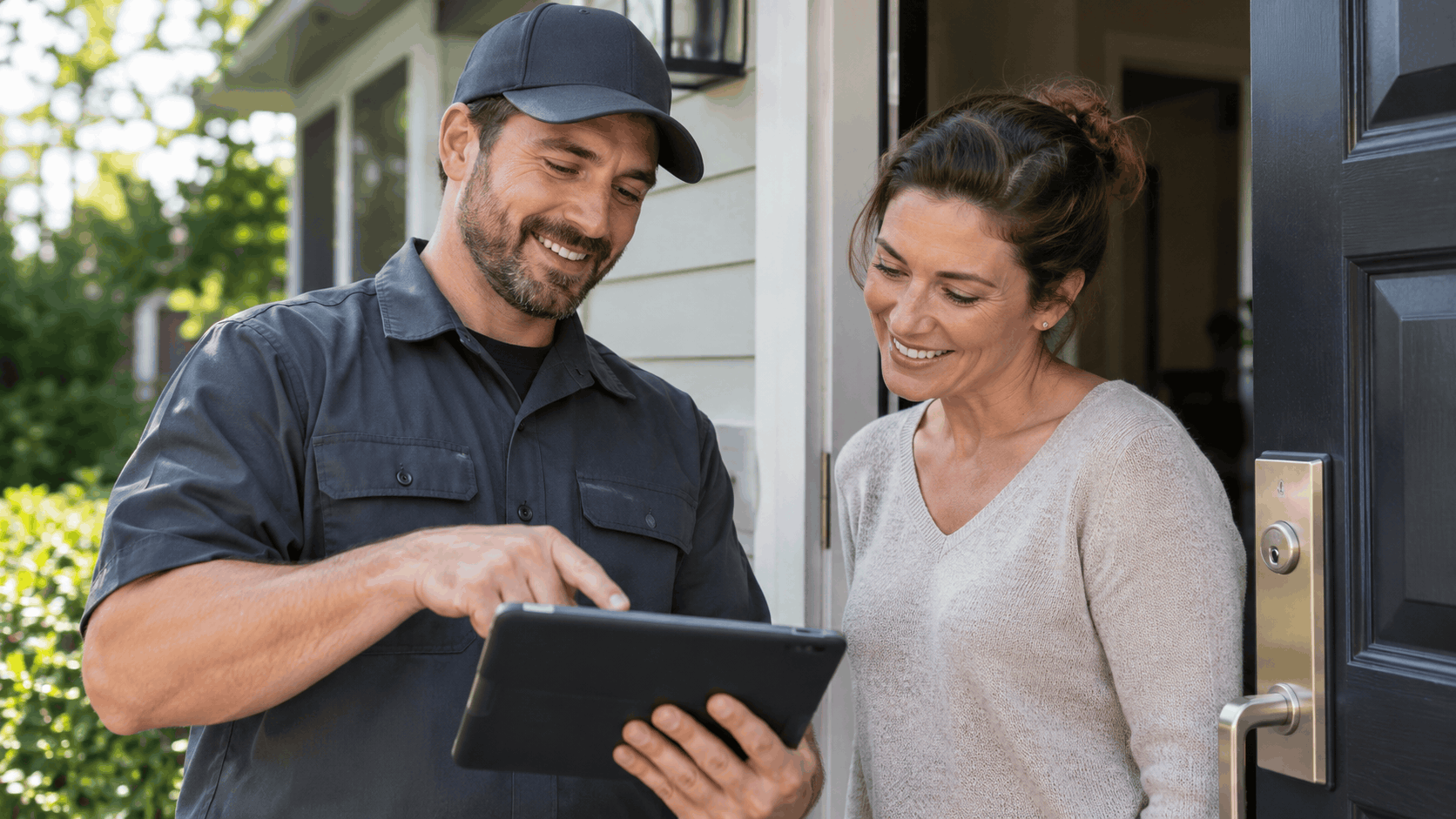
Friendly locksmith showing tablet estimate to smiling homeowner at front door

Why Locksmith Customers Expect to Get Ripped Off?

Few trades carry as much baggage as locksmithing. The person calling has usually read a warning or heard a story, so they come in half-expecting a locksmith scam. Understanding that mindset helps an owner see why honest prices matter more here than in almost any other local service.

The bait-and-switch pattern is the root of the distrust. A low number gets quoted, then the bill climbs once the work is done. That gap between the promise and the charge is what erodes consumer trust across the whole trade, even for honest operators.

What the caller fearsWhat an honest site shows
A $45 quote that becomes $135 or moreA real price range for each job
An out-of-town call centerA real business name and local service area
A fake listingA license number and verified profile
Pressure during an urgent lockoutClear numbers before the call

The Low Quote That Becomes a Big Bill

The pattern is specific, and consumers have read about it in detail. An ALOA page describes a phone quote near $45 that turns into a $135 to $150 bill once the technician is on site. The gap between the two numbers is the whole scam.

It usually works like this. The low number gets the person to say yes and wait. Then, once the work starts, the upsell begins: the lock is "special," the door needs extra work, the service call was separate from the labor.

One version regulators warn about is the drill and replace claim. The technician says the lock cannot be picked and must be drilled out, then charges for a new lock that was never needed. A skilled locksmith can open most standard locks without destroying them.

Because so many people have read about this exact sequence, callers now brace for the trick before they even describe their problem. A website that states the real range for drilling, rekeying, or a lock change answers that fear before the first word of the call.

Fake Listings and Out-of-Town Call Centers

The FTC warning on this goes back years. In May 2008 the FTC told consumers that some locksmiths advertising locally may not be local at all. The number on the ad can route to a call center far away that dispatches an unvetted subcontractor.

Regulators give consumers a short checklist to protect themselves. They tell people to look for a local address, to get a total quote by phone, and to watch for a branded vehicle that matches the company name when the technician arrives.

A mismatch on any of those is a red flag. An unmarked car, a vague company name, or a refusal to give a total over the phone all point to the out-of-town model the FTC warned about.

A lockout caller is extra wary because they cannot shop around in the moment. They are stuck, often at night, and they have to trust whoever shows up. A website that shows the business name, the area served, and real prices settles that worry in advance.

How Google Has Cracked Down on Fake Profiles

The scale of the fraud problem is real, and Google's own numbers show it. Google says it removed over 13 million fake Business Profiles in 2025, up from about 12 million in 2024. That is background on how large the problem has been, not a measure of how many listings are fake right now.

The locksmith category has been a known target for this kind of abuse. Fraudulent listings cluster in on-call trades where buyers are urgent and cannot verify anyone before the technician arrives.

The Google removal effort has pushed the platform toward stronger checks. For locksmiths, that means tighter verification before a profile can run ads, which is a good thing for honest owners who want to stand apart from the fakes.

The takeaway for an owner is not that the market is hopeless. It is that proving legitimacy, with a verified profile and honest prices, is what separates a real local locksmith from the listings Google keeps taking down.

Why the Urgency Makes It Worse

A lockout is not a shopping trip. It is an urgent search, often done one-handed on a phone while standing in a driveway. People in that spot call the first credible result they see and hope for the best.

That urgency is exactly what the bad actors exploit. A person who feels trapped will agree to a vague quote because they want the problem solved now, not in an hour of comparison shopping.

A clear price up front removes that pressure. When a caller can see that a lockout runs within a stated range, they are not agreeing to an unknown. They are hiring a locksmith who already told them what it costs.

That is the quiet advantage of honest numbers. They turn a stressful, high-pressure moment into a simple decision, and the locksmith who provides that clarity earns the call.

What Honest Price Ranges Do for a Worried Caller?

Publishing real numbers does something no reassuring slogan can. Honest pricing answers the central fear before the customer picks up the phone. It is proof, not a promise.

This connects directly to what consumers say they want from a local business online. Price ranges are one of the first things people hunt for, and seeing them builds website trust in a trade where trust is usually in short supply.

Prices Are One of the Five Things Customers Look For

Research backs this up plainly. A BrightLocal survey of 800 US consumers in March 2016 found that all age groups named the same five website must-haves: a list of services, prices, opening hours, a phone number, and a physical address.

That finding from BrightLocal is striking because it crossed every age group. Younger and older buyers wanted the same five things, and prices sat right near the top of the list.

For a locksmith, prices rank even higher than usual. The whole trade is shadowed by the fear of a surprise bill, so a visitor scanning the site is often looking for numbers first and everything else second.

A site that hides its prices forces the visitor to call blind, which is precisely the position the scam stories taught them to avoid. Showing the numbers answers the question they came to ask.

A Range Sets Expectations Without Overpromising

A single exact price would be dishonest for most locksmith work, because the job in front of the technician is never identical to the last one. A price range is the truthful way to show cost.

HomeAdvisor's June 2026 figures give a useful starting point an owner can adapt to their own work. They put a house lockout at $65 to $200, a rekey at $80 to $150, a lock change at $50 to $250, a car lockout at $50 to $300, and a car key at $100 to $400.

The spread in those ranges reflects real job variation. A basic residential deadbolt and a high-security commercial lock are different jobs with different hardware, so one number could never cover both.

Presenting a range is an honest estimate that sets expectations without overpromising. The caller knows the ballpark, understands why the final number lands where it does, and is not blindsided by the bill.

Clear Prices Beat a Rival With No Numbers

Picture two locksmiths side by side in the search results. One shows honest ranges on the site. The other shows nothing and asks the visitor to call to find out.

To a wary caller, that is not a close contest. The one with numbers has already answered the fear, while the one without numbers looks like the setup for the exact surprise the caller is dreading.

This is a competitive advantage built on transparency, not on being the cheapest. A locksmith can sit mid-range on price and still win the call simply by being the one who was upfront.

None of this is about outranking a rival in search. It is a trust point. When a nervous person has to choose, the business that told them the cost earns the benefit of the doubt.

Why a Website Carries More Weight Than a Social Post

A price listed on an owned website lands differently than the same number in a Facebook comment. DreamHost's 2026 Local Business Trust Index, a November 2025 survey of 1,201 Americans ages 18 to 64, found that 69% say a website is website credibility essential for a local business, and 70% are more likely to do business with a company that has one.

Those DreamHost figures show that a website is not optional in the eyes of most buyers. It reads as a sign the business is established and here to stay.

A price page on an owned site feels more permanent than a social post that scrolls away in a day. The visitor can return to it, check it, and treat it as a commitment rather than a passing message.

A dedicated service page for each job also lets the owner explain what the price covers, which a short social post rarely has room to do. That context is what turns a number into reassurance.

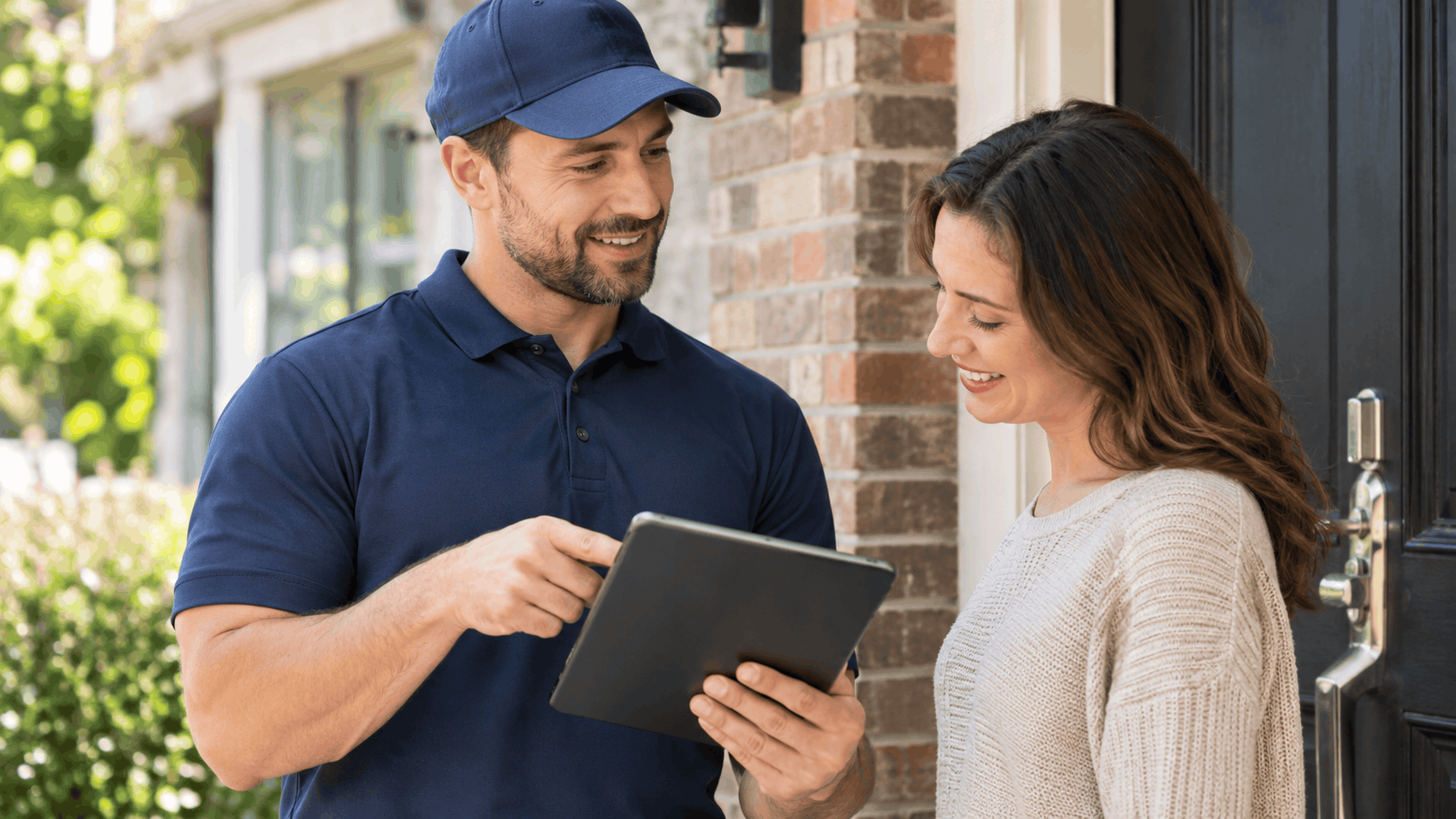
Smiling locksmith showing tablet to homeowner at front door during service call

Which Locksmith Prices to Put on Your Website?

Knowing that prices build trust is one thing. Deciding which service prices to publish is the practical next step. The HomeAdvisor June 2026 ranges give solid source material for a price list that covers the common locksmith services.

An owner does not need to list every obscure job. A handful of the most-requested services, each with a clear range and a plain explanation, answers the questions most callers actually have.

House Lockouts and Rekeys

The house lockout is the job most people picture when they think of a locksmith. HomeAdvisor puts it at $65 to $200. It covers getting a locked-out homeowner back inside without damaging the door or lock.

The range reflects how the entry is handled. A simple knob or deadbolt is quick, while a high-security lock or a stuck mechanism takes more time and skill, which pushes the price toward the upper end.

A rekey, which HomeAdvisor lists at $80 to $150, is different work. The locksmith changes the internal pins of an existing lock so the old keys no longer work and a new key does, without replacing the hardware.

Rekeying is popular with people who just moved in or had a roommate leave. Explaining in plain words that a rekey keeps the existing lock but voids the old keys helps the home locksmith customer understand why it costs less than a full lock change.

Lock Changes and New Hardware

A lock change runs $50 to $250 according to HomeAdvisor, and that is one of the widest ranges on the list. The spread catches a lot of people by surprise until it is explained.

The reason the range is so wide comes down to hardware quality and door type. A basic entry knob from a hardware store sits at the low end, while a graded deadbolt or a smart lock with electronics costs far more just for the part.

The door itself matters too. A standard residential door is straightforward, but a metal commercial door, a mortise lock, or a non-standard prep can turn a quick swap into a longer job with extra parts.

Tying this explanation to the quote helps the customer. When the locksmith tells them a graded deadbolt on a metal door lands higher than a basic knob on a wood door, the new lock price makes sense instead of feeling like an upsell.

Car Lockouts and Car Keys

A car lockout is listed at $50 to $300 by HomeAdvisor. The low end covers an older vehicle with a simple lock, while a newer car with tight tolerances and sensitive electronics takes more care, which raises the price.

The bigger jump comes with keys. A car key replacement runs $100 to $400, and the gap confuses a lot of people until they understand what modern keys contain.

Many of today's keys are not simple cut metal. They hold a chip that the car has to recognize, so the job includes key programming to pair the new key with the vehicle's computer. That equipment and time are what drive the cost.

A proximity fob for a push-button car costs more than a basic transponder key, which costs more than an old-style metal key. Laying this out in plain words helps a driver see why a replacement is not a flat, cheap number.

After-Hours and Emergency Fees

Many lockouts happen at night or on weekends, so the after-hours fee deserves its own line. HomeAdvisor shows an after-hours add of $150 to $250 on top of the base job.

Showing that number up front is the exact opposite of bait-and-switch. The scam relies on hiding the after-hours charge until the bill arrives. Publishing it means the 2 a.m. caller already knows the night rate before they dial.

It also helps to anchor the whole list with a typical figure. HomeAdvisor puts the average job at $163, which gives a caller a realistic sense of what a normal service visit costs across all these categories.

An emergency callout at night will sit above that average, and a simple daytime rekey will sit below it. Stating both the average and the after-hours add gives the customer a full, honest picture rather than a single number that fits nothing.

Honest pricing is not only about trust. A careless price can create a legal problem. Owners need to understand bait advertising rules, FTC rules, and state ad compliance requirements before they post numbers.

The goal is a price page that is both honest and compliant. The two go together: the same habits that protect the customer also keep the business on the right side of the law.

RuleWhat it means for a price page
16 CFR 238 bait advertisingNo teaser price you never intend to honor
California BSIS (since 2009)Ads show business name, address or phone, license number
Texas ad rulesCompany name and address on record must appear
FTC Consumer Review Rule (Oct 21, 2024)No fake or suppressed reviews

Why a Teaser Low Price Can Be Bait Advertising

A "$19 service call" sounds like a deal, but if it is never meant to be sold at that price, it is a legal trap. A teaser price that is not a real offer fits the definition of bait advertising.

The FTC's rule on this is 16 CFR 238, which describes bait advertising as "an alluring but insincere offer" made to draw people in before switching them to something more expensive. That is the legal name for the exact scam that gave the trade its bad reputation.

The safe path is to quote real ranges the business will actually honor. If the page says a lockout is $65 to $200 and the technician charges within that range, there is no bait and no switch.

Honest ranges protect the owner twice over. They satisfy the wary customer and they keep the advertising clear of the bait-advertising rule at the same time.

License Number and Business Name Rules by State

Several states regulate what a locksmith ad must contain. In California, the Bureau of Security and Investigative Services (BSIS) has required since 2009 that ads show the business name, an address or phone, and the license number.

That California BSIS requirement applies to advertising, which includes a website. A locksmith operating in a licensing state should treat the price page as an ad and include the required details.

Texas has its own approach. Under Texas rules, ads need the company name and the address on record, and using the word "locksmith" at all counts as acting as a locksmith company, which carries its own obligations.

Licensing changes often, and only some states require a license at all. Owners should confirm their own state's current rules rather than assuming, because what applies in California or Texas may not match their home state.

Honest Reviews Alongside Honest Prices

Honest prices lose their power if the reviews beside them are fake. The FTC Consumer Review Rule, effective October 21, 2024, bans a range of review tricks that used to be common.

The rule prohibits fake reviews, including AI-written ones, as well as incentives tied to a particular sentiment and undisclosed insider reviews. It also bans fake independent review sites set up to praise a single business.

It also bars review suppression, meaning a business cannot hide or scrub honest negative reviews to make itself look better. The reviews a visitor sees are supposed to reflect real experience.

For a locksmith, trustworthy reviews and trustworthy prices reinforce each other. A real review from a customer who paid within the stated range is powerful proof that the price page is not just talk.

Quote the Total Over the Phone

Regulators consistently tell consumers to ask for a total quote by phone before anyone is dispatched. That single step defeats most of the after-the-fact surprises people fear.

A website price page makes that phone estimate easier and more consistent. When the ranges are published, the person answering the phone quotes from the same numbers every time instead of improvising.

That consistency is a form of consumer protection the business provides itself. The caller hears a total that matches the website, and the final bill matches the total, so there is no gap for distrust to grow in.

It also protects the technician on site. When the quote was clear and documented, there is no awkward argument at the door about what was and was not agreed.

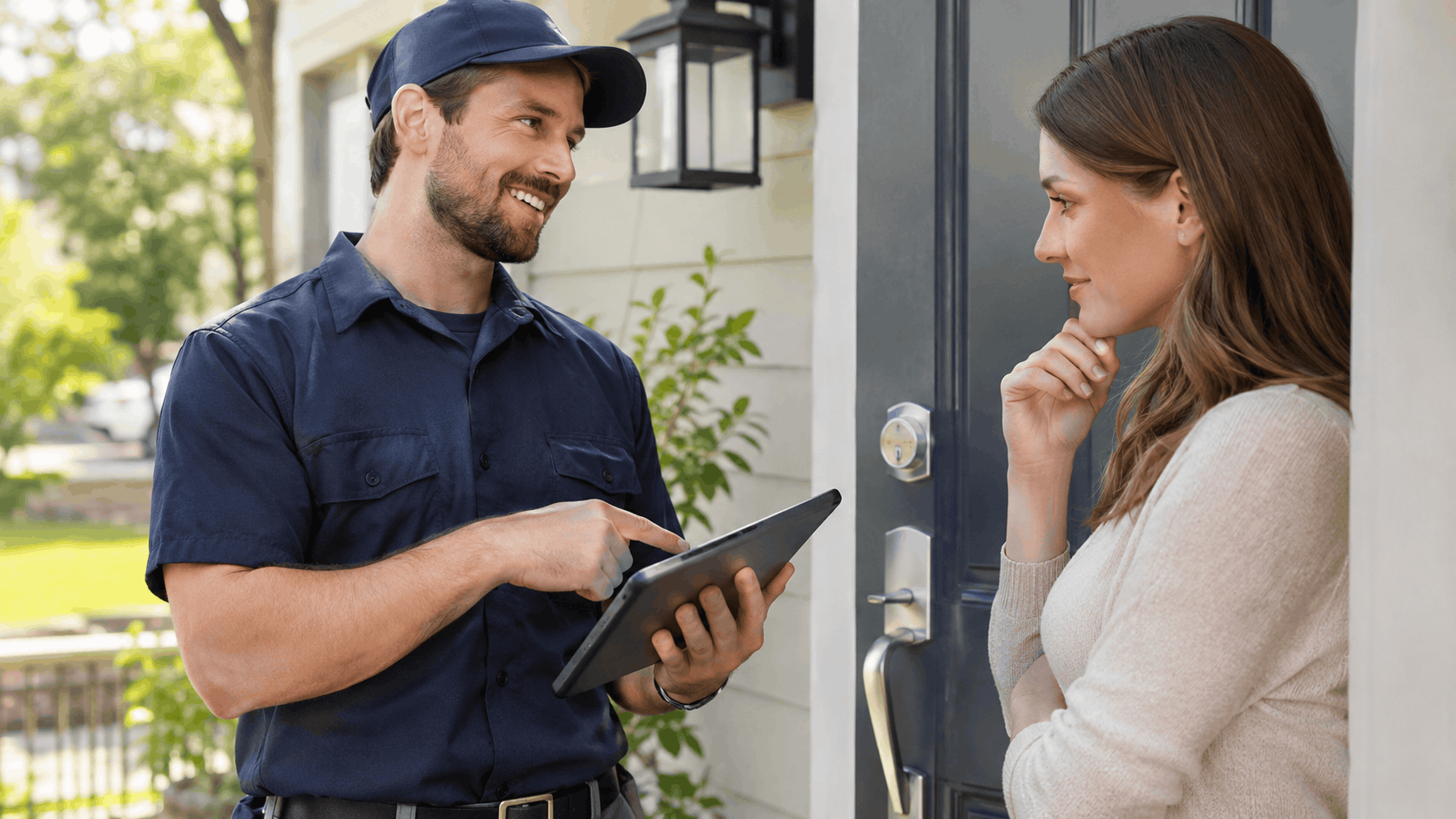
Smiling uniformed technician with tablet discussing service details with homeowner at front door

Trust Signals That Should Sit Next to Your Prices

Prices do their best work when they sit beside other proof of legitimacy. The strongest trust signals are the ones that both fraud-wary buyers and Google's verified profile systems check. Pairing them with the numbers builds real credibility.

A price page floating on its own is good. The same page surrounded by a license number, a verified profile, fresh reviews, and a clear service area is far stronger.

Your License Number and Real Business Name

A license number and a real business name are the fastest way to separate a legitimate locksmith from a fake listing. A scam call center rarely has either to show.

Regulators advise consumers to check for exactly these details. A real company name, not a generic keyword string, and a license number where the state requires one are on the short checklist the FTC and state agencies hand out.

Displaying them on the price page connects the dots for the visitor. They see the honest range, the real name, and the license, and the combination reads as a real local business rather than a dispatcher in another state.

In licensing states this is not just good practice, it is often required in advertising. Showing the license number earns trust and satisfies the rule at the same time, which is why it belongs right next to the prices.

A Verified Google Business Profile

A verified, public Google Business Profile is central to locksmith trust and visibility. Locksmith search ads require Advanced Verification because the category is urgent and high-risk, and a verified profile is a condition for running them.

Google even uses a locksmith as its textbook example of a service-area business in its video verification help page. Videos must be live, unedited, and at least 30 seconds, showing the location, proof of the business, and proof of management.

That verification exists because the category has been so heavily targeted by fraud. Passing it is a signal to Google and to customers that the business is real and locally present.

Linking the verified profile to the website ties the two together. A visitor who finds the profile, then lands on a matching site with honest prices and a license number, sees a consistent story that a fake listing cannot copy.

Recent Reviews That Match the Price Promise

Reviews only reassure if they are current and strong. BrightLocal's 2026 research found that 68% of consumers require 4 stars or more before they will consider a business, and 74% look for reviews from the last three months.

That demand for review freshness is important for locksmiths. A wall of five-star reviews from three years ago does less than a handful of recent reviews from the last quarter.

Fresh reviews also back up an honest price page in a specific way. When a recent reviewer mentions a fair, upfront price, it confirms to the next visitor that the published ranges are honored in practice.

The star rating and the review dates work alongside the numbers. Honest prices plus current, positive reviews tell the wary caller that other local people got exactly what the site promised.

A Branded Vehicle and Local Service Area

Consumers are told to watch for a matching branded vehicle when the locksmith arrives. A van or truck with the company name confirms the person at the door belongs to the business that was called.

The site can reinforce this by describing the service area honestly. A locksmith is usually a service-area business, which means the physical address is hidden on the Google profile, but the areas served are still clearly stated.

Google guidance for a service-area business is to stay within about a 2-hour drive and to avoid virtual offices. Describing realistic local coverage on the site matches that and signals a genuine local presence.

An owner can list the towns and neighborhoods they actually cover using a location page for each area. That honest map of coverage answers the "are you really local" question the FTC warned people to ask.

Writing Price Pages That People and AI Tools Both Use

A clear price page does double duty. Good price page content helps the human searcher decide, and it gives AI answer tools something solid to cite. That improves AI visibility and supports local SEO without any promise about rankings.

The thing that helps a person pick a locksmith is the same thing that helps an AI tool summarize one: a clear, specific answer to the cost question.

Answer the Cost Question Clearly

AI answers tend to show up on research questions about cost, process, and timing. A page that answers those specifically gives the tools citable content to pull from.

An Ahrefs check in October 2026 found that AI Overviews appeared on searches like "lock change," "car key replacement," and "locksmith cost." Notably, the plain "near me" search did not show an AI Overview, while the cost question did.

That pattern tells an owner where to focus. A page that clearly answers what a job costs, what the range depends on, and how long it takes is exactly the kind of content these tools reach for.

Vague pages get skipped. A page that says a rekey runs $80 to $150 and explains why gives both the reader and the AI tool a concrete answer worth repeating.

Your Website Is the Source AI Points To

When AI tools answer a question, they point somewhere, and increasingly that somewhere is a business's own site. Yext's analysis of 6.8 million citations across ChatGPT, Gemini, and Perplexity from July to August 2025 found that first-party website content was the largest single source of AI citations at 44%.

That figure from Yext matters for where the price page should live. A number buried in a social post is hard for a tool to cite, while a clear page on the owner's domain is easy.

The behavior after a recommendation reinforces the point. Yext's March 2026 survey of 1,120 US adults found that after an AI recommendation, 58% visit the business website. The site is where the curious person lands next.

So the price page belongs on the owner's own website, not scattered across platforms. That way the AI tool can cite it and the follow-up visitor can read it, all in one place the owner controls.

Use Plain Words and the Right Category

Google's core category for this trade is simply Locksmith category, listed as "Locksmith." Choosing it correctly on the Business Profile helps Google understand what the business does.

On the website side, schema markup helps too. Schema.org has a Locksmith type under HomeAndConstructionBusiness, which is a behind-the-scenes label that tells search engines the kind of business the page describes.

The visible words should stay in plain language a lockout caller would actually type. People search "locked out of my house" or "car key replacement," not industry jargon, so the page should speak the way the customer speaks.

Separate service pages that describe each job work best. A page on house lockouts, another on rekeys, another on car keys, each with its range and plain explanation, serves both the searcher and the search engine.

Do Not Stuff City Names Into the Page

It is tempting to paste a long list of nearby cities onto a page to try to rank in all of them. That tactic backfires because it is treated as keyword stuffing.

Google already knows where the searcher is. Proximity in the results comes from the searcher's own location, not from how many times a page repeats near me or lists towns.

Google's spam policies specifically name "blocks of text that list cities and regions that a web page is trying to rank for" as keyword stuffing. Pages built to funnel multiple regions to one page count as doorway abuse.

The honest approach is real coverage described genuinely, with proper location pages for areas actually served. That satisfies both the customer who wants to know if the locksmith comes to them and Google's rules against stuffing.

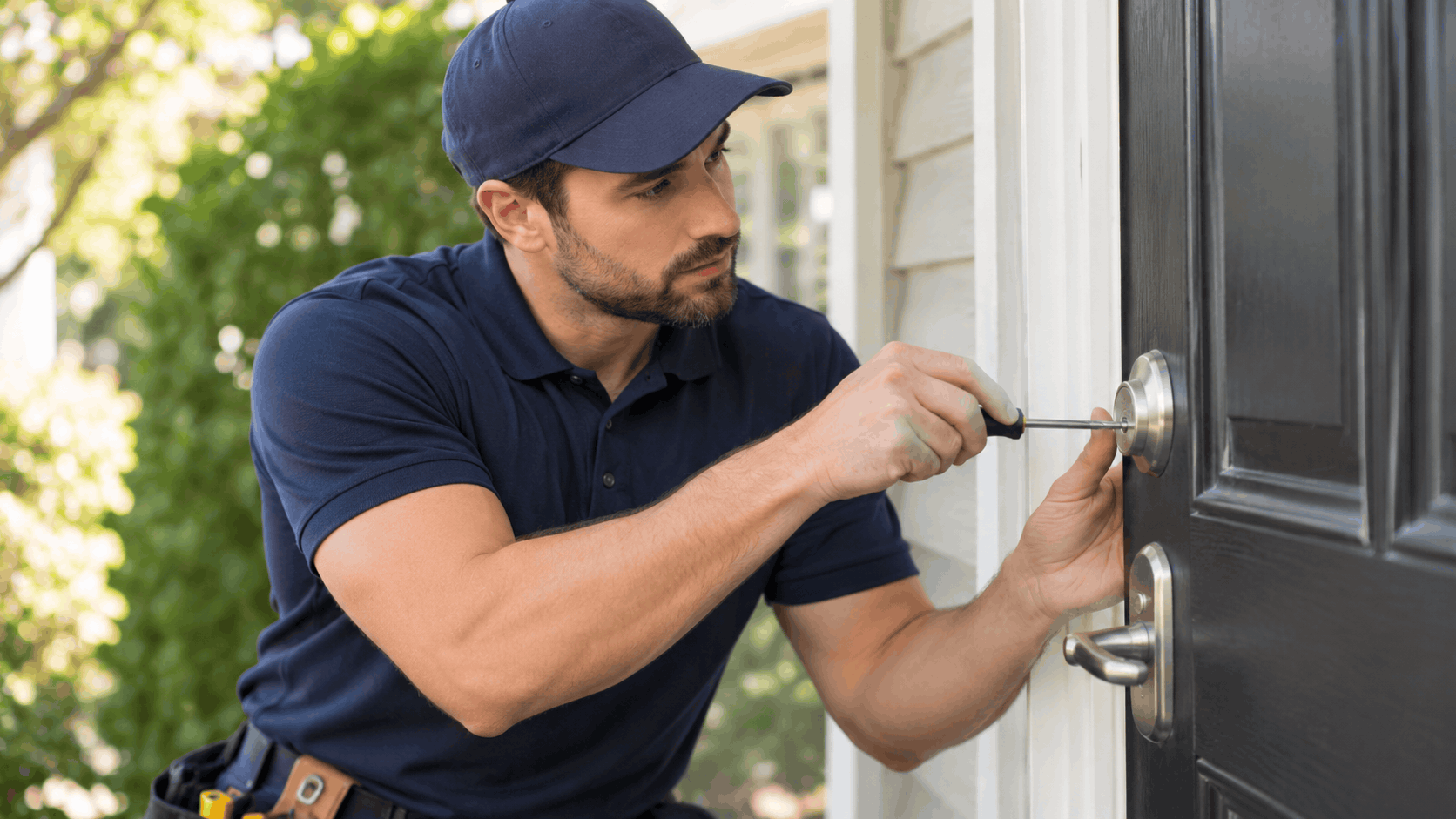
Professional locksmith in navy uniform installing door lock hardware with screwdriver

Building Your Price Page Without Any Tech Skills

A busy mobile locksmith does not have time to learn web design between jobs. A website builder made for local owners solves that. With Grow Local, getting an honest price page online is a matter of answering a few questions.

The whole point is to put the fear-fighting price page within reach of an owner who has never built a site. No code, no designer, no agency.

Answer Simple Questions and Let AI Build the Site

The process starts with simple questions about the business. The owner answers them, and the AI website builder builds the whole site from the answers, including service pages and a management dashboard.

The site comes out SEO-friendly and AI-ready, with structure that search tools and answer engines can read. It connects to the Google Business Profile, which ties back to the verified profile that matters so much in this trade.

There is one plan at $99 per month, with no contract and the option to cancel anytime. That covers hosting, security, backups, the AI-generated pages, and analytics, with no separate setup fee.

Before paying anything, the owner gets a free preview of the full site. They can see how the service pages and layout look with their own information before deciding, which takes the risk out of trying it.

Update Your Prices Any Time From the Dashboard

Prices change, and a price page is only useful if it stays current. From the Grow Local dashboard, the owner can make those changes without help.

Those self-service edits cover the things a locksmith actually needs to adjust: services and their ranges, business hours, phone number, photos, logo, and brand colors. No support ticket, no waiting.

That matters because a stale price page is worse than none. If rates have gone up and the site still shows last year's numbers, the honest-pricing advantage turns into a different kind of surprise at the door.

The site itself is quick to produce. After payment, the full site is generated automatically in about 1 to 3 minutes according to Dan Milstein in October 2026, so the first version is ready fast and updates after that are quick to publish.

See Your Call Clicks and Form Leads

Once the price pages are live, an owner wants to know whether they are bringing in work. The leads and analytics view in the dashboard shows that at a glance.

It counts Call Clicks, which are taps on the website's call button, and contact form leads for the month, then adds them together as Total Leads. That gives a simple monthly picture of how the site is performing.

It is worth being clear about what this is. The Call Clicks figure counts taps on the call button only. It is not call tracking. The dashboard does not record calls or store any caller's phone number.

Still, the analytics help an owner see patterns. If the page that explains car key pricing drives more call button taps than the others, that tells the owner which honest price page is doing the most work.

When You Want Someone Else to Do the SEO

Grow Local is the do-it-yourself start. An owner answers questions, the site gets built, and they manage it themselves from the dashboard. For most local locksmiths, that is all they need.

Some owners eventually want someone else to handle the search work for them. When that day comes, they can look at DM. Digital, the AI SEO agency from the same company, for done-for-you SEO and related services.

That is an upgrade path, not a starting point. There is no pressure to take it, and the site keeps running the same whether the owner stays self-serve or not.

The main move is still to start with Grow Local. Get the honest price page online, manage it yourself, and decide later whether handing off the deeper work makes sense.

Turn the Fear Into the Reason They Call You

The bait-and-switch stories are why a locked-out person hesitates before dialing. Honest price ranges on a website answer that fear before the call, which is the single strongest advantage a locksmith can build online.

The pieces fit together. Real ranges adapted from HomeAdvisor figures, a license number, a verified Google Business Profile, fresh reviews, and an honest service area tell a wary caller the whole truth before they commit. Keep the numbers compliant with bait-advertising and state ad rules, and confirm your own state's licensing since it changes often.

A locksmith can put all of that online by answering a few simple questions and letting AI build the site, then keeping the prices current from the dashboard. Start a free preview at Grow Local, see your own price pages take shape, and give the next worried caller a reason to pick you instead of bracing for a trick.

Grow Local Team

Written by Grow Local Team

Editorial

Grow Local helps local service businesses build SEO-ready sites and grow online.

Ready to improve your local visibility?

Get started now and discover local opportunities you're missing.

Get Started Now

No commitment, cancel anytime