Grow Local
Grow Local
Cost Guides

HVAC Business Website Cost: What You Pay and What You Get at Each Level

November 12, 2026Skip to article
Grow Local

Build for free, only pay if you like it.

Build your site free

Free. Takes a few minutes.

Love it? Go live

$99/month. Cancel anytime.

Get more customers

SEO optimized and AI ready.

Loading website builder...

2,500+ local businesses
already online
HVAC Business Website Cost: What You Pay and What You Get at Each Level

Key Takeaways

  • 1HVAC website costs fall into three levels: DIY builders at roughly $50 to $500 a year, agency builds at about $1,000 to $15,000 one time, or a flat monthly done-for-you fee.
  • 2The low DIY sticker price hides real costs: Wix plans run $17 to $159 a month, plus apps, email, and a domain that renews after the first year.
  • 3Agency quotes swing from $1,000 to $15,000 based on scope and hourly rates; the $38,105.39 average is pulled up by large projects, not local HVAC sites.
  • 4Yearly costs like domain, hosting, SSL, maintenance, and content updates continue after any launch, so compare total cost rather than the sticker price.
  • 5A website you own beats relying on a Facebook Page or Google profile, since rented accounts can be restricted and Google already ended its free profile websites in March 2024.
  • 6Service pages, location pages, and clear call and lead tracking are what connect an HVAC website to getting found on Google and in AI tools; no one can promise rankings.
  • 7DreamHost found 69% say a website is essential for local business credibility, and Yext found first-party websites were the top AI citation source at 44%.
  • 8Grow Local is a done-for-you option at $99 a month, no contract, build free first, with hosting, SSL, service pages, and location pages handled for you.

An HVAC business website cost ranges from $50 to $500 a year if you build it yourself, $1,000 to $15,000 for a one-time agency build, or a flat monthly fee for a done-for-you service, and what you pay directly shapes what you get at each level. The gap between those three numbers is real, and most owners do not find out why until the first renewal bill lands.

Picture a two-truck HVAC shop in the middle of July. The phone is ringing with emergency AC calls, the schedule is full, and the owner is trying to decide whether to spend evenings building a website or hire someone to do it. That choice is really a choice between money, time, and technical work, and the right answer depends on which of those you have the least of.

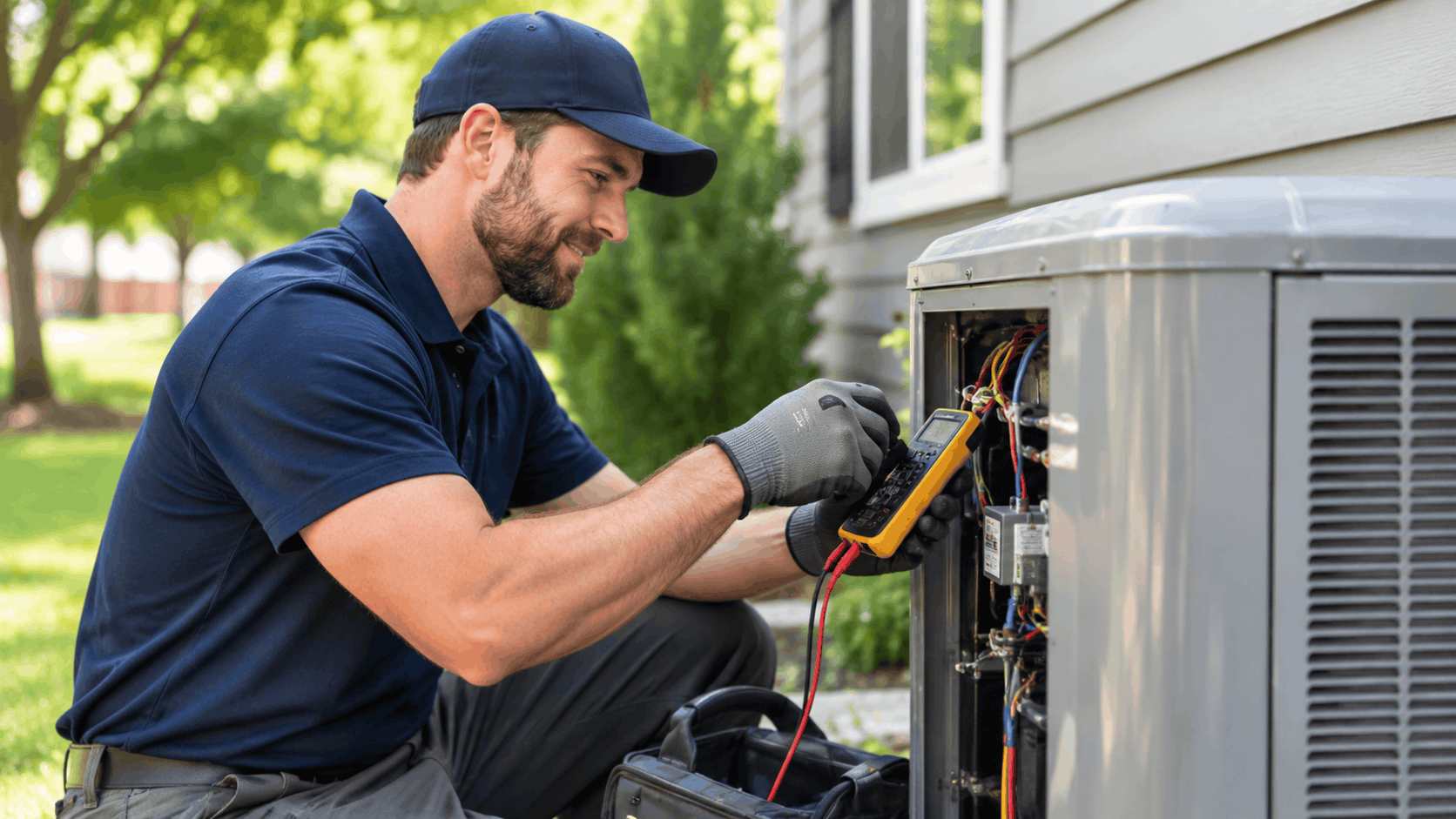
HVAC technician using multimeter to diagnose outdoor air conditioning unit beside house

The Three Ways HVAC Owners Pay for a Website

Every HVAC contractor who wants a website ends up on one of three paths. Each one trades money for time or technical work in a different way, which is why the HVAC website cost swings from a few hundred dollars a year to five figures. One path hands you the tools and the workload. One hands you a finished product and a big bill. One sits in the middle.

Understanding the three website options up front makes the rest of the decision easier. A small business website is not one product with one price. It is a service you can buy at very different levels of help.

PathWho does the workTypical cost
DIY builderThe ownerAbout $50 to $500 a year
Design agencyThe agencyAbout $1,000 to $15,000 one time
Done-for-you monthlyA service providerA flat monthly fee

Do It Yourself With a Builder

DIY builders like Wix and Squarespace put the editor directly in the owner's hands. You sign up, pick a template, and start dragging blocks around the screen. Nobody writes your service pages for you, nobody picks your layout, and nobody fixes it when something breaks. The tool is there, but the work is yours.

GoodFirms 2024 estimates put a basic DIY site at $50 to $500 a year. That is the lowest sticker price of the three paths, which is why it pulls in budget-conscious owners first. The price covers the platform, not the labor of writing and building.

For an HVAC company, the labor is the catch. You write the AC repair page, the furnace page, the heat pump page, and the maintenance plan page yourself. You also keep them current as your hours, phone number, and license information change. The plan is cheap, but the hours are not.

A DIY builder suits an owner who genuinely enjoys this kind of work and has slow weeks to spend on it. For most contractors, the editor is the easy part and the writing is the wall they hit.

Hire a Design Agency

The agency path buys a custom website built by professionals. You describe what you want, they design it, write it, and launch it. This is the most hands-off option in terms of the build itself, and it carries the highest upfront price by a wide margin.

A GoodFirms survey of more than 100 web development companies, published February 2024, put a simple 5 to 10 page business website at $1,000 to $15,000. That is a one-time build cost, and the range is enormous for a reason we will cover later. The same survey found 60% of firms charge $1,000 to $7,000 for a business site.

Agencies also take time. GoodFirms reported an average build time of about two months for a basic site. For an HVAC owner who wants a website before the next busy season, two months of back-and-forth on design drafts and copy approvals is part of the deal.

A custom build can be worth it for a larger operation with the budget and specific needs. For a solo or small shop, the five-figure ceiling and the wait are a lot to take on for a straightforward local site.

Pay a Flat Monthly Done-for-You Fee

The third path sits between the other two. Someone builds and maintains the site for a set monthly price, so the owner skips both the big upfront check and the DIY learning curve. You are not dragging blocks around, and you are not writing a $10,000 check either.

With a done-for-you monthly service, the heavy lifting happens behind the scenes. The provider writes the pages, handles hosting, and keeps the technical side running. The owner provides business information and a design preference, then stays out of the weeds.

This managed website model spreads the cost out instead of front-loading it. For a busy HVAC owner, that often matches cash flow better than a single large bill, and it removes the ongoing question of who updates the site when something changes.

The trade-off is a recurring charge rather than a one-time purchase. Whether that is better depends on how much time and technical patience the owner has, which is exactly the decision this guide is built to help with.

The DIY Builder Level: Lowest Sticker Price, Highest Time Cost

The DIY HVAC website looks like the obvious bargain until you add up the hours and the add-ons. The plan price is only the start. The real cost is what the owner pays in time writing pages, picking layouts, and keeping everything accurate during the season when phone calls matter most.

Writing service pages for AC, furnace, and heat pump work takes hours. Each page needs a real explanation of the service, not filler, and it needs to stay current. Those are hours an HVAC owner could spend answering the phone during a heat wave.

What you pay forWhat it covers
Monthly planThe platform and editor
Apps and add-onsExtra features bolted on
Your timeWriting, layout, and upkeep

What the Monthly Plans Actually Cost

Builder pricing changes often, so dated figures matter. Website Builder Expert reported in September 2026 that Wix plans run $17 to $159 a month billed annually, or $24 to $172 billed monthly. The annual commitment lowers the rate, but it is still a recurring charge.

The annual tiers break down as Light at $17, Core at $29, Business at $39, and Business Elite at $159 a month. Most local HVAC sites do not need the top tier, so an owner usually lands in the lower band. That keeps the plan itself affordable on paper.

The monthly-billed prices run higher, from $24 up to $172, because you pay for the flexibility of not committing a year ahead. For a contractor testing the waters, the monthly option costs more per month but avoids locking in. Either way, the plan is the floor, not the ceiling.

None of these figures include the work of building the site. You are buying the editor and hosting. The writing, the layout choices, and the upkeep are still on you, and that is where DIY stops being cheap.

The Add-Ons That Creep In

The plan price rarely stays the plan price. Website Builder Expert reported in September 2026 that some Wix apps cost about $3 to $20 a month each. Add two or three to cover features your base plan lacks, and the monthly bill climbs.

Email is another line item. Custom email through Google runs about $6 a month per the same September 2026 report. If you want an address that matches your web domain instead of a free generic inbox, that is an ongoing cost on top of the plan.

Online payments carry a fee too, at 2.9% plus $0.30 per sale, though most HVAC sites do not sell products online and can skip that. The domain is the sneakier cost. The free domain lasts only the first year, then renews at about $21.35 for a .com, and the 14-day refund covers only the first payment, not renewals.

Those small charges are easy to wave off one at a time. Stacked together across a year, they turn a $17 plan into a noticeably larger bill, which is why it pays to read the renewal terms before you commit.

Who Actually Builds It

Here is a number that surprises people. In Clutch's 2025 release, owners built only 8% of sites themselves. In-house teams built 37%, and outsourced partners built 45%. The owner-built share is the smallest slice by far.

Clutch also found that DIY builders like Wix and Squarespace power 41% of recently launched sites. So plenty of businesses use builders, but most are not the owner personally sitting down to build the thing. The work often gets handed to staff or hired out even when a builder is the tool.

That gap matters for an HVAC contractor. On a DIY builder, you are the one writing the copy, choosing the layout, uploading photos, and fixing problems when a page breaks. The platform gives you the editor, but it does not give you the time or the writing.

If you do not have a staffer who can own the project, DIY quietly turns into a job you added to your own plate. The low sticker price assumes free labor, and for a working owner that labor is not free.

The Time an HVAC Owner Does Not Have

HVAC demand is seasonal, and the timing works against DIY. Searches for AC repair rise 266% in July. That is the exact stretch when an owner building a website is choosing between the editor and the ringing phone.

Building a site in peak season means pulling attention away from paying work. A furnace lead in January or an emergency AC call in July does not wait while you tweak a header. Every hour at the keyboard is an hour not spent booking jobs or finishing them.

The build is not quick either. GoodFirms reports professionals average about two months for a basic site, and they do this for a living. A solo owner learning as they go, while also handling the writing, photos, and updates, should expect it to stretch longer.

None of that makes DIY wrong. It makes DIY a choice best suited to the slow months and to owners who want to learn the tool. For a shop buried in summer calls, the time cost is the real price tag.

HVAC technician showing tablet screen to homeowner beside outdoor air conditioning unit

The Agency Level: Most Expensive Up Front

A custom agency build buys a website designed from scratch for your business. For a larger HVAC operation, that can be money well spent. For a local contractor with a couple of trucks, it is a big check to write for something a simpler path could cover.

The agency number swings more than any other option, from a thousand dollars to fifteen thousand. The swing is not random. It tracks the scope of the work, the number of pages, and the hourly rate of the people doing it. Knowing what drives the price helps you judge whether an agency fits.

What a Custom Build Includes

A typical agency scope starts with a custom design built to match your brand rather than a stock template. From there it usually includes service pages for AC, furnace, heat pump, and maintenance plans, location pages for the towns you serve, and lead forms so customers can reach you.

GoodFirms, in its February 2024 survey of more than 100 web development companies, put a simple 5 to 10 page business website at $1,000 to $15,000. That covers the kind of straightforward local site most HVAC shops need, built to order instead of assembled by the owner.

The appeal is that professionals handle the writing and the design. You describe your services and service area, and the agency turns that into pages. For an owner who wants no part of the building, that hands-off experience is the draw.

The catch is that custom work is priced like custom work. Every page, every design round, and every revision adds to the total, which is why the finished number can land anywhere in that wide range.

Why the Price Range Is So Wide

The $1,000 to $15,000 gap comes down to who builds it and how. Clutch, updated September 2026, reports that shortlisted web design companies charge around $100 to $149 an hour. Firms that use website builders charge far less, around $25 to $49 an hour.

Hourly rate times hours worked explains most of the swing. A small site from a builder-based firm at $40 an hour lands near the bottom. A fully custom build from a $140-an-hour design shop with many pages and revisions climbs toward the top.

Clutch also lists an overall average project cost of $38,105.39. That figure is pulled up by large corporate projects and is not what a local HVAC site costs. Reading it as your price would badly overstate the real number for a small shop.

The honest takeaway is that the quote depends on scope and the firm's rate, not on a fixed market price. Two agencies can quote the same HVAC site at very different numbers, so comparing scope line by line matters more than comparing headline prices.

What Happens After Launch

The build is only the beginning of the spending. GoodFirms 2024 data puts annual maintenance for a small business site at $250 to $1,000. That is a yearly cost that continues long after the site goes live.

A domain adds about $10 to $15 a year per the same GoodFirms data. SSL, the padlock that keeps a site secure, runs $50 to $100 unless it comes free with hosting. These small recurring charges are easy to forget when you are focused on the big build number.

Changes cost extra too. With many agencies, updating your hours, swapping a photo, or correcting your license number means paying the agency again for the work. A site that seems finished at launch keeps generating invoices every time something needs to change.

For a business whose hours, phone number, and seasonal services shift through the year, those change requests add up. It pays to ask up front what updates cost and whether minor edits are included, so the maintenance bill does not surprise you.

When an Agency Makes Sense for HVAC

An agency build can be the right call for the right operation. Larger multi-truck HVAC companies with the budget and specific design needs often get real value from fully custom work. The more complex the business, the more a tailored site can carry.

Residential HVAC consolidation is described as about halfway through, with add-on deals in the market and many buyers backed by private equity. A shop preparing for that kind of growth or sale may want the polished, custom presence an agency delivers. The investment can match the stakes.

A solo operator or small shop is a different story. For a straightforward local site with service and location pages, a five-figure build is more than the job requires. The money often buys polish the business does not need to book work.

The question is scope and scale, not prestige. If your site needs are standard for a local HVAC contractor, an agency is likely overbuilt for the price. If your operation is large or growing fast, the custom route starts to earn its cost.

The Yearly Costs Every HVAC Owner Forgets

Whatever path you choose, the sticker price is not the whole bill. Several costs continue every year after any website launches, and they apply no matter which level you pick. Comparing only the upfront number is how owners get surprised at renewal time.

Total cost is what matters. A cheap build with high yearly fees can cost more over three years than a pricier option that bundles those fees in. Here is what keeps charging after launch day.

Hosting, SSL, and Backups

Hosting is the service that keeps your site online and reachable. Without it, there is no website for anyone to find. It is a recurring cost on every path, whether you host through a builder, an agency, or a managed service.

SSL is the padlock in the browser bar that tells visitors a site is secure. GoodFirms 2024 data puts SSL at $50 to $100, though 46.2% of companies said it comes free with basic hosting. Whether you pay for it depends on who hosts your site, so it is worth confirming.

Backups are saved copies of your site that can be restored if something goes wrong. A bad update or a technical glitch can take a page down, and a recent backup is what brings it back quickly. Not every low-cost plan includes them automatically.

These three items are the quiet foundation of any website. They rarely show up in the headline price, but they run in the background year after year. When you compare options, check whether each one is included or billed on the side.

Your Domain Name

A domain is the web address customers type to reach you, like yourcompany.com. It is yours to use as long as you keep renewing it, and it is a yearly cost on every path. Let it lapse, and your site can go dark.

GoodFirms 2024 puts a domain at about $10 to $15 a year. That is modest, but it is not optional, and it recurs for as long as you own the site. Budget for it the same way you budget for any annual subscription.

Builders sometimes offer a free domain to sweeten the first year. On Wix, the free domain lasts only the first year, then renews at about $21.35 for a .com per Website Builder Expert, September 2026. The free label hides a renewal cost most owners do not notice until the bill arrives.

The lesson is to always check the renewal price before you sign up, not just the introductory rate. A free first year followed by a standard renewal is common, and the second-year cost is the one you will pay every year after.

Apps, Email, and Payment Fees

Beyond the plan, smaller charges stack up. Website Builder Expert reported in September 2026 that some apps cost about $3 to $20 a month each. Add a few to fill gaps in your plan, and the monthly total grows well past the base price.

Business email is another recurring cost. Custom email through Google runs about $6 a month per that same September 2026 report. An address that matches your domain looks more professional than a free generic inbox, but it is a separate line on the bill.

Payment fees usually do not apply to HVAC sites. These are basic local business websites without an online store, so there is no shopping cart charging customers at checkout. The 2.9% plus $0.30 per sale fee on online payments only matters if you are selling products online, which most contractors are not.

So for a typical HVAC company, email and apps are the add-ons that matter. Neither is large on its own, but across a year they are a real part of the total, and they belong in any honest cost comparison.

The Cost of Keeping Content Current

A website is not a set-it-and-forget-it purchase. Your license number, hours, phone number, and seasonal service pages all need updates over time. Keeping that content current is work, and work is a cost whether you do it or pay someone else to.

License rules make accuracy a legal matter, not just a nicety. California's C-20 is the HVAC license, and B&P 7030.5 requires the number in all advertising. Texas requires the ACR licensee number in most ads, with narrow exemptions. Your website is advertising, so that number has to be present and correct.

Expired offers are a common trap. The federal 25C credit ended for property placed in service after December 31, 2025, so any site still promoting it is showing customers out-of-date information. Pages that mention it need to be cleaned up, and that is an update someone has to make.

Seasonal pages need attention too, with cooling content ready before summer and heating content before winter. Confirm current license requirements with your state board, since rules can change. Every one of these updates is ongoing work, and on a DIY site that work falls on you.

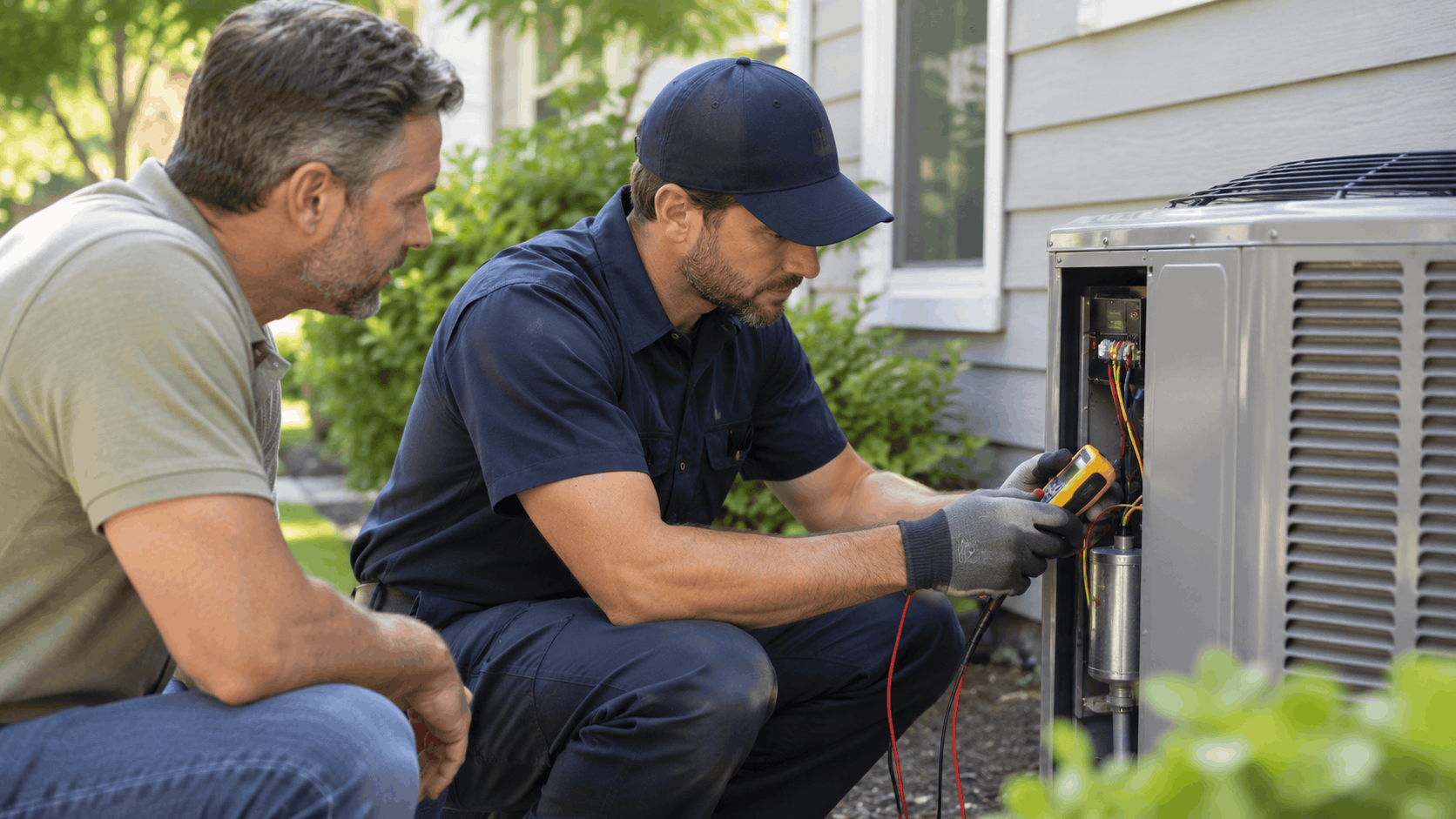
HVAC technician using multimeter to diagnose outdoor AC unit while homeowner watches

What You Get for Your Money at Each Level

Price is only half the comparison. What the money buys is the other half, and for an HVAC owner the goal is getting found on Google and in AI tools, not just a site that looks nice. A beautiful website that no one finds does not book jobs.

The real value sits in structure and content. Service pages, location pages, and clear tracking are what connect a website to local SEO and AI visibility. Here is what each piece does for an HVAC business.

Service Pages for AC, Furnace, Heat Pump, and Maintenance

A page per service helps both customers and search engines understand exactly what you do. When someone searches for furnace repair, a dedicated furnace page answers that search directly instead of burying the answer in a single catch-all page. Clarity helps the reader and the algorithm alike.

HVAC priorities call for pages covering AC, furnace, heat pump, and maintenance plans. Each one is a distinct service with its own pricing, its own questions, and its own season. Splitting them out lets each page go deep on what that specific customer needs to know.

These pages should carry your license number, which doubles as compliance and as a trust signal to customers checking that you are licensed. A well-built service page explains the work, sets rough expectations, and makes it easy for the visitor to take the next step.

The more specifically each page answers a real customer question, the more useful it is to searchers and to AI tools looking for something clear to cite. Thin, vague pages do little. Detailed, honest ones give both people and software something to work with.

Location Pages for the Areas You Serve

Most HVAC companies are service-area businesses that cover several towns rather than serving customers at a storefront. A page for each area served helps those customers see you work where they live, and it gives search engines a clear map of your coverage.

Service-area businesses follow some practical rules. They hide the home address when the business runs out of a house, and they generally stay within about two hours of driving from their base. A location page should match the real area you can actually reach and serve.

Each location page gives searchers and AI tools something specific to latch onto. A page about your work in a particular town reads as more relevant to someone in that town than a generic coverage list. Specificity is what makes these pages pull their weight.

Done well, location pages describe the real service you provide in each area without stuffing the same copy everywhere. They connect your business to the places your customers search from, which is exactly how a local company gets found.

Getting Found on Google and AI Tools

Local search results rest on three things: relevance, distance, and prominence. Google is clear that there is no way to request or pay for a better local ranking. A website supports relevance by giving Google detailed, accurate pages about your services and areas.

AI tools are part of the picture now. WebFX, in a July 2025 study of nearly 238,000 home services queries, found AI Overviews appeared on 17.7% of searches and on 41.1% of queries with seven or more words. Longer, more detailed questions are where AI answers show up most.

Those longer queries are often research questions about cost, process, and options. A website that answers them clearly gives AI tools something worth citing and gives searchers a reason to stay. Vague pages get skipped by both.

No honest provider can promise rankings or a spot in an AI answer. What a website does is give these systems clear, specific pages to work from, alongside your reviews and your Google profile. Those pieces together shape whether you get found, and time plays a part too.

Tracking Calls and Leads

Owners want to know whether the site is bringing in work, and tracking answers that. A simple setup counts the taps on your website's call button and the contact form submissions, then adds them together so you can see the monthly total at a glance.

That call figure is a count of button taps, not call tracking. No calls are recorded, and no caller phone numbers are stored. It tells you how many people tapped to call from your site, which is a useful signal of interest, without reaching into the call itself.

Form leads work alongside it. When someone fills out your contact form, that lead is captured so you can follow up. Seeing calls and form leads together gives a clear read on how much the website is prompting people to reach out.

This kind of tracking turns a website from a guess into something you can measure. You can watch the numbers move with the seasons, see whether a busy month shows up in the data, and judge the site on real activity rather than hope.

Why a Website Beats Relying on Facebook or Your Google Profile Alone

Some owners figure a Facebook Page or a free Google Business Profile is enough. Both are useful, but neither is a replacement for a website you own. The cost angle matters here: free is not really free if the account can disappear and take your presence with it.

A profile and a Page live on platforms someone else controls. A website on your own domain is yours. That difference between rented and owned shapes how much you can count on each one.

Rented Accounts Can Vanish

A Facebook Page or Google profile is rented space. The platform owns the account and sets the rules, and it can change those rules without asking you. You build on ground you do not control.

The Queensland Small Business Commissioner warned in June 2026 that Meta owns the platform and the account permissions. Accounts can be restricted for reasons outside a business's control. Its advice was direct: businesses should build their own website rather than depend only on a rented platform.

For an HVAC company, that risk is real. If a profile or Page gets restricted, the customers who found you there suddenly cannot. You have no say in the decision and limited ability to fix it quickly.

A website you own does not carry that single point of failure. The content is yours, hosted under your own domain, and it stays up on your terms. That is the core reason to make a website your home base and treat the rest as helpful extras.

Google Already Turned Off Its Free Websites

This is not a hypothetical. Google once built free websites from Business Profiles, and then it ended them. Search Engine Land reported in March 2024 that those free sites were no longer available as of March 5, 2024.

Visitors to those sites were redirected to the business profile until June 10, 2024. After that date, they were shown a page not found error. Any business relying on one of those free sites lost it on Google's schedule, not its own.

That is exactly the risk of building on a free tool you do not control. The provider can retire the product whenever it chooses, and your presence goes with it. There is nothing you can do to keep a tool running after its owner shuts it down.

The owners who had their own domain and website were unaffected. That is the point. Free tools can end, and when they do, only the people who own their own site are left standing.

What Customers Expect From an HVAC Company

Customers now expect a real company to have a website, and the numbers back that up. DreamHost's 2026 Local Business Trust Index, a November 2025 survey of 1,201 Americans, found 69% say a website is essential for a local business to be credible.

The same survey found 70% are more likely to do business with a company that has a website. For an HVAC owner inviting strangers into their home for a repair, that credibility matters. A missing website can plant a seed of doubt before you ever get the call.

AI recommendations tie back to websites too. DreamHost found only 35% would consider a business recommended by AI if it lacks a website. So even when an AI tool names you, the absence of a site can cost you the customer's confidence.

None of this means a Facebook Page is worthless. It means a website is the thing customers look for to decide you are real and worth calling. Skipping it to save a little money can quietly cost you the trust that books jobs.

Where AI Tools Pull Their Answers

AI tools do not invent their answers out of thin air. They pull from sources on the web, and websites are a leading one. Yext, studying 6.8 million citations from July to August 2025, found first-party websites were the largest single source of AI citations at 44%, with listings close behind at 42%.

A first-party website is your own site on your own domain. When AI tools cite sources, your website is the kind of source they reach for most often. Without one, you are leaning entirely on listings to carry you in AI answers.

That is a strong reason to own detailed pages about your services and areas. The clearer and more specific those pages are, the more there is for an AI tool to reference. A website gives these systems something concrete to cite about your business.

Your Google profile still plays a part, and owners add a link to their Google Business Profile from their site. The website and the profile work together, but the website is the owned piece that gives AI tools the richest material to pull from.

HVAC contractor showing customer different air conditioning system options on laptop screen

How to Pick the Right Level for Your HVAC Business

The right level comes down to three things: your budget, your time, and how you get work. There is no single best answer, only the best fit for your situation. Match honestly, and the decision gets simple.

Run yourself through the cases below. Each one points to a path based on what you have the most and least of, so you can choose without guessing or getting talked into more than you need.

If You Have Time but Little Budget

A hands-on owner with slow weeks and a tight budget can make DIY work. If you enjoy the building and have real time to give it, a builder lets you keep cash in your pocket while you learn the tool. For the right person, that is a fair trade.

Be honest about the hours, though. Writing service pages for AC, furnace, and heat pump work takes time, and keeping them current takes more. During busy AC season in July, those hours compete directly with answering the phone.

The low sticker price also grows once add-ons pile on. Apps at $3 to $20 a month, custom email at about $6 a month, and a domain that renews after year one all add to the base plan. The $17 figure rarely stays $17.

DIY fits the owner who has time now, in the slow months, and wants to do the work. If that is you, go in knowing the price is as much time as money. If your weeks are full, this is the path that costs the most where you can least afford it.

If You Want Full Custom and Have the Money

Larger or growing HVAC operations with the budget may want an agency. Custom work pays off most when the business is complex enough to need it, and when there is money set aside for a one-time build in the thousands.

Plan for the timeline. GoodFirms reports an average build of about two months for a basic site, and custom work with many pages can run longer. If you want the site before a busy season, start well ahead of it.

Budget for the ceiling, not just the floor. The GoodFirms range tops out at $15,000 for a simple 5 to 10 page site, and Clutch lists design shops at $100 to $149 an hour. Add ongoing maintenance of $250 to $1,000 a year on top of the build.

An agency fits a multi-truck shop or a company positioning for growth or a sale. If that describes you and the budget is there, full custom can be worth it. If you are a small shop, this is likely more than the job needs.

If You Want It Handled Without the Big Bill

Some owners want no editor, no learning curve, and no five-figure invoice. A flat monthly done-for-you option fits that owner. Someone else builds and maintains the site, and you pay a set amount each month instead of a large upfront sum.

A good monthly service includes the parts that otherwise become separate bills. That means hosting to keep the site online, SSL for the security padlock, and the service and location pages an HVAC company needs. Bundling them into one price makes the total easy to see.

This path spreads the cost to match how a seasonal business earns. Instead of saving up for a big build, you pay as you go, and the provider handles updates and the technical side. For a busy owner, that removes the two biggest DIY and agency headaches at once.

It fits contractors who would rather run their business than build a website or manage an agency relationship. The site gets handled, the monthly cost is predictable, and the owner stays focused on the work that pays.

Questions to Ask Before You Pay

Before you commit to any option, ask a few plain questions. Is there a contract, or can you leave when you want? A month-to-month arrangement carries far less risk than a locked-in term.

Add up the yearly costs, not just the headline price. What does the domain, hosting, SSL, and any apps or email come to over a full year? That total is the real number to compare across paths.

Ask who updates the site when your hours change or your license information needs correcting. On some options that is included; on others you pay for every edit. Also confirm the site includes a service page for each service and a location page for each area you serve.

Finally, ask whether you can see the site before you pay. Being able to preview the finished product removes the guesswork. A provider confident in the work will let you look first.

How Grow Local Gets Your HVAC Website Built

Grow Local is the done-for-you option for an HVAC owner weighing these costs. You type in your business information and pick a design, and Grow Local writes and launches the site for you. This is handled for you, not a do-it-yourself builder like Wix or Squarespace where the work lands back on your plate.

The site includes service pages for AC, furnace, heat pump, and maintenance plans, plus location pages for the areas you serve. Behind the scenes, Grow Local keeps improving the technical SEO and AI visibility of your site, and handles the hosting, SSL, and backups so you never have to think about them.

You connect your own domain by adding one DNS record, and Grow Local verifies it and sets up SSL automatically. From the dashboard, you can edit your services, hours, phone, photos, logo, and colors yourself, and add a link to your Google Business Profile. You can see call clicks and form leads in one place.

One plan runs $99 per month, with no contract. You can build free first to see your site before paying, and you can cancel anytime.

Real estate agent showing home listings on laptop to client at desk

How Grow Local Handles the Whole Thing for You

If the cost breakdown told you anything, it is that the sticker price is never the full story. The real question for a busy HVAC owner is who does the work and who keeps it running. Grow Local answers both by doing it for you.

You type in your business information and choose a design. Grow Local writes and launches the site, with service pages for AC, furnace, heat pump, and maintenance plans, and location pages for the areas you serve. There is no editor to learn and no copy to write yourself.

Behind the scenes, Grow Local keeps improving the technical SEO and AI visibility of your site, and handles hosting, SSL, and backups so you never have to think about them. You connect your own domain by adding one DNS record, and the rest is verified and secured automatically.

It is $99 per month, you can build free first to see your site before paying, and you can cancel anytime.

The Bottom Line on HVAC Website Costs

Three paths, three very different price tags. A do-it-yourself builder has the lowest sticker price but the highest time cost, and the hours land hardest during busy AC season. An agency build buys fully custom work for a thousand to fifteen thousand dollars, which fits larger operations more than small shops. A flat monthly done-for-you fee sits in between, spreading the cost and handling the work for you.

Whichever you pick, look past the first number to the yearly costs that keep charging: domain, hosting, SSL, apps, and the ongoing work of keeping your license number, hours, and seasonal pages current. Owning a website on your own domain matters too, since rented profiles and free tools can disappear on someone else's schedule.

Match the level to your budget, your time, and how you get work, ask the plain questions before you pay, and you will choose the right level for your HVAC business instead of the one that sounded cheapest at first glance.

Frequently Asked Questions

How much does an HVAC business website cost?

It depends on the path. A do-it-yourself builder runs roughly $50 to $500 a year per GoodFirms 2024. A simple agency build runs about $1,000 to $15,000 one time per GoodFirms February 2024. A done-for-you service charges a flat monthly fee instead. Whichever you choose, remember yearly costs like your domain and hosting keep charging after launch, so compare the full total, not just the first bill.

What yearly costs come with an HVAC website?

Several costs recur every year. A domain runs about $10 to $15 a year per GoodFirms 2024. SSL, the security padlock, runs $50 to $100 unless it comes free with hosting. Annual maintenance runs $250 to $1,000. Add any apps at $3 to $20 a month or custom email at about $6 a month. Some plans bundle these into one price, which makes the total easier to track.

Is a cheap DIY builder good enough for an HVAC company?

It can work if you have real time to write your service pages and keep them current. The catch is the hours, plus add-ons like apps, email, and a domain that renews after the first year, which push the low price higher. During busy AC season, those hours compete with the phone. Clutch's 2025 release found owners built only 8% of sites themselves, so most businesses hand the work off even when using a builder.

Why do agency quotes range from $1,000 to $15,000?

The swing comes from scope, the number of pages, and hourly rates. Clutch, updated September 2026, lists web design companies at about $100 to $149 an hour, and builder-based firms at $25 to $49 an hour. More pages and more custom design mean more hours and a higher total. Clutch's overall average of $38,105.39 is pulled up by large corporate projects and is not what a local HVAC site costs.

Do I need a website if I have a Google Business Profile?

The profile is free and genuinely useful, but it is rented space that Google controls. Google even ended its free Business Profile websites in March 2024 per Search Engine Land, which shows free tools can end on the provider's schedule. A website on your own domain is owned content you control, with detailed service and location pages. Owners add a link to their Google Business Profile, so the two work together.

What pages should an HVAC website have?

There is no magic number. Most HVAC companies do well with a home page, a page for each main service like AC, furnace, and heat pump, a maintenance plan page, an about page, a contact page, and a page for each area they serve. What matters is that each page answers a real customer question clearly. A separate page per service helps both customers and search engines understand exactly what you do and where.

Will a website help me get found on Google and in AI tools?

A good website can help, but nobody can honestly promise you will show up at the top. Google ranks local results mainly on relevance, distance, and prominence, and there is no way to pay for a better local ranking. Changes to your site can take anywhere from a few hours to several months to show up. What a website does is give search engines and AI tools clear, detailed pages to work from, alongside your reviews and your profile.

Can I see my website before I pay?

Yes. You can preview your Grow Local site for free before you pay anything, so you can check your pages and how your business is described without spending a cent. If you like it, the plan is $99 per month with no contract. If you do not, you have lost nothing. Keep in mind that a website on its own does not guarantee rankings or leads. It is one important piece alongside your Google profile and your reviews.

How fast can an HVAC website be built?

A live preview builds in real time while you answer the setup questions, so you see your site take shape as you go. After payment, the full site is generated automatically within a few minutes. Keep in mind that connecting your domain involves a DNS change that can take time to spread, and Google indexing and rankings take longer and vary. The build is quick; getting fully found online takes more time.

Can I cancel if it does not work out?

Yes. There is no contract, and you can cancel anytime from your own dashboard. The cancellation takes effect at the end of your current billing period, and the dashboard shows the date your subscription is set to end. Your site stays up until the end of the paid month, and your content is kept for 90 days. That means you are never locked in and can step away whenever you choose.

Grow Local Team

Written by Grow Local Team

Editorial

Grow Local helps local service businesses build SEO-ready sites and grow online.

Ready to improve your local visibility?

Get started now and discover local opportunities you're missing.

Build Your Website Free

No commitment, cancel anytime