Back to blog
Tips & Advice

Why Every Neighborhood You Serve Deserves Its Own Page

August 13, 202628 min read
Why Every Neighborhood You Serve Deserves Its Own Page

Key Takeaways

  • 1Customers search by their own neighborhood name, so a single citywide list page misses most local searches.
  • 2A generic 'areas we serve' page is thin content that competes against itself and cannot hold local proof.
  • 3Dedicated neighborhood pages build trust by naming real streets, local problems, nearby jobs, and area rules.
  • 4Separate pages give search engines a clean target and more chances to rank for long-tail local terms.
  • 5Each page needs a specific headline, real local details, photos, reviews, and clear contact info.
  • 6Avoid copy-paste pages by varying streets, problems, and examples so every page stays unique.
  • 7Grow Local makes building and updating neighborhood pages fast with a local-ready structure and AI drafting.

A landscaper we know covers five parts of town. The Highlands, Elm Street, the neighborhoods along Willow Creek, the newer subdivisions near Oakmont, and the older blocks downtown. His website had one page called "Areas We Serve" with all five names listed in a row.

The problem showed up in his call log. People in Oakmont were hiring the company across the street, even though his crew drove past their homes every week. When someone in Oakmont searched for help, they typed "lawn care Oakmont," not the whole city name. His single list page did not match that search well enough to show up.

People searching for local help almost always type their own neighborhood name. This article breaks down why a dedicated page for each area helps a business show up in more searches, earn trust with residents, and win work in every corner of a city. We will cover how customers really search, what a generic list page misses, and how to build these pages without hiring a developer.

How People Actually Search for Local Businesses?

The way people search shapes the pages a business needs. Nobody types the way a business owner thinks. Owners think in terms of their whole city. Customers think in terms of their street, their block, and the park down the road.

Once a business understands this gap, the fix becomes obvious. Local search rewards pages that match the exact words and location a searcher uses. Below is a look at how these searches break down.

What the owner expectsWhat the customer typesSearch intent
plumber in the cityplumber near Highlandswants someone close, fast
roofer citywideroof repair Elm Street areawants proof of nearby work
lawn care companylawn service Oakmont subdivisionwants a crew that knows the area
electricianelectrician near Willow Creekwants a local, trusted name

People Search by Their Own Neighborhood, Not the Whole City

Someone standing in the Highlands does not think of themselves as living in the city as a whole. They think of themselves as living in the Highlands. So when their water heater fails, they search "plumber near Highlands" or "plumber Highlands neighborhood."

The same thing happens on Elm Street and in every subdivision near Oakmont. A resident types the neighborhood name they use every day. That neighborhood name carries real weight in local search because it tells Google exactly where the person is and what they want.

These near me searches have grown for years as phones got better at knowing location. People trust results that name their own area back to them. A page that only lists the whole city feels distant, while a page built around their neighborhood feels like it was made for them.

This is why neighborhood keywords matter so much. They mirror the language customers already use. When a business matches that language on a real page, it earns a spot in results that a generic city page cannot reach.

Why 'Near Me' Searches Reward Specific Pages

When someone types "near me," Google fills in the blank with their actual location. It looks at where the phone is and tries to match that spot with the most fitting page it can find. A page focused on one neighborhood gives Google a strong, clear match.

Geo targeting works best when the signals line up. If a resident in Oakmont searches and a business has a real Oakmont page with local details, that page has a much better chance of showing up. A single list of twenty area names spreads the signal too thin.

Think about two competing sites. One has a dedicated page for each area it serves. The other has one page that mentions every neighborhood in a paragraph. Google reads the first as a clear answer and the second as a vague one.

The lesson is simple. Specific pages win near me searches because they give search engines a clean, confident match between what the person wants and where they are.

The Questions Customers Ask Before They Call

Before anyone picks up the phone, they run through a short list of worries. "Do they even cover my street?" "Have they worked in my area before?" "Will they charge extra to drive out to me?" These customer questions decide who gets the call.

A generic service area list rarely answers them. It shows a name in a row of names, nothing more. A resident on Elm Street cannot tell whether the business truly works there or just added the name to look bigger.

A dedicated page answers each question head on. It can say the crew works Elm Street and the blocks around it every week. It can name the nearest park, mention a recent job two streets over, and confirm there is no travel fee for that area.

When a page answers the exact questions in a customer's head, it removes doubt. That trust often decides the sale before a single word is spoken on the phone.

How AI Assistants Pull Neighborhood Answers

More people now ask AI chat tools for help finding a local business. They type something like "who does drywall repair near the Highlands" and expect a clear name in return. These tools pull from pages that give plain, location-specific answers.

AI search rewards clarity. When a page clearly states the service and the neighborhood in plain language, an assistant can quote it with confidence. A vague citywide page gives the tool nothing solid to repeat.

This is where writing for both Google and AI pays off. Technical terms help the crawler, while plain sentences help the assistant explain the answer to a person. A good neighborhood page does both at once.

Businesses that publish clear local answers get mentioned more often in these new tools. As AI assistants shape more buying choices, specific pages become the source these tools trust for local answers.
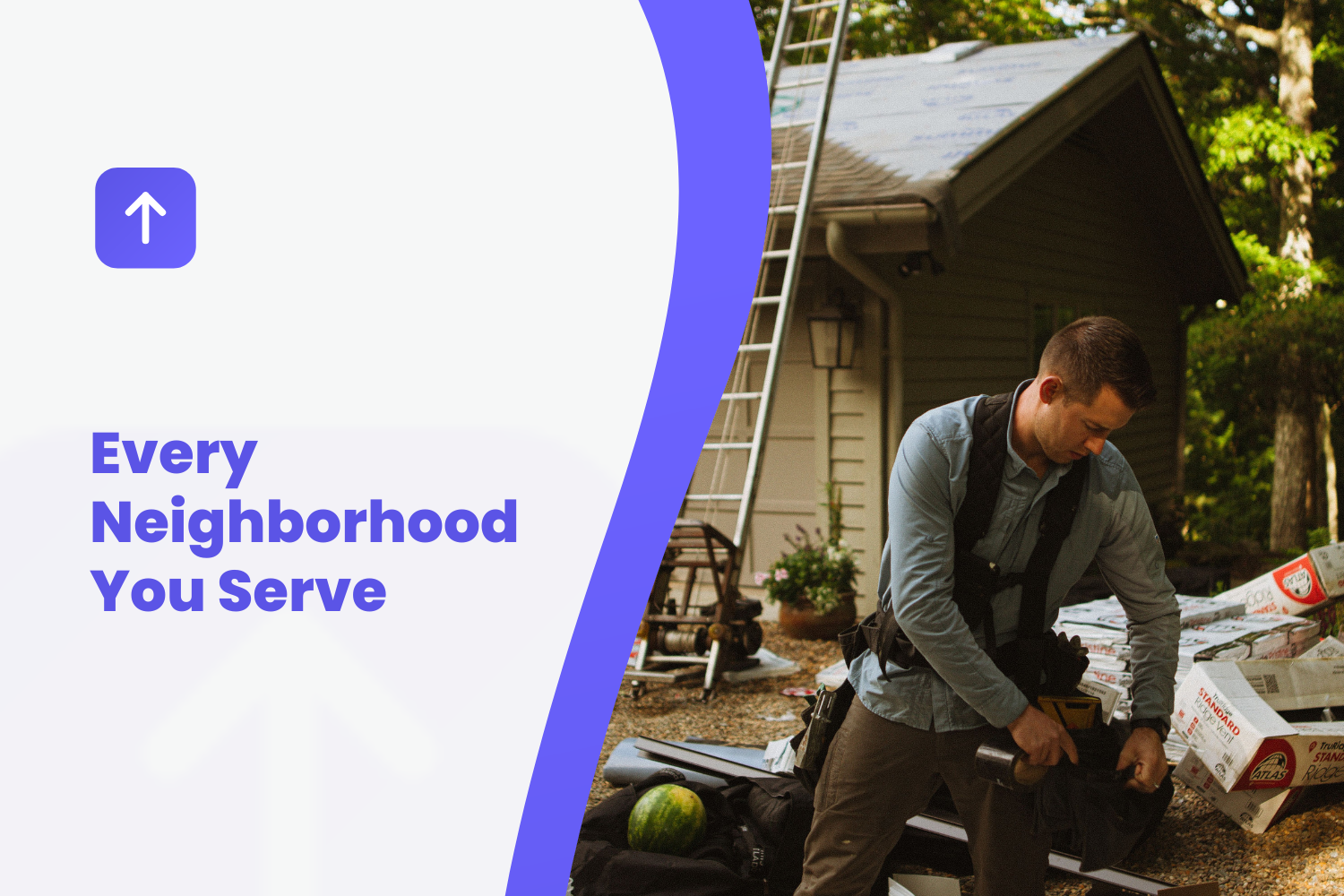
What One Generic 'Areas We Serve' Page Misses

The single "areas we serve" page feels efficient. One page, every neighborhood, done. In practice it leaves a lot of work on the table and gives up ranking chances a business has already earned.

Cramming every area into one service area page creates thin content and mixed signals. Below are the main weaknesses of that approach and why they cost real leads.

A List of Names Does Not Rank

A page that lists twenty neighborhoods with no real detail is thin content. It has the names but none of the substance search engines look for. There is nothing to read, nothing to learn, and nothing that proves real knowledge of any area.

Google ranks pages that answer a searcher's need in depth. A row of names does not do that. It cannot explain the drainage problems near Willow Creek or the older wiring in downtown homes because it has no room for any of it.

So the page sits low in results while competitors with real neighborhood pages climb past it. The business may serve those areas well in real life, yet the website fails to show it. That gap between real work and online proof costs leads every week.

Ranking comes from matching intent with useful content. A list of names matches almost nothing, which is why these pages rarely compete for the searches that matter.

Generic Copy Feels Like It Applies to Nobody

Vague citywide language tries to speak to everyone and ends up speaking to no one. A line like "we proudly serve the entire metro area" gives a resident in Oakmont no reason to feel understood. It is generic content that any competitor could copy word for word.

Trust grows from specifics. When a page names the streets, the parks, and the common problems of one area, a reader feels seen. When it stays broad and fuzzy, the reader shrugs and keeps scrolling.

People hire businesses that seem to know their exact spot. A homeowner near Elm Street wants to read about Elm Street, not the whole city. Generic copy cannot deliver that, so it leaves trust on the table.

This is the quiet cost of a single list page. It may look complete, but it fails to reassure the one person reading it right now.

You Compete Against Yourself for Every Term

When one page tries to rank for twenty neighborhoods, it dilutes its own focus. Google struggles to tell what the page is truly about. This is keyword cannibalization, where a single page waters down its own relevance for every area it names.

Page focus matters more than page count in this case. A tightly focused page about one neighborhood sends a strong signal. A page split across many areas sends a weak one for each.

The result is a page that ranks poorly for everything instead of well for one thing. The business loses ground in every neighborhood at once. Splitting into separate pages fixes this by giving each area its own clear target.

Focus wins in local search. One page, one area, one clear message beats a scattered list trying to be everything to everyone.

No Room to Show Local Proof

Local proof closes deals. Job photos, reviews from nearby homeowners, and details about specific work all build confidence. A single list page has no room to hold that proof for every area.

Imagine trying to fit reviews from ten neighborhoods on one page. It becomes a jumble that helps no one. A resident near Willow Creek cannot easily find proof of work in their own area buried in that pile.

Dedicated pages solve this cleanly. Each page can feature its own photos, its own reviews, and its own recent jobs. A homeowner sees proof from their exact area and feels far more comfortable calling.

Without room for local proof, a page asks people to trust on faith alone. Separate pages let a business show, not just tell, that it works in each neighborhood.

How a Dedicated Neighborhood Page Builds Trust

Local trust is the difference between a call and a scroll. A specific page makes a resident feel the business knows their exact area. That feeling turns a stranger into a lead.

A strong neighborhood page builds credibility in ways a list page never can. Here is how the details add up:

  • It names real streets and landmarks the resident recognizes.
  • It speaks to problems common in that exact area.
  • It shows nearby jobs and reviews from close by.
  • It mentions the local rules and providers that govern the area.

Showing You Know the Streets and Landmarks

Naming real streets and landmarks proves genuine familiarity fast. When a page mentions the park at the end of Elm Street or the route drivers take through the Highlands, a reader knows the business has been there. That recognition builds instant trust.

Landmarks act like a handshake. They tell the reader, "we know your area, not just your zip code." A page that names the creek crossing near Willow Creek or the hill up to Oakmont speaks the resident's own language.

You can add depth on a dedicated locations page that spells out the streets and landmarks for each area. This kind of detail is impossible to fake with a generic list. It signals that the crew drives these roads and works these blocks.

When residents see their own streets on the page, doubt drops. They stop wondering if the business is local and start thinking about booking the job.

Addressing Problems Common to That Area

Every neighborhood has its own quirks. Older homes near downtown often hide outdated wiring and worn pipes. Properties along Willow Creek deal with drainage issues after heavy rain. These local conditions differ block by block.

A page that names these common problems shows real experience. A homeowner in an older district reads about the exact issue in their walls and thinks, "they get it." That kind of recognition is hard to earn and easy to lose.

Generic pages cannot do this. They talk about the whole city, so they miss the drainage line near the creek and the aging panels downtown. Specific pages meet each resident where they actually live.

Speaking to local problems turns a page into helpful advice. It teaches the reader something true about their home while proving the business has handled it before.

Featuring Nearby Jobs and Reviews

People feel safer hiring a business that has worked two streets over. A review from a neighbor on the same block carries more weight than a five star average from across town. These case studies and local reviews do the selling for you.

A dedicated page can feature the exact jobs done in that area. A photo of a repaired roof three houses down speaks louder than any slogan. Local reviews put a familiar name and street next to the praise.

This nearby proof answers the quiet worry every customer has. "Have they really worked around here?" Yes, and here is the job, the photo, and the neighbor who left the review.

Adding fresh job photos to each area page keeps the proof current and specific. That local evidence often tips a careful homeowner from thinking about it to picking up the phone.

Talking About Local Rules and Providers

Every area answers to different rules. One neighborhood falls under a specific water district. Another sits inside an HOA community with its own approval process. A third deals with a particular building department for permits.

Mentioning the right building department, HOA, or utility providers proves deep local knowledge. It tells the reader the business has pulled permits here and worked within these rules before. That saves the homeowner worry about surprises later.

A page can note which water district serves the area or which HOA governs approvals near Oakmont. These details are small but powerful. They show the business handles the paperwork side, not just the labor.

Knowing the local rules sets a business apart from out of town competitors. It signals that the crew works these neighborhoods often enough to know exactly who to call and what to file.

The Local SEO Case for Separate Pages

Beyond trust, separate pages carry real ranking power. Each neighborhood page gives search engines a clean, indexable target. That structure lines up with how local SEO actually works.

Here is the ranking case for giving each area its own page:

  • Each page holds one clear topic Google can read easily.
  • More pages create more chances to rank for local terms.
  • Internal links tie the pages together for users and crawlers.
  • Local schema and map signals confirm which area each page serves.

One Page, One Clear Topic

A focused page tells search engines exactly what area it covers. When a page is about roof repair in the Highlands and nothing else, its topical focus is sharp. Google reads that page as a strong answer for Highlands roof searches.

Relevance grows from focus. A page split across ten areas confuses the topic. A page built around one area sends a clean signal that lifts its ranking for that area's searches.

This clarity helps both search engines and readers. Visitors land on a page about their exact area and stay. That engagement feeds back into rankings as a sign the page answered the need.

One page, one topic is the simplest rule in local SEO. It works because it removes the guesswork for Google and the reader alike.

More Pages, More Chances to Rank

Each neighborhood page can rank for its own set of terms. A Highlands page targets Highlands searches. An Oakmont page targets Oakmont searches. Together they cover far more ground than one page ever could.

These long-tail keywords add up. "Lawn care Oakmont subdivision" and "drainage repair Willow Creek" are exactly the phrases residents type. Separate pages let a business match each one directly.

Search visibility grows with each well built page. A single list page competes for a handful of terms. A set of neighborhood pages competes for dozens, each aimed at a real search a customer makes.

Setting up a clean services structure alongside these pages helps a business capture more of these local searches. More focused pages mean more doors into the site from Google.

Internal Links That Guide Google and Visitors

Internal linking ties the whole site together. When a neighborhood page links to a service page, and the service page links back, both users and crawlers follow the path. This site structure helps Google understand how the pages relate.

Good internal links spread ranking strength across pages. A strong service page can pass value to a newer neighborhood page through a simple link. That gives the new page a head start in search.

Visitors benefit too. Someone on the Highlands page who wants details on a specific service can click straight to it. That smooth path keeps people on the site and moving toward a call.

A clear set of features for building this structure makes internal linking simple to manage. Well planned links turn a pile of pages into a connected, easy to crawl site.

Local Schema and Map Signals

Structured data reinforces which area each page serves. Local schema markup tells search engines the business type, service area, and contact details in a language they read cleanly. This backs up the words on the page with clear signals.

Map pack placement often decides who gets the call. Location signals, consistent details, and schema all feed into that map ranking. Neighborhood pages with clear area signals strengthen the whole profile.

You can read more about how local business structured data works from Google's own guidance. Adding it correctly helps each page describe its area in a way search engines trust.

Together, schema and map signals turn a good page into a well understood one. They confirm the story the page already tells about the neighborhood it serves.

What Belongs on Every Neighborhood Page

A neighborhood page needs the right content to work. Skip the local details and it becomes another thin page. Include them and it earns trust and rankings at once.

Here is a practical checklist for the local content each dedicated page should carry. Follow it and each page will pull real weight.

A Headline That Names the Area and the Service

The headline should combine the neighborhood and what the business does. Something like "Roof Repair in the Highlands" tells the reader and Google the topic in one glance. This page title does double duty for people and search engines.

The H1 at the top of the page should carry this same clear message. A vague title like "Our Services" wastes the strongest spot on the page. A specific one grabs the exact search a resident types.

Clarity in the headline sets the tone for the whole page. A reader who sees their neighborhood named up top knows they are in the right place. They keep reading instead of bouncing back to search results.

A strong, specific title is the first step to a page that ranks and converts. It anchors everything that follows.

Local Details Only a Local Would Know

Local details separate a real page from a template. Name the streets, the parks, and the routes. Mention the seasonal issues, like drainage near Willow Creek after spring storms or ice on the hill up to Oakmont in winter.

These area-specific challenges prove real knowledge. A page that notes older homes downtown often need panel upgrades speaks to a true local problem. That detail teaches the reader and builds trust at the same time.

You can gather these facts from real jobs and add them to your business info so each page reflects genuine experience. Seasonal notes keep the content useful year round.

Local details are what make a page worth reading. They turn a service description into advice that fits the reader's exact home and neighborhood.

Photos, Reviews, and Recent Jobs

Real images and testimonials from that area boost confidence. A photo of a finished job on a nearby street proves the work is real. Photos beat stock images every time because they show actual results in the reader's own area.

Reviews from that neighborhood carry extra weight. A testimonial that names a street two blocks away tells the reader their neighbor trusted this crew. That social proof answers the biggest question a customer has.

Recent jobs keep the page feeling active and current. A note about a project finished last month shows the business is working the area now, not years ago. Fresh proof reads as reliable proof.

Together, photos, reviews, and recent jobs turn a page from a claim into evidence. They give a cautious homeowner every reason to call.

A Clear Way to Get in Touch

A page that builds trust must make contact easy. Put a phone number, a form, and a clear service promise where residents can find them. A strong call to action removes the last bit of friction before a call.

The contact details should sit near the top and repeat at the bottom. A reader ready to call should not hunt for the number. A form gives those who prefer typing an easy path too.

Tracking those calls and form fills through leads analytics shows which neighborhood pages bring in real work. That data helps a business focus on the areas that perform.

A clear contact section turns interest into action. When the trust is built and the number is right there, the call comes easily.

How to Avoid Duplicate or Thin Pages

Neighborhood pages only work when each one is real. Copy the same text into every page and the whole effort backfires. Keeping each page unique is what makes the strategy pay off.

Duplicate content and thin pages hurt rankings instead of helping them. Here is how to keep each page useful and distinct.

Why Copy-Paste Pages Backfire

Identical pages with only the name swapped can hurt rankings. Search engines call these doorway pages, and they can trigger penalties. Google wants real pages for real areas, not clones built to game the map.

Copy-paste pages also fail the reader. A homeowner who visits two of your pages and sees the same words with a different name loses trust. It looks lazy, and it undoes the local feel the pages are meant to create.

The risk is real and worth avoiding. Google's own search guidance">search essentials warns against thin, duplicated content built only for search engines. Pages must serve people first.

Cutting corners here defeats the purpose. The goal is genuine local pages, and clones deliver the opposite of that.

Making Each Page Genuinely Different

Unique content comes from real variation. Change the streets, the problems, the photos, and the examples for each area. A page for Willow Creek should talk about drainage, while a downtown page talks about older wiring.

Draw from actual jobs to fill each page. The work you did in Oakmont differs from the work near the Highlands, so the pages should reflect that. Real experience is the easiest source of unique detail.

Vary the reviews and the local notes too. Each page should feel written for its own neighborhood, because it was. That variation keeps every page distinct in the eyes of Google and readers.

Genuine difference is the core of a working neighborhood strategy. When each page tells its own true story, none of them read as duplicates.

Deciding Which Neighborhoods Get a Page

Not every area deserves its own page. Choose the neighborhoods where the business has real work, real demand, or real knowledge. A page for an area you have never worked is hard to fill with honest detail.

Prioritization keeps the effort focused. Start with the areas that already send calls, like the Highlands or Oakmont. Add pages for spots where demand is growing and the crew has recent jobs to show.

Building a page for a random distant suburb with no work there wastes time. There is nothing true to say and nothing to prove. The service area should match reality, not wishful thinking.

Smart choices here mean every page has substance. Focus on the neighborhoods you truly serve and each page will carry weight.

Keeping Pages Fresh Over Time

Pages need updates to stay useful. Add new jobs as you finish them. Drop in seasonal notes, like winter ice warnings or spring drainage tips. Mention local developments, like a new subdivision going up near Oakmont.

Content updates signal freshness to search engines. A page that changes with new proof and current notes reads as active. A page frozen for three years starts to slip in results.

Freshness also serves readers. A homeowner who sees a job from last month trusts the page more than one showing work from years back. Current content proves the business still works the area.

Regular updates keep neighborhood pages strong. A few minutes to add a job or a seasonal note keeps each page ranking and relevant.

Building and Managing These Pages Without the Headache

The idea of building a page for every neighborhood can sound like a lot. With the right tools, it is fast and simple. This is where Grow Local makes the work easy for a busy owner.

A site built for local businesses handles the structure, the drafting, and the updates without a developer. Here is how it comes together.

Starting With a Local-Ready Site Structure

A site built for local SEO makes adding neighborhood pages simple from the start. The structure already knows how service pages and area pages connect. That foundation saves hours of setup.

With Grow Local, the site structure is ready for neighborhoods out of the box. Adding a new area page fits the existing pattern instead of breaking it. The internal links and layout follow along automatically.

A clean structure also helps Google crawl the site. When pages connect in a logical way, search engines index them faster. That local ready base gives every new page a strong start.

Starting with the right structure removes the biggest hurdle. The framework is set, so the owner can focus on the local details that matter.

Letting AI Draft the First Version

An AI website builder can create a solid starting draft. Instead of facing a blank page, the owner gets a first version to shape. That draft covers the layout, the sections, and a base of content.

The owner then personalizes it with real local details. They add the streets, the recent jobs, and the reviews only they know. The AI handles the heavy lifting of content drafting while the owner adds the truth.

This mix works well. The AI moves fast, and the human adds the genuine local knowledge that makes a page unique. Together they produce pages that read real and rank well.

Drafting with AI turns a slow chore into a quick task. The owner spends time on what only they can add, not on staring at an empty screen.

Fast Pages That Load and Rank

Page speed keeps visitors and supports rankings. A page that loads fast holds the reader's attention. A slow page loses people before they see the local proof.

Sites built with Grow Local focus on performance across every page. Whether a visitor lands on the Highlands page or the Oakmont page, it loads quickly. That speed helps every neighborhood page compete.

Google factors load time into rankings, so speed pays off twice. Fast pages rank better and convert better. That is a strong return for a simple technical foundation.

Performance is not an afterthought here. Quick pages across the whole site keep both readers and search engines happy.

Updating One Page or Many in Minutes

Simple management lets owners add or edit neighborhood pages without a developer. Add a new job to one page or update seasonal notes across several. The dashboard makes easy editing a few clicks away.

No waiting on a web team. When the crew finishes a job near Willow Creek, the owner can add the photo that day. That speed keeps every page fresh without extra cost.

Managing many pages stays simple even as the count grows. Whether a business has three area pages or fifteen, the site management tools handle them the same easy way.

Fast, self serve updates keep the strategy alive long term. The pages stay current because keeping them current takes minutes, not meetings.

Final Thoughts

People search by their own neighborhood, not the whole city. A single "areas we serve" list misses those searches and the trust that comes with local detail. Separate pages fix both problems at once.

Each dedicated page names real streets, speaks to local problems, shows nearby proof, and gives search engines a clean target. Done well, these pages help a business show up and win work in every corner of a city.

Grow Local makes building and managing these pages fast, even without a developer. Start your local ready site at growlocal.build and give every neighborhood you serve the page it deserves.

Frequently Asked Questions

What is a neighborhood page?

A neighborhood page is a dedicated web page built around a single area a business serves. Instead of listing many areas in one place, it focuses on one neighborhood with real local detail. It names streets, common problems, nearby jobs, and reviews from that spot. This focus helps the page rank for local searches and reassures residents that the business truly works in their area.

How many neighborhood pages should a business have?

It depends on the real service areas where the business does actual work. Start with the neighborhoods that already send calls and where the crew has recent jobs. A business might have three pages or fifteen, based on genuine demand and knowledge. Avoid building pages for areas you never serve, since there is nothing true to say. Let real work guide the service area count.

Will separate pages count as duplicate content?

Separate pages only risk duplicate content problems if the text is near-identical across them. Swapping just the neighborhood name and keeping everything else the same can hurt rankings. Keep each page unique by varying the streets, local problems, photos, and reviews. Draw from real jobs in each area so every page tells its own true story. Genuine variation keeps each page safe and useful.

Do neighborhood pages really help with Google rankings?

Yes. Focused local pages give a business more chances to match specific searches. Each page targets its own neighborhood and service terms, so together they cover far more ground than one list page. A page about one area sends a clear signal to Google, which lifts its ranking for that area. This focused approach is a proven part of local SEO.

What should go on each page?

Each page should include a headline naming the area and service, local details only a local would know, and real photos, reviews, and recent jobs. Add the streets, seasonal issues, and area-specific problems. Mention the local rules and providers that govern the area. Finish with clear contact details, a phone number, a form, and a service promise. This page content builds trust and rankings together.

Can a business rank for an area without a physical address there?

Yes. A service-area business can target nearby neighborhoods honestly even without an office there. The pages should reflect real work done in those areas, with genuine photos and reviews. Focus on neighborhoods the crew actually serves and can speak about with real detail. Never claim work in areas you have not touched. Honest, specific pages help service-area businesses rank without a local address.

How long does it take to see results?

Indexing can happen within days to a few weeks after a page goes live. Ranking movement usually takes longer, often a few months, depending on competition and how strong the page is. Fresh, detailed pages with real local proof tend to climb faster. Keep the pages updated with new jobs and seasonal notes to build momentum. Patience and consistency drive the best SEO timeframe results.

How often should neighborhood pages be updated?

Update pages whenever you have something new to add. Drop in fresh jobs and photos as the crew finishes work in each area. Add seasonal notes, like winter ice warnings or spring drainage tips. Mention local changes, such as new subdivisions or developments. Even a few small content updates each season keep pages fresh for readers and search engines alike.

Do I need a developer to build these pages?

No. An AI-powered website builder lets owners create pages without coding. With Grow Local, the site structure is ready for neighborhoods, and AI drafts a first version to personalize. Owners add real local details, photos, and reviews themselves. Editing and adding pages takes a few clicks, not a call to a web team. The whole process stays simple for a busy business owner.

What if two neighborhoods have very similar needs?

If two areas have nearly identical needs and low search demand, combining them into one page can make sense. But if each name draws real searches, keep them separate to capture both. Base the choice on search demand and whether you have distinct local proof for each. When in doubt, separate pages usually win more searches. Combining areas works best only when demand is thin.

Grow Local Team

Written by Grow Local Team

Editorial

Grow Local helps local service businesses build SEO-ready sites and grow online.

Ready to improve your local visibility?

Get started now and discover local opportunities you're missing.

Get Started Now

No commitment, cancel anytime