Back to blog
Tips & Advice

Best Electrician Website Builder: Complete Comparison

June 4, 202629 min read
Best Electrician Website Builder: Complete Comparison

Key Takeaways

  • 1Electricians lose jobs daily to competitors with professional websites - a social media page or directory listing is not enough to compete in local search.
  • 2The most important website builder feature for electricians is built-in local SEO with automatic service area pages, schema markup, and Google Business Profile integration.
  • 3Grow Local scores 90-98 on PageSpeed Insights and generates electrician-specific pages with AI, making it the strongest option for local trades at $30-75/month.
  • 4Wix and Squarespace are easy to use but lack the local SEO tools electricians need to rank in map packs and neighborhood-level searches.
  • 5WordPress is powerful but demands ongoing plugin updates, security management, and technical know-how that most electricians do not have time for.
  • 6Lead-gen platforms like Angi cost $15-75 per lead with no long-term value, while a well-built website generates free organic traffic month after month.
  • 7Service area pages need unique, neighborhood-specific content - not the same text with city names swapped - to rank and build trust with local homeowners.
  • 8Solo electricians should prioritize speed and simplicity, while growing companies covering multiple cities need a platform that scales without adding maintenance burden.

Imagine this: a licensed electrician with 15 years of experience, a truck full of tools, and a phone that rings thanks to word-of-mouth referrals. But when a homeowner in a new subdivision searches "electrician near me" on a Saturday morning with a tripped breaker, that electrician is nowhere to be found. Instead, the job goes to a competitor with a clean website, five-star reviews front and center, and a click-to-call button that makes booking effortless.

This scenario plays out every day in cities and towns across the country. A strong online presence for electricians is no longer optional - it is how new customers decide who to trust with their home's electrical system. The question is not whether an electrician needs a website, but which platform will get it done right without eating up nights and weekends.

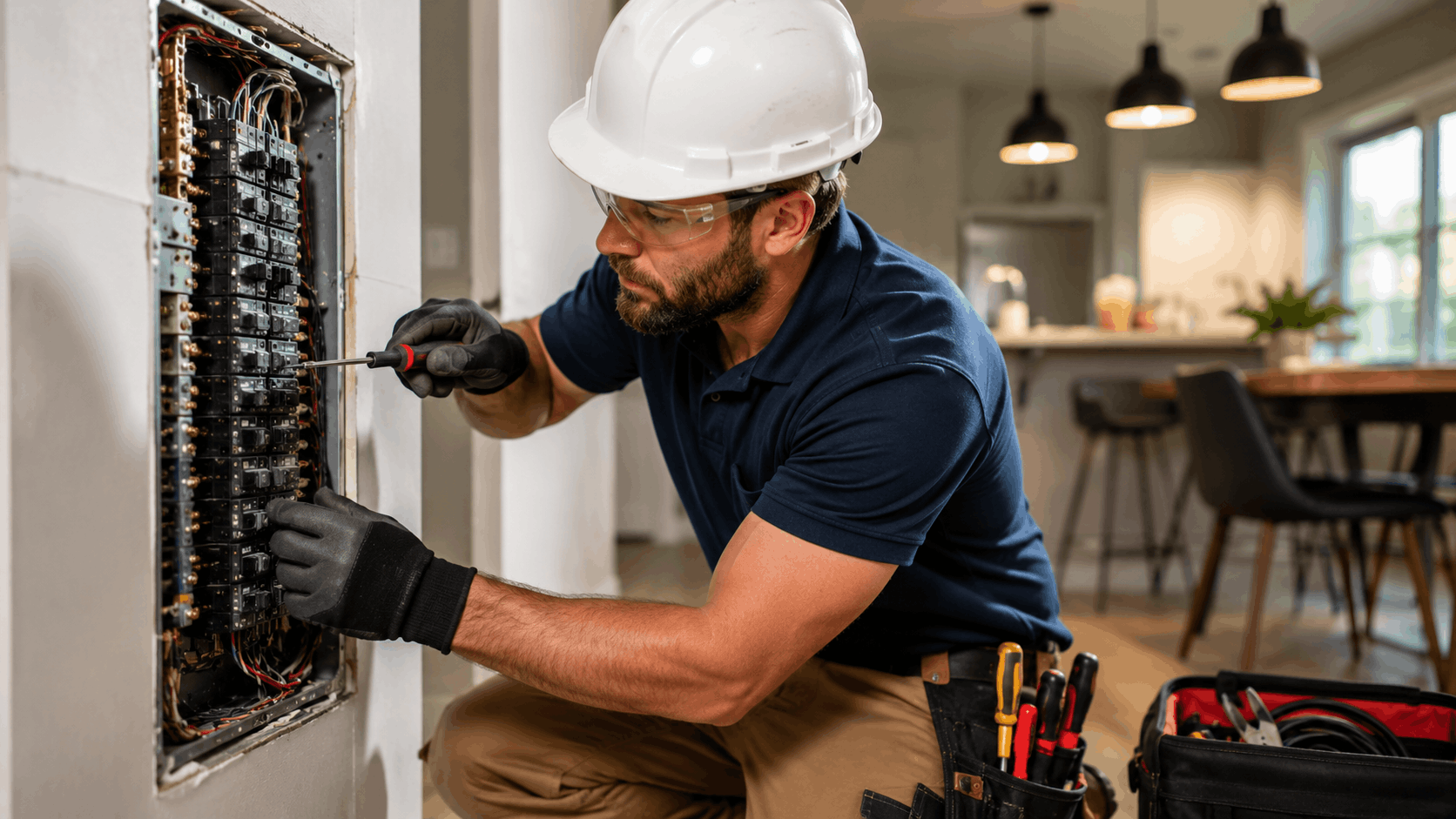
Licensed electrician working on residential electrical panel breaker box in modern home

Why Electricians Need a Purpose-Built Website in the First Place

A Facebook page or a listing on Yelp might seem like enough. After all, people can find the phone number and see a few reviews. But here is what those platforms cannot do: rank the electrician for specific services in specific neighborhoods, present a professional image the electrician controls, or generate leads without paying per click.

Homeowners searching for electrical help have specific expectations. They want to see the services offered - panel upgrades, EV charger installation, whole-home rewiring. They want to confirm the electrician is licensed and insured. They want to read reviews from other homeowners in their area. And they want to request a quote or call immediately.

What Homeowners Look ForSocial Media PageDirectory ListingProfessional Electrician Website
Detailed service descriptionsLimitedNoYes
Service area informationLimitedBasicDetailed with local pages
License and insurance infoRarelySometimesYes
Customer reviewsSomeYesYes, with full control
Click-to-call / quote requestLimitedBasicProminent and customizable
Before-and-after photosPossibleNoYes, with gallery pages
Local search ranking potentialLowMediumHigh

How Homeowners Actually Search for an Electrician

The path from "I have an electrical problem" to "I just booked someone" is shorter than most people think. A homeowner notices flickering lights or needs an outlet added in their garage. They grab their phone and type "electrician near me" or "electrical panel upgrade [city name]." Google serves up a map pack with three local businesses, followed by organic search results.

According to a BrightLocal consumer survey, 87% of consumers read online reviews for local businesses, and a large percentage will skip a business entirely if it has no website. The local search behavior pattern is clear: search, scan the map pack, check websites, read reviews, and call the one that looks most professional and trustworthy.

A dedicated electrician website acts as the digital handshake. It tells the homeowner, "We are real, we are licensed, we serve your neighborhood, and here is how to reach us right now." Without that, the electrician is invisible to anyone outside their existing referral network.

The Real Cost of Not Having Your Own Site

Many electricians rely on platforms like Angi (formerly Angie's List) or Thumbtack for lead generation for electricians. These platforms work - they deliver phone calls and job requests. But they come at a steep recurring cost. Angi leads can run $15 to $75 each depending on the service type and location. Thumbtack charges similarly, and the electrician is competing against several other pros for every single lead.

Over a year, an electrician spending $500/month on lead-gen platforms is paying $6,000 - and the moment they stop paying, the leads stop coming. That money buys zero long-term assets. Compare that to a website generating organic traffic. A well-built site with strong service area pages can pull in calls from Google search month after month without a per-lead fee.

The math gets even clearer for electricians in competitive markets. A site that brings in just five organic leads per month at an average job value of $400 is generating $2,000/month in revenue - from an asset the electrician owns outright.

What a Good Electrician Website Should Include

Not every electrician website needs to be fancy. But it does need the right pages and elements to convert visitors into callers. Here are the must-haves for electrician website pages:

  • Service pages - Individual pages for each specialty: panel upgrades, EV charger installs, rewiring, lighting installation, outlet and switch repair, generator installation, and code compliance inspections.
  • Service area pages - Separate pages for each city or neighborhood served, with content specific to that area. A page targeting "electrician in Riverside Heights" is far more useful than a generic "we serve the metro area" line.
  • License and insurance information - Displayed prominently, ideally on the homepage and About page. Homeowners in older neighborhoods near downtown or historic districts often require permitted work, and seeing credentials up front builds confidence.
  • Click-to-call buttons - On every page, especially mobile. If a homeowner on Elm Street has a power outage at 9 PM, tapping one button to call should be all it takes.
  • Before-and-after project photos - Swapped-out Federal Pacific panels, new 200-amp service installations, and finished EV charger setups in garages all tell a visual story that words cannot.
  • Reviews and testimonials - Pulled from Google or displayed as written quotes from real customers.
  • Contact page with a quote request form - Simple, short, and connected to the electrician's email or CRM.

What to Look for in a Website Builder as an Electrician

Choosing a website builder is not the same for an electrician as it is for a photographer or a restaurant. Electricians run service-area businesses - they go to the customer's location rather than operating from a storefront. That changes which website builder features matter most.

Here is what to prioritize when comparing platforms for a service area business website:

  • Local SEO tools built in - not just a blog editor and a meta title field
  • Ability to create service area pages - one for each city, town, or neighborhood
  • Fast page load times - especially on mobile devices
  • Simple setup and maintenance - minimal ongoing work required
  • Professional templates - designed for trades or service businesses, not generic portfolios
  • Click-to-call and lead capture - built into the design, not bolted on
  • Schema markup support - so Google can read structured business data

Local SEO Tools and Service Area Pages

Local SEO for electricians is the single biggest factor that separates website builders worth considering from those that are not. A builder that makes it simple to create location-specific service area pages gives the electrician a massive advantage in local search results.

Why does this matter so much? When someone searches "electrician in Cedar Park" or "panel upgrade in Pflugerville," Google looks for pages that specifically mention those areas with relevant service content. A generic homepage that says "serving the greater metro" will not rank for those neighborhood-level searches.

The best builders also handle schema markup automatically - structured data that tells Google exactly what the business does, where it operates, and how to contact it. Without schema, the site is leaving information on the table that competitors might be using to outrank it.

Page Speed and Mobile Performance

Over 60% of local searches happen on mobile devices, according to Google's own research. A homeowner with a sparking outlet is not sitting at a desktop computer - they are standing in their kitchen with their phone. If the electrician's website takes more than three seconds to load, that person is hitting the back button and calling the next result.

Mobile website speed is a direct ranking factor through Core Web Vitals - Google's set of metrics measuring load time, interactivity, and visual stability. Builders that rely on heavy templates, uncompressed images, and bloated JavaScript tend to score poorly. A mobile-first design approach, where the site is built for phones first and desktops second, produces faster load times and better search performance.

Each builder in this comparison handles speed differently. Some generate clean, minimal code. Others pile on features that slow everything down. We will cover specific performance scores in the platform reviews below.

Ease of Use for Non-Technical Business Owners

An electrician's workday starts early and ends late. Between running service calls, ordering parts, and managing a crew, there is zero time to learn CSS or troubleshoot plugin conflicts. The website builder needs to be dead simple.

Drag-and-drop editors and no-code website builders have made this easier across the board. But "easy" means different things on different platforms. Wix is easy to start but can become complicated when trying to add local SEO features. WordPress is powerful but demands regular updates and troubleshooting. An easy website builder for an electrician is one where the site gets built quickly, looks professional, and requires almost no ongoing technical work.

Pre-written content options are another time-saver. Instead of staring at a blank screen trying to describe panel upgrade services, a builder that suggests or auto-generates electrician-specific content cuts setup time dramatically.

Licensed electrician in white hard hat working on residential electrical panel

The Best Electrician Website Builders Compared Side by Side

Here is where the rubber meets the road. We compared the most popular electrician website platforms across the criteria that matter most: pricing, local SEO features, page speed, templates, and ease of use. This best website builder comparison includes both general-purpose tools and platforms built specifically for local service businesses.

PlatformMonthly CostLocal SEO FeaturesAvg. Page Speed ScoreElectrician TemplatesEase of Use
Grow Local$30-75Built-in, automatic90-98AI-generated for tradesVery Easy
Wix$17-159Manual setup required50-75Several availableEasy
Squarespace$16-65Limited60-80General service templatesEasy
WordPress (self-hosted)$25-100+ (hosting + plugins)Strong with pluginsVaries widely (40-95)Thousands of themesModerate to Difficult
GoDaddy$10-25Basic65-80Generic templatesVery Easy
Jobber$49-249 (includes CRM)Minimal60-75Basic trade templatesEasy (limited options)

Quick Comparison: Pricing, SEO, and Speed at a Glance

Looking at website builder pricing alone can be misleading. GoDaddy is the cheapest option at $10-25/month, but its local SEO tools are so basic that an electrician may end up paying for a separate SEO service anyway - negating those savings. WordPress can be inexpensive for hosting, but the real cost shows up in time spent managing plugins, security patches, and backups.

On the website speed comparison front, Grow Local consistently scores in the 90s on Google's PageSpeed Insights - the range where Google considers a site "good" across all Core Web Vitals. Wix and Squarespace land in the middle, with scores that vary depending on how many widgets and images are loaded. WordPress speed is a wildcard; a well-optimized WordPress site can score 95+, but most small business WordPress sites sit in the 50-70 range without professional tuning.

For local SEO features included out of the box - service area pages, local schema, and Google Business Profile integration - Grow Local leads the pack. WordPress can match it, but only after installing and configuring multiple plugins.

Which Builders Are Built for Local Service Businesses vs. General Use

This is the distinction that matters most for electricians. Wix, Squarespace, and WordPress are general-purpose builders. They work for photographers, restaurants, online stores, bloggers, and yes - electricians. But they were not designed with a local business website builder mindset. Features like service area pages, local schema, and Google Map Pack signals are afterthoughts or plugin-dependent.

Grow Local was built from the ground up for local service businesses. Every design decision, every AI-generated page, and every SEO feature is aimed at helping trades like electricians show up in local search results. That focus shows in how the platform handles location pages, structured data, and mobile performance.

Why does the Google Map Pack matter so much? The map pack - those three business listings that appear with a map at the top of Google search results - captures a massive share of clicks for local searches. The electrician's website sends signals to Google that support the Google Business Profile listing. A builder that generates strong local signals from the website itself gives the electrician a better shot at landing in that top three.

Grow Local: The AI-Powered Builder Made for Local Trades

Grow Local at growlocal.build is an AI website builder designed specifically for local service businesses - electricians, plumbers, HVAC techs, roofers, and similar trades. Instead of starting with a blank template and figuring out what to write, the platform asks a few questions about the business and generates a complete, SEO-ready site.

Here is what makes it stand out for electrical contractors:

  • AI-generated service pages - The platform creates individual pages for panel upgrades, EV charger installation, rewiring, and other electrical services based on the specialties the electrician selects.
  • Automatic service area pages - Enter the cities and neighborhoods served, and Grow Local builds location-specific pages with real content - not just city-name swaps.
  • Local SEO baked into the structure - Schema markup, proper heading hierarchy, and meta tags are handled automatically.
  • Fast, clean code - Sites score in the 90s on PageSpeed Insights without any manual optimization.
  • Simple management dashboard - Update contact info, add service areas, or swap photos without touching code.

Grow Local is best for electricians who want a professional, high-performing site without spending weeks building it or hundreds of dollars per month maintaining it. It is not meant for someone who wants pixel-perfect custom design work - that is still agency territory.

How Grow Local Handles Local SEO Structure Automatically

The biggest headache for electricians trying to rank locally is creating the right page structure. Grow Local's AI handles this by automatically generating service area pages that target specific cities and neighborhoods. An electrician serving the suburbs around a major metro - places like Maple Ridge, Westlake, or the older homes along Oak Hill Drive - gets individual pages that reference those areas specifically.

Each page includes automatic local SEO signals: LocalBusiness schema, service schema, and proper internal linking between service pages and location pages. The platform also structures content so Google can easily connect the electrician to the neighborhoods they serve. No SEO expertise is needed from the business owner.

Google Business Profile integration is straightforward too. The site's NAP (Name, Address, Phone) data stays consistent with the GBP listing, which is one of the strongest local ranking factors. Grow Local prompts the electrician to verify this information during setup.

Site Speed and Performance Scores

Grow Local builds fast websites. Not "fast for a website builder" fast - genuinely fast by any standard. Typical PageSpeed Insights scores for Grow Local sites land between 90 and 98 on mobile, which places them in the top tier of web performance.

That speed comes from clean, minimal code - no bloated JavaScript frameworks, no unnecessary third-party scripts loading in the background. Images are automatically compressed and served in modern formats. The result is a site that loads in under two seconds on a typical mobile connection.

For electricians, this translates directly to more calls. A homeowner in the Parkview neighborhood searching for help with a tripped breaker at 10 PM is not going to wait for a slow site to load. They will call whoever shows up first with a fast, professional-looking page and a prominent phone number.

Pricing, Setup Time, and Ongoing Management

Grow Local's website builder pricing falls in the $30-75/month range - well below the cost of hiring a marketing agency and in line with paid tiers on platforms like Wix or Squarespace. The difference is what is included: local SEO structure, AI content generation, and performance optimization come standard.

Setup time is where the platform shines brightest. An electrician can answer a few questions about their business - services offered, areas served, license number - and have a live site in under an hour. Compare that to a weekend project on Squarespace or a multi-week build on WordPress.

Ongoing management is minimal. The dashboard makes it simple to update a phone number, add a new service area, or upload project photos. There are no plugins to update, no security patches to install, and no hosting to manage. For an electrician who would rather spend Saturday on a rewiring job than wrestling with website maintenance, that low maintenance website approach is a major draw.

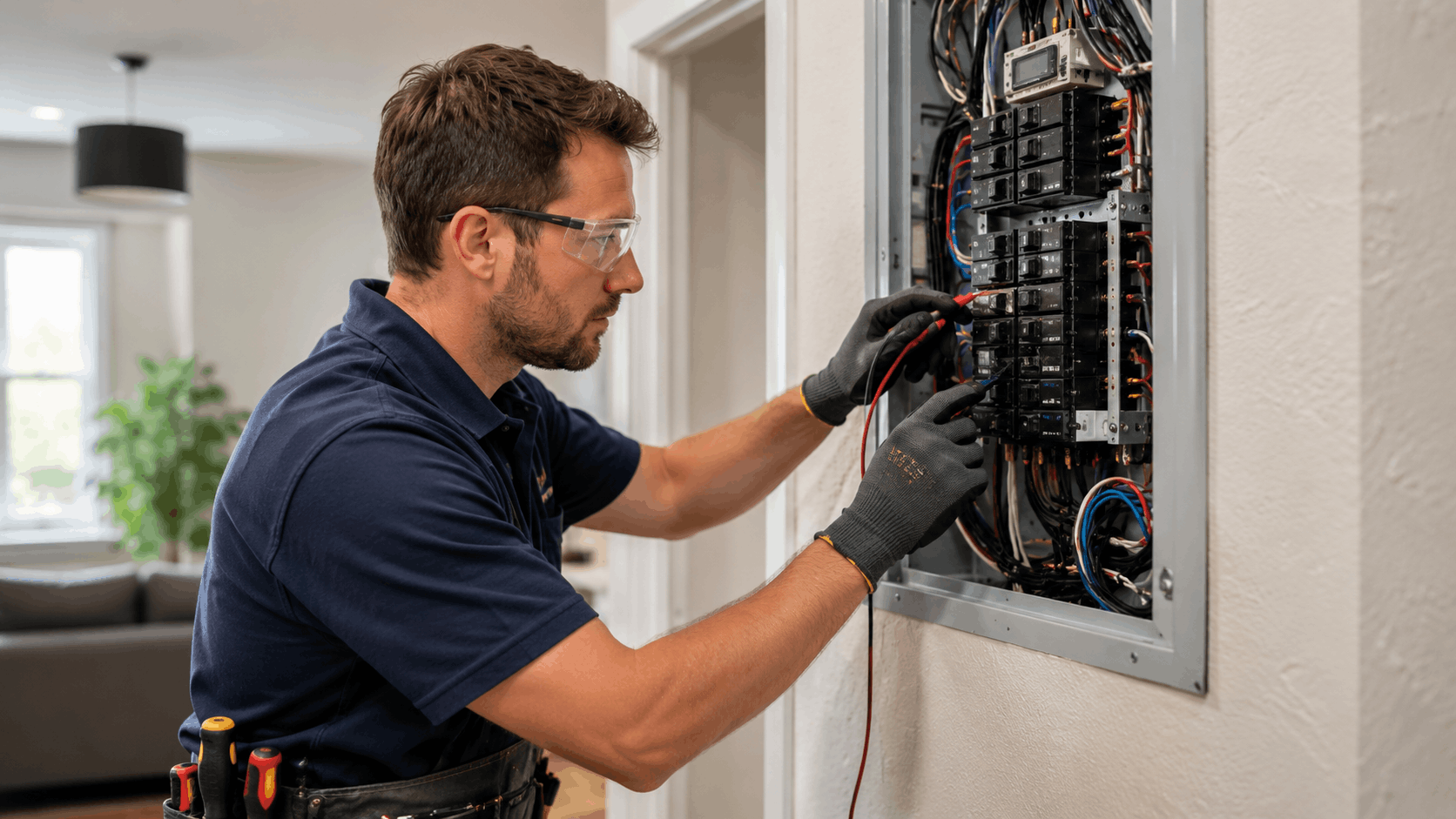
Licensed electrician in hard hat and safety glasses working on residential electrical panel

Wix, Squarespace, and WordPress: General Builders for Electricians

These three platforms power millions of websites worldwide. Each has real strengths. But each also has specific drawbacks that electrical contractors should know about before committing. Here is an honest look at using these general-purpose builders for a Wix for electricians setup, a Squarespace electrician website, or a WordPress electrician site.

FeatureWixSquarespaceWordPress
Starting Price$17/mo$16/mo$25+/mo (hosting + plugins)
Local SEO ToolsManual, limitedMinimalStrong with plugins
Mobile SpeedBelow averageAverageDepends on setup
Electrician TemplatesYesGeneral serviceMany themes available
Maintenance RequiredLowLowHigh
Service Area PagesManual creationManual creationManual or plugin-assisted

Wix: Easy to Start but Tough to Rank Locally

The Wix website builder is genuinely beginner-friendly. It offers electrician templates, a drag-and-drop editor, and a quick path to a live site. For someone who just needs a basic online presence, Wix can work. Wix pricing starts at $17/month for a basic plan and goes up to $159/month for the business VIP tier.

The problems show up when trying to compete in local search. Wix SEO limitations include bloated page code that drags down speed scores, limited control over URL structures, and no built-in service area page generator. An electrician can manually create location pages, but the platform does not guide them on what to include for local ranking signals. Schema markup requires manual code injection or third-party apps.

Common frustrations from electricians using Wix: the site looks fine but never appears in local search results, mobile speed scores hover in the 50-70 range, and the free tier slaps Wix branding all over the page - which does not exactly scream "professional licensed electrician."

Squarespace: Beautiful Sites That May Not Get Found

Squarespace design quality is legitimately impressive. The templates are modern, the typography is clean, and the image handling is excellent. For electricians who care about aesthetics - maybe they specialize in high-end residential lighting design or smart home installations - Squarespace for contractors can produce a visually stunning site.

But Squarespace SEO has real gaps for local service businesses. There is no built-in service area page generator. No automatic local schema markup. No Google Business Profile integration tools. An electrician would need to manually build each location page and add structured data through code injection - which defeats the purpose of choosing a simple builder.

Squarespace pricing sits at $16-65/month depending on the plan. The mid-range Business plan ($33/month) is where most electricians would land. It is a solid choice for someone who primarily gets referrals and wants a polished-looking site to send people to, but it is not the right pick for someone trying to win new customers through local search.

WordPress: Powerful but High Maintenance

WordPress for electricians is the most flexible option on this list. With the right combination of WordPress plugins - RankMath or Yoast for SEO, Jeuspaned for forms, an LCP optimization plugin for speed - a WordPress site can do anything. Multi-location service area pages, advanced schema, custom layouts, blog content that ranks - all possible.

The catch is that WordPress is a self-hosted website platform. That means the electrician needs to choose a hosting provider, manage SSL certificates, run security updates, handle plugin compatibility issues, and troubleshoot when something breaks after an update. For an electrician who enjoys tinkering with technology, this can be rewarding. For the majority who just want a site that works, it is a time sink.

WordPress is the right choice for a growing electrical company with a marketing person on staff or a budget to hire a developer for ongoing maintenance. It is the wrong choice for a solo electrician who wants to set up a site on Sunday afternoon and never think about it again.

GoDaddy, Jobber, and Trade-Specific Platforms

Beyond the big three general builders, electricians often encounter platforms that are either bundled with other tools or positioned specifically for contractors. Here is how the GoDaddy website builder, Jobber website features, and contractor-specific agencies stack up.

PlatformBest ForSEO StrengthMonthly CostBiggest Limitation
GoDaddyQuick placeholder siteWeak$10-25Rigid templates, basic SEO
JobberScheduling + basic web presenceMinimal$49-249 (includes CRM)Website is an afterthought
ServiceTitanLarge operations with full CRM needsMinimalCustom pricing (expensive)Website features are limited
Scorpion / Blue CoronaFull-service marketingStrong$200-500+Long contracts, high cost

GoDaddy: Fast Setup with Limited Customization

The GoDaddy builder gets a website live in minutes. Many electricians already own a domain through GoDaddy, so the quick website setup appeal is obvious - just click a few buttons and the site is up. GoDaddy pricing is the lowest on this list at $10-25/month.

But GoDaddy limitations are significant. Templates are rigid with minimal customization options. SEO controls are surface-level - a meta title and description field, but no schema markup, no service area page tools, and no structured local SEO guidance. Sites built on GoDaddy tend to look generic, and for a trade where trust matters, looking like every other template site does not help.

GoDaddy works as a temporary placeholder while an electrician figures out their long-term website strategy. It is not a platform to grow on.

Jobber and ServiceTitan: CRM Tools with Add-On Websites

Jobber and ServiceTitan are excellent at what they were built for - scheduling, dispatching, invoicing, and customer management. The Jobber website feature and ServiceTitan's web offering are add-ons to those core CRM products.

The problem is that the website features are afterthoughts. Limited SEO, limited design options, and in some cases the site lives on a subdomain (like yourcompany.jobber.com) rather than a CRM with website that runs on the electrician's own domain. Subdomain sites carry less authority in Google's eyes, and they look less professional to customers.

Bundling makes sense when the electrician's primary need is operational - scheduling, estimates, and invoicing - and they just want a basic web page that exists. It does not make sense when the goal is generating new leads through local search.

Contractor-Specific Marketing Companies

Companies like Scorpion marketing and Blue Corona (now part of the Scorpion family) build polished, high-performing websites specifically for trades. An electrician marketing company like these delivers professional design, strong SEO, content creation, and ongoing management. The results can be excellent.

The trade-off is cost and commitment. Expect to pay $200-500+ per month, often with a 12-month contract. Some agencies charge $2,000-5,000 upfront on top of the monthly fee. And if the electrician leaves, they often lose the website since the agency owns the design and hosting.

For a large electrical company with a serious marketing budget, a contractor marketing agency can deliver. For a small shop or solo operator, the price-to-value ratio does not work when platforms like Grow Local offer similar local SEO structure at a fraction of the cost.

Licensed electrician inspecting residential electrical panel with safety gloves and protective eyewear

Local SEO Features That Actually Move the Needle for Electricians

Not all SEO is created equal. An electrician does not need to rank nationally for "how to wire a three-way switch." They need to show up when someone in their service area searches for an electrician who can do the job today. Local SEO for electricians is about hyper-local signals - the ones that tell Google "this business serves this specific area and does this specific work."

Google Business Profile optimization is the starting point, but the website is what supports and strengthens that listing. Here are the local ranking factors that a website builder should handle.

Service Area Pages Done Right

There is a right way and a wrong way to create service area landing pages. The wrong way is spinning up 20 pages that all say the same thing with only the city name swapped out. Google has been penalizing thin location pages like these for years.

The right way involves creating neighborhood SEO content that is genuinely specific to each area. An electrician serving older homes near the Willowbrook subdivision might mention that houses built in the 1970s in that area commonly have aluminum wiring that needs evaluation. A page targeting the Lakeside Crossing development might note that newer construction there often needs EV charger installations as homeowners buy electric vehicles.

These details are not just good for Google - they build trust with the homeowner reading the page. When someone in the Riverside Heights neighborhood sees that the electrician specifically mentions their area and the types of homes there, it feels like a local expert rather than a faceless company.

Schema Markup and Google Business Profile Integration

LocalBusiness schema is structured data embedded in a website's code that tells Google exactly what the business is, where it operates, and what services it offers. Service schema adds detail about specific offerings. Together, these structured data types help Google match the electrician to relevant local searches.

NAP consistency - Name, Address, Phone number - between the website and the Google Business Profile listing is another strong ranking signal. If the website says "Johnson Electric LLC" but the GBP listing says "Johnson's Electrical Services," Google treats them as potentially different businesses. The best builders enforce NAP consistency automatically.

Grow Local handles both LocalBusiness schema and NAP alignment during the setup process. With WordPress, an electrician would need to install a schema plugin and manually configure it. Wix and Squarespace require code injection for schema - a step most non-technical users skip entirely.

Review Integration and Trust Signals

A Google reviews widget that pulls live reviews onto the website does double duty. It shows social proof to the visitor ("50 five-star reviews - this electrician must be good") and adds fresh, user-generated content to the page that Google can index.

Trust badges matter too - "Licensed," "Bonded," "Insured," state license numbers, and any certifications like NFPA or manufacturer-specific training. These trust badges give homeowners confidence, especially for high-value work like full panel replacements or commercial electrical projects.

Some builders make review integration simple with built-in widgets. Others require third-party embedding scripts. Grow Local includes business credential display and review integration as standard features.

How to Pick the Right Builder for Your Electrical Business

The right website builder depends on the electrician's specific situation. Budget, business size, technical comfort level, and growth plans all factor in. Here is a practical decision framework that matches different profiles to the best option.

Solo Electrician or Small Shop on a Tight Budget

For a one-person operation working with an affordable website builder budget under $50/month, the goal is simple: get a fast, professional, SEO-friendly site live as quickly as possible. Every dollar spent on the website needs to generate a return through incoming calls and quote requests.

Both GoDaddy and Grow Local fall within this budget range. GoDaddy is cheaper at $10-25/month, but the solo electrician website will lack the local SEO features needed to actually attract new customers organically. Grow Local at $30-75/month delivers a budget website that punches well above its price point on SEO and speed.

For a solo operator serving three to five nearby cities - working on homes along Cedar Lane, pulling permits at the county building department on Main Street, and picking up supplies from the electrical wholesaler near the highway interchange - Grow Local's automatic location pages make the most sense without requiring extra hours of website work.

Growing Electrical Company Covering Multiple Cities

When an electrical company expands to cover 10 or more service areas with multiple crews, the multi-location website needs change. More service area pages, more service descriptions, and a CMS that can scale without becoming unwieldy.

Two platforms stand out for scaling electrician business websites: Grow Local and WordPress - for very different reasons. Grow Local handles the growth through its AI, generating new service pages and location pages as the business adds them through the dashboard. WordPress handles growth through raw flexibility, but it requires a developer or a very motivated business owner to manage multiple service areas properly.

The deciding factor is usually the team. If there is a marketing coordinator or office manager who can handle WordPress maintenance, it is a strong choice. If the owner is still the one updating the website between jobs, Grow Local's hands-off approach wins.

Already Have a Site but Not Getting Leads From It

This is the most common situation we hear about. An electrician paid someone $1,500 for a website three years ago, and it just sits there. The signs of a website not generating leads are predictable: slow load times (check it on PageSpeed Insights), no service area pages, vague service descriptions, no calls to action above the fold, and zero organic traffic in Google Search Console.

Sometimes the fix is updating the existing site. But more often, it is faster and more cost-effective to rebuild on a better platform. Migrating to Grow Local from an underperforming site takes less than an hour, and the improvement in local search visibility can start showing results within weeks as Google re-crawls and re-indexes the new, better-structured pages.

Before rebuilding, the electrician should keep their existing domain name and set up proper redirects. The domain carries whatever authority it has built over time - throwing it away is one of the most common improve electrician website migration mistakes.

Electrician in overalls installing recessed ceiling light fixture wearing protective gloves

Final Thoughts

Every electrician deserves a website that works as hard as they do. The platforms in this comparison range from bare-bones placeholder sites to fully custom agency builds, with several strong options in between. The right choice depends on budget, technical comfort, and how seriously the electrician wants to compete in local search.

For most electrical contractors - whether they are a solo operator working out of the Northside or running crews across a dozen suburbs - a builder that handles local SEO, loads fast, and requires minimal upkeep is the sweet spot. Grow Local was built for exactly that scenario. It takes the guesswork out of creating a site that ranks and converts, so the electrician can focus on what they are actually good at: the work itself.

Ready to see what it looks like? Get started at www.growlocal.build.

Frequently Asked Questions

How much does an electrician website cost per month?

Electrician website cost varies widely. Free tiers from Wix or GoDaddy come with ads, no custom domain, and limited features. Budget builders run $10-20/month. Mid-range platforms like Grow Local cost $30-75/month and include local SEO, fast hosting, and AI-generated content. Agency-built sites typically charge $200-500+ per month plus upfront design fees. The monthly website pricing sweet spot for most electricians is $30-75/month where the site generates real leads.

Can I build my own electrician website with no tech skills?

Yes - with the right platform. AI-powered builders like Grow Local let an electrician answer a few questions and receive a complete, professional site without touching code. No-code website builder tools like Wix offer drag-and-drop editing that most people can figure out in an afternoon. WordPress requires more learning and ongoing technical management. Realistically, plan for 1-4 hours of focused time to build your own website on a modern platform.

How long does it take to get an electrician website live?

Website setup time depends entirely on the platform. AI-powered builders like Grow Local can produce a fully functional, SEO-ready site in under an hour. Wix or Squarespace typically take a full weekend of focused work to select a template, write content, and configure settings. WordPress builds range from one to four weeks depending on theme customization and plugin setup. Agency-built sites often take four to six weeks from kickoff to launch.

Which website builder is best for showing up on Google Maps?

The website itself does not directly appear in the Google Maps ranking results - the Google Business Profile listing does. However, the website sends local signals that support the GBP listing and influence local pack placement. Builders with strong local SEO features - like automatic service area pages, local schema markup, and NAP consistency - give the biggest boost. Grow Local is the strongest option here because these features are built into every site automatically.

Do I need a separate page for every city I serve?

Ideally, yes. Each city service page helps Google match the business to searches in that specific city or neighborhood. But these location landing pages need real, unique content - not cookie-cutter text with city names swapped out. Mention specific neighborhoods, common electrical issues in the area, and local details that prove the electrician actually works there. Grow Local generates these pages with area-specific content automatically.

Should I use a free website builder for my electrical business?

Free website builder options come with significant trade-offs for a licensed electrician. Expect third-party ads displayed on the site, no custom domain (the URL will include the builder's branding), limited SEO features, and slower page speeds. For a business that depends on looking professional and trustworthy, these drawbacks can cost more in lost jobs than a free vs paid website monthly fee would. Investing $20-50/month in a proper platform pays for itself with one or two additional jobs per year.

What pages should every electrician website have?

The non-negotiable electrician website pages include: a Home page with a clear value proposition and click-to-call, an About page with licensing and insurance info, individual service pages for each specialty (panel upgrades, rewiring, EV charger installation, lighting, generators), service area pages for every city or neighborhood served, a reviews/testimonials page, and a Contact page with a quote request form. This website structure gives Google and homeowners everything they need.

How does Grow Local compare to hiring a web design agency?

A web design agency delivers custom design, hands-off setup, and ongoing management - but typically charges $2,000-10,000 upfront plus $200-500/month. The Grow Local vs agency comparison comes down to budget and priorities. Grow Local offers a similar local SEO structure and fast performance at a fraction of the web design agency cost, with AI doing the content and structure work. The trade-off is less custom visual design, though Grow Local's design options are professional and clean.

Can I switch website builders without losing my Google rankings?

Yes, as long as the electrician keeps the same domain name and implements proper 301 redirects from old URLs to new ones. These 301 redirects preserve link equity and tell Google the content has moved rather than disappeared. Common website migration mistakes include changing the domain, failing to redirect old pages, or launching with broken links. Most modern builders, including Grow Local, support custom domains and make the switch straightforward.

How often should I update my electrician website?

At minimum, keep contact information, service offerings, and service areas current. Adding a new project photo, customer testimonial, or short blog post monthly helps with content freshness signals that Google rewards. Major updates - new services, new crew members, expanded territory - should go live as soon as they happen. Some builders like Grow Local reduce the website maintenance burden by making updates quick through a simple dashboard, so even a busy electrician can keep things current in minutes.

Grow Local Team

Written by Grow Local Team

Editorial

Grow Local helps local service businesses build SEO-ready sites and grow online.

Ready to improve your local visibility?

Get started now and discover local opportunities you're missing.

Get Started Now

Pay $99/mo when you go live • Cancel anytime