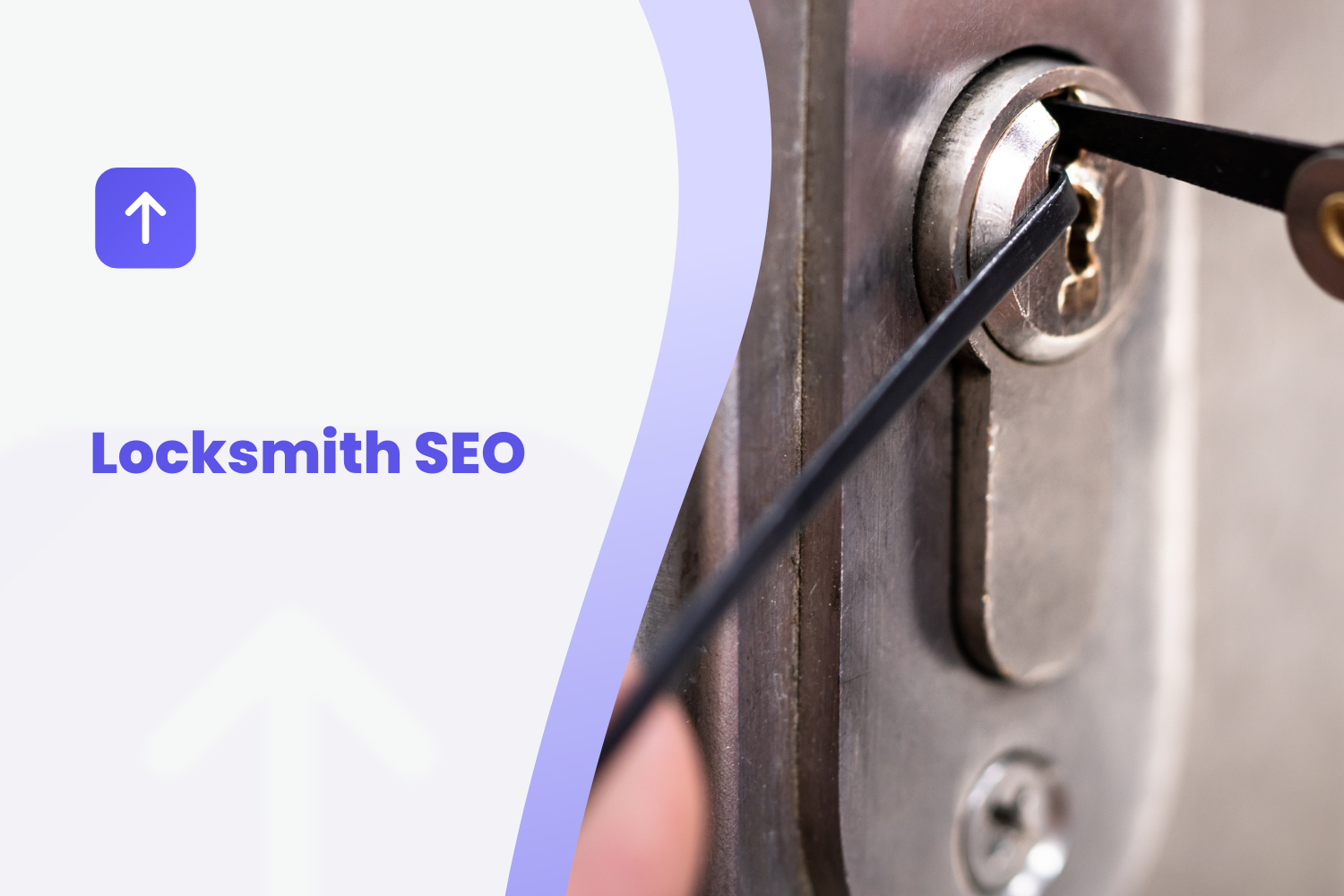
Short answer: locksmith SEO means making your locksmith business easy to find, and easy to trust, when someone nearby searches for help, often in a hurry and often at night. It rests on a verified Google Business Profile with your real name and a compliant address or service area, a website that shows your license where required, honest price information and a tappable phone number, steady recent reviews and consistent listings everywhere. Trust matters more in locksmithing than in almost any trade, because fake locksmith listings have been a long-running problem: Google says it removed over 13 million fake Business Profiles in 2025, and a 2017 study with Google researchers found 11% of locksmith search results were fraudulent. Customers and Google both look for signs that a locksmith is real, local and licensed. This guide covers how locksmith searches work, the Business Profile rules that matter, what a locksmith website needs, reviews, pricing honesty, ads verification and a plan you can follow. If you want the website built for you, Grow Local's locksmith website builder creates service and location pages from your answers.
Key Takeaways
- 1Locksmith SEO rests on a verified Business Profile with your real name and a compliant service area, a clear website and steady recent reviews.
- 2Google removed over 13 million fake Business Profiles in 2025, and locksmiths have long been a fraud target, so real-business trust signals matter.
- 3Do not use keyword names, virtual offices or extra city profiles; they match the fraud pattern and break Google guidelines.
- 4Show your license where your state requires it, publish honest price ranges and explain trip and after-hours fees to avoid bait-pricing complaints.
- 5Google requires advanced verification, including license checks and a video interview, for locksmith ads in the US and Canada.
- 6Build pages for house, car, rekey, lock change and commercial services, plus real town pages, and ask every customer for a review.
- 01Why Locksmith Searches Are Different
- 02How Google Decides Which Locksmiths to Show
- 03Google Business Profile for Locksmiths
- 04Licensing, Advertising Rules and Honest Pricing
- 05What a Locksmith Website Needs
- 06An Honest Pricing Section: What It Can Look Like
- 07Getting Ready for Busy Months
- 08Writing Locksmith Pages Customers Trust
- 09Reviews: Ranking Signal and Trust Signal
- 10The Searches Locksmiths Should Plan For
- 11Car Locksmith SEO
- 12Commercial Locksmith SEO
- 13Handling After-Hours Calls
- 14Proof of Ownership: Turning Caution Into Trust
- 15Photos That Build Trust for Locksmiths
- 16A Monthly Locksmith SEO Routine
- 17Questions to Ask Before Hiring SEO Help
- 18Your Website and Profile Working Together
- 19Answering the Phone: The Last Step of SEO
- 20Ads, Verification and Local Services Ads
- 21Locksmith SEO and AI Search
- 22What the Fraud Problem Means for Honest Locksmiths
- 23Rekeying and Moving: Year-Round Demand
- 24Safes and Specialty Services
- 25Partnerships That Bring Steady Work
- 26Listings and Local Links
- 27A Locksmith SEO Plan
- 28What Customers Check Before Calling a Locksmith
- 29Content Ideas for Locksmiths
- 30Measuring Locksmith SEO Results
- 31Locksmith SEO Terms in Plain English
- 32Common Locksmith SEO Mistakes
- 33Choosing a Website for Your Locksmith Business
- 34An Example: A Mobile Locksmith Cleans Up and Grows
- 35Myths About Locksmith SEO
- 36Frequently Asked Questions
- 37Final Thoughts
Why Locksmith Searches Are Different
Urgency
Someone locked out of a house or car is not comparing ten websites. They search on their phone, look at the map results and call one of the first locksmiths that seems credible. BrightLocal's 2026 data found 73% of local searches start on a mobile device, and for lockouts that share is likely higher.
Big demand, concentrated in the map
Ahrefs' third-party estimates put yearly average US searches for "locksmith near me" at roughly 210,000 to 340,000 a month between 2022 and 2024, with "car locksmith" at about 6,000 and "emergency locksmith" at about 2,300 to 2,600. In an Ahrefs check of six locksmith searches in October 2026, a Google map pack appeared on five. Most lockout calls are won or lost in the map, which runs on your Business Profile.
Seasonal patterns
From 2019 to 2024, Ahrefs estimates show "locksmith near me" was usually busiest in June, July and August and slowest in January, February and April, with the busiest month about 1.5 times the slowest. "Emergency locksmith" tended to peak in July, October and December. A AAA club has named the holiday season as a common time for lockouts. Plan updates and review requests before your busy months.
A trust problem in the category
The FTC warned back in 2008 that "some locksmiths advertising in your local phone book may not be local at all," and that some may lack formal training, according to its press release. The same problem moved online. A 2017 study by Google and university researchers of more than a hundred thousand suspended Google Maps listings named unaccredited locksmiths as a target and found 11% of locksmith search results were fraudulent, rising to 15.6% in New York. That study is old, but it explains why Google applies extra checks to locksmiths, and why customers look hard for signs that a business is real.
Job values
HomeAdvisor's cost guide, dated June 2026, puts the average locksmith job at $163, typically $107 to $242, with house lockouts at $65 to $200, rekeying at $80 to $150 per home, car lockouts at $50 to $300 and after-hours surcharges of $150 to $250. Each call is modest on its own, which is why volume, repeat customers and commercial accounts matter.
How Google Decides Which Locksmiths to Show
Google's help page on improving local ranking says local results are "mainly based on relevance, distance, and prominence." Relevance is how well your profile matches the search. Distance is how far you are from the searcher. Prominence is how well known you are, including reviews and information across the web. Google adds that businesses "with complete and accurate info are more likely to show up in local search results," and that "There's no way to request or pay for a better local ranking on Google."
Distance matters a lot for lockouts, because people search where they are standing. You cannot change where a customer is, but you can make sure your service area is accurate and your profile is complete and trustworthy.
Google Business Profile for Locksmiths
Use your real business name
Google's guidelines for representing your business say your profile name must reflect your real-world business name, without added keywords, locations or phone numbers. "24/7 Locksmith Near Me Cheap" is exactly the kind of name Google removes. In a category with heavy fraud enforcement, a clean, real name protects you.
Address or service area, done correctly
If customers visit a staffed shop, list its real address. Most locksmiths are mobile, which makes them service-area businesses: hide your address and list the areas you serve, within about two hours of driving from your base, according to Google's service area help page. Google does not allow virtual offices or addresses where you are not staffed, and you should not create extra profiles for nearby cities. These are exactly the patterns fake locksmith networks use, and Google watches for them.
Verification
Google's help page on video verification uses "a locksmith or a plumber" as its example of a service-area business. Videos must be live, unedited and at least 30 seconds long, showing your location, proof of the business, such as branded vehicles and tools, and proof that you manage it. Prepare before you record: a marked van, your tools, signage and access to your business records.
Categories
"Locksmith" is the core category. Check the categories available in your profile for any that genuinely fit as secondary options, and avoid adding categories you do not truly represent.
Hours
Only list 24-hour availability if you genuinely answer the phone at all hours. If you offer emergency service on call but not 24/7, set your real hours and explain after-hours availability on your website. A customer who calls at 2 a.m. because your profile says "Open 24 hours" and gets voicemail is a likely bad review.
Photos and services
Add real photos of your vehicles, uniforms, team and work. Add services that match your website, such as home lockouts, car lockouts, rekeying, lock changes, key duplication, car key replacement, safe opening and commercial access control, only for services you actually provide.
Keep it active
Reply to every review, add photos regularly, update holiday hours and post occasional updates. An active, complete profile looks real, which matters in this category.
Licensing, Advertising Rules and Honest Pricing
This is general information, not legal advice. Check your own state and city.
Licensing varies by state and city
The Associated Locksmiths of America listed 13 states with locksmith licensing as of January 2025: Alabama, California, Connecticut, Illinois, Louisiana, Maryland, Nevada, New Jersey, North Carolina, Oklahoma, Oregon, Texas and Virginia. Illinois licensing is set to sunset in 2029. Some cities and counties, such as New York City, Nassau County, Miami-Dade and Hillsborough County, license locksmiths locally. Tennessee ended licensing in 2021.
License numbers in advertising
Some states require license details in ads. California's Bureau of Security and Investigative Services requires locksmith ads to show the business name, address or phone and license number. Texas requires ads to show the company name and address on record. If your state requires it, show your license number on your website, profile description where appropriate and vehicles.
Avoid bait pricing
"$19 service call" ads followed by much larger bills are a well-known locksmith scam pattern. An ALOA page describes phone quotes near $45 becoming bills of $135 to $150. The FTC's guides against bait advertising, 16 CFR 238, describe bait advertising as "an alluring but insincere offer." Publish honest prices or ranges, explain trip and after-hours fees, and give customers a total quote by phone where you can.
Why honesty helps SEO
Honest pricing and clear licensing are not just legal protection. They are exactly what wary customers look for, and they make your website and profile more convincing than the vague listings customers have learned to distrust.
What a Locksmith Website Needs
A homepage that answers the panic questions
Within the first screen on a phone, a locked-out customer should see:
- Your real business name.
- A tappable phone number and a "Call now" button.
- Where you work: "Serving Columbus, Dublin, Westerville and nearby."
- When you work: your real hours, including after-hours availability.
- One line of trust: licensed where required, insured, years in business, review rating.
Google's web.dev guidance says to "wrap all phone numbers in hyperlinks with the tel: schema" so visitors can call by tapping.
A page for each main service
- House lockouts
- Car lockouts
- Rekeying
- Lock installation and replacement
- Car key replacement and programming
- Commercial locks and access control
- Safe opening and installation
- Key duplication, if you offer it
Google's SEO Starter Guide asks for content that is "helpful, reliable, and people-first" with titles "unique to the page." A car key replacement page can explain which vehicles you handle, what customers need to show proof of ownership and how pricing works. That is far more useful than a single list.
What a strong locksmith service page includes
- A clear heading with the service and area.
- What the service involves and how long it usually takes.
- Honest price ranges or how pricing works, including trip and after-hours fees.
- What ID or proof of ownership you require, which reassures customers that you are careful.
- Whether you try non-destructive entry first, stated honestly.
- Photos of real work and your branded vehicle.
- FAQs and a call button.
Location pages with real detail
Create pages for the towns you genuinely serve, with real information: typical response areas, the neighborhoods you cover, local building types such as apartments or older homes and any local licensing notes you know. Google's spam policies treat near-identical pages that only swap the town name as doorway pages, and fake-locksmith networks are known for exactly that pattern. Real detail sets you apart.
Trust signals
- License number where required, and insurance.
- Your real name and photos of your team and vehicles.
- A real address for a storefront, or a clear service area for a mobile business.
- Reviews and a link to your Google reviews.
- A clear explanation of how you verify ownership before opening a lock.
In DreamHost's 2026 Local Business Trust Index, a vendor survey of 1,201 US adults, 67% said clear contact information builds trust and 47% said real photos of the team or location do.
Built for phones
Google says it uses the mobile version of a site for indexing and ranking, according to its mobile guidance. Keep pages light, put the phone number in the header, avoid pop-ups and keep any form to name, phone, location and a short note.
Structured data
Schema.org has a Locksmith type. Google's LocalBusiness documentation requires only name and address and says details must match the visible page. It helps machines read your details accurately but is not a ranking shortcut.
An Honest Pricing Section: What It Can Look Like
You do not have to publish a full price list, but a clear pricing section on your website builds trust in a category known for bait pricing. A simple structure:
- How we price: "We quote a total price by phone before we drive out, based on the job, your location and the time of day."
- Typical ranges: your real ranges for house lockouts, car lockouts, rekeying and lock changes. National guides such as HomeAdvisor's give context, for example $65 to $200 for house lockouts and $80 to $150 for rekeying, but publish your own numbers.
- Fees: any trip charge and after-hours surcharge, stated clearly.
- Hardware: that new locks or key blanks are priced separately, with typical ranges if you can.
- No surprises: that you explain any change in price before doing extra work.
Publish only prices you will honor, and update them when they change. Clear pricing also reduces the number of calls from people who were only shopping for the lowest number.
Getting Ready for Busy Months
Ahrefs estimates show "locksmith near me" searches usually peak in summer, and lockouts are common around the holidays. A few weeks before those periods, confirm your hours and after-hours availability on your site and profile, add recent photos, ask recent customers for reviews and test your call button and form on your phone. If you expect to be stretched, say honestly how quickly you can usually respond.
Writing Locksmith Pages Customers Trust
Locksmith websites often sound alike: "fast, reliable, affordable, 24/7." Customers have seen those words on scam listings too. Specific, plain writing stands out:
- Weak: "Fast and affordable locksmith services available anytime." Better: "We answer calls 7 a.m. to 11 p.m. daily and usually reach homes in Columbus, Dublin and Westerville within about 30 to 45 minutes, depending on traffic."
- Weak: "Low prices guaranteed." Better: "House lockouts typically cost $85 to $150 during the day. We quote a total price by phone before we leave."
- Weak: "Professional and trusted." Better: "Licensed and insured. We ask for ID and proof of residence before opening any home."
These examples are illustrations; use your real hours, prices and policies, and only promise response times you consistently meet.
Reviews: Ranking Signal and Trust Signal
BrightLocal's 2026 survey found 68% of consumers require four stars or more and 74% look for reviews from the past three months. Google lists review count and score as part of prominence.
- Ask after every job, with a direct review link by text. Lockout customers are often relieved and happy to help right after the job.
- Reply to every review, politely and without private details.
- Never offer incentives or gate reviews. The FTC's rule, effective October 21, 2024, bans fake reviews including AI-written ones, incentives tied to a particular sentiment and review suppression.
- Keep asking all year, so reviews stay recent before your busy season.
Our guide to getting your first 25 Google reviews has simple scripts.
The Searches Locksmiths Should Plan For
| Kind of search | Examples | Page that should answer it |
|---|---|---|
| Urgent | locksmith near me, locked out of house | Business Profile and homepage with tap-to-call |
| Car | car locksmith, car key replacement | Car lockout and car key pages |
| Security upgrade | rekey locks, change locks after moving | Rekeying and lock change pages |
| Commercial | commercial locksmith, access control installer | Commercial services pages |
| Cost | locksmith cost, how much to rekey a house | Service pages with honest price ranges |
| Place-based | locksmith in [town] | Town pages with real local detail |
| Trust | licensed locksmith near me | About page, license details and reviews |
Car Locksmith SEO
Car work is a distinct, steady part of locksmith demand; Ahrefs estimates show "car locksmith" searches stayed fairly steady through the year from 2019 to 2024. Customers searching for car help ask different questions from homeowners:
- Can you make a key for my make, model and year?
- Can you program a key fob or transponder key?
- Is it cheaper than the dealer?
- What proof of ownership do I need?
- Can you come to where my car is?
A dedicated car key page that answers these, lists the vehicle types you handle, explains your proof-of-ownership process and gives honest price ranges serves these searches far better than a line on a general services page. HomeAdvisor's June 2026 guide puts car lockouts at $50 to $300 and notes after-hours car service can cost double, so explain your after-hours pricing clearly.
Commercial Locksmith SEO
Commercial work, such as master key systems, access control, high-security locks, panic hardware and ongoing service for property managers, can bring steadier, higher-value business than lockouts. Commercial buyers research differently: they want proof of experience, licensing, insurance and reliability more than speed. Give commercial services their own pages, describe the building types you serve, explain how you handle service agreements and key control, and show project photos where clients allow it. Keep commercial calls to action, such as "Request a site visit," separate from emergency residential ones.
Handling After-Hours Calls
Late-night lockouts are some of the most valuable calls, and the most likely to go wrong if expectations are unclear.
- Be honest about availability. If you answer after hours, say until when and whether fees apply.
- Quote clearly by phone. Give a total or a range including trip and after-hours fees before you drive out.
- Record a useful voicemail for times you cannot answer, saying when you will call back.
- Arrive identifiable: branded vehicle, uniform and ID, which regulators tell consumers to look for.
- Verify ownership before opening anything, and explain why.
Every after-hours job handled honestly is a strong candidate for a glowing review.
Proof of Ownership: Turning Caution Into Trust
Responsible locksmiths verify that a customer has the right to enter a home or vehicle before opening it. Some customers find this inconvenient in the moment, but explaining it on your website turns it into a trust signal. Describe what ID or documents you ask for, why you ask and what happens if a customer cannot provide them. Customers who have read about scams will see a careful locksmith as a safe one, and the explanation reduces friction on the call.
Photos That Build Trust for Locksmiths
- Your branded vehicle, clearly showing your business name.
- You and your team in uniform.
- Locks you install, rekeying work and key programming equipment.
- Commercial installations, with client permission.
- Your shop, if you have one customers can visit.
Avoid stock photos of generic locks and keys. Real photos show you are a real, local business, which is exactly what fraud-wary customers look for.
A Monthly Locksmith SEO Routine
- Check that your name, phone, hours and service area match on your website and Business Profile.
- Tap the call button on your website from your phone.
- Add a few new photos to your profile.
- Reply to new reviews and send review requests to recent customers.
- Check Search Console for new issues.
- Update prices or services if anything changed.
Questions to Ask Before Hiring SEO Help
- Will you create profiles in cities where I have no staffed location? If yes, walk away; that breaks Google's guidelines.
- Will you add keywords to my business name? That risks suspension.
- Do you guarantee rankings? Google says no one can pay for a better local ranking.
- Will you buy reviews or links? Both carry real risk under FTC rules and Google's policies.
- Who owns the profile, website and accounts?
- How will you measure results: calls and jobs, or only rankings?
Your Website and Profile Working Together
Most locksmith calls start in the map, but many customers tap through to your website before they call, especially for planned work like rekeying or car keys. BrightLocal's 2026 survey found 54% of consumers visit a business's website after reading positive reviews. Make sure the website confirms what the profile promises: the same name, phone, hours and service area, the services listed on the profile, your license and honest prices. A mismatch, such as different hours or a phone number that does not match, raises exactly the doubts a fraud-wary customer is looking for. For more, see our guide to Google Business Profile and your website.
Answering the Phone: The Last Step of SEO
All of this work ends with a phone call. A locked-out customer who reaches voicemail calls the next locksmith. Decide who answers and when, use a voicemail that says when you call back, return missed calls quickly and give a clear quote. The best rankings in the world cannot help if the phone goes unanswered, so treat phone coverage as part of your marketing plan.
Ads, Verification and Local Services Ads
Google Ads advanced verification
Google requires advanced verification for locksmith advertisers in the United States and Canada, according to its Advanced Verification policies. The process reviews publicly available data such as state registrations and professional licenses, checks business registration and evidence of misleading practices, and includes a video interview. Google may ask you to re-verify every 12 months. Plan for the time this takes before relying on ads.
Local Services Ads
Local Services Ads charge per lead and show a Google badge for businesses that pass screening. For locksmiths, Google's requirements include background checks, insurance and state licenses where local law requires them, plus a verified Business Profile. Google Verified replaced the older Google Guaranteed badge in October 2025.
What ads cost
No reliable locksmith-specific cost per lead benchmark exists. As a rough proxy only, LocaliQ's home services benchmark reported a median cost per lead of $129.02 for plumbing and $90.92 for home services overall, from 3,211 US campaigns in 2024 and 2025. Ads stop when the budget stops; your profile, website and reviews keep working.
Ads do not improve map rankings
Google says there is no way to pay for a better local ranking. Ads are a separate, labeled placement.
Locksmith SEO and AI Search
More people now ask AI tools questions like "how much does a car key replacement cost" or "who can rekey my locks today." BrightLocal's 2026 study of nearly 2 million AI citations from ChatGPT, Google AI Mode and AI Overviews found Google Business Profile was the top cited source at about 28.6% of citations, and that 93% of the 116,000 cited domains were business websites. In the Ahrefs check mentioned earlier, AI Overviews appeared for searches like "lock change," "car key replacement" and "locksmith cost," but not for the "near me" search. That suggests a simple split: win hiring searches with your Business Profile, and earn visibility on research questions with clear, honest service pages. Google says its AI features need "no additional requirements," according to its guide to AI features.
What the Fraud Problem Means for Honest Locksmiths
Google says it removed over 13 million fake Business Profiles and blocked or removed over 292 million policy-violating reviews in 2025, up from about 12 million profiles and 240 million reviews in 2024, as reported by Search Engine Roundtable. Google has also taken legal action against people creating and selling fake profiles. No category breakdown was published, but locksmiths have long been one of the targeted trades.
For honest locksmiths, this cuts two ways. The downside is extra scrutiny: verification can take longer, suspicious-looking edits can trigger reviews and customers are wary. The upside is that every fake listing removed is a competitor gone, and the signals that separate you from scammers, a real name, a real service area, a license where required, real photos, honest prices and genuine reviews, are exactly the signals Google and customers reward. Avoid anything that looks like the fraud pattern, such as multiple profiles, keyword names, virtual offices or bait pricing, and your legitimacy becomes an advantage.
Rekeying and Moving: Year-Round Demand
Not all locksmith work is emergencies. Many homeowners rekey or change locks after moving in, after losing keys or after a tenant leaves. HomeAdvisor's June 2026 guide puts rekeying at $80 to $150 per home and lock changes at $50 to $250 for labor, plus hardware. These jobs are planned, so customers compare options and read pages more carefully than during a lockout. A clear rekeying page explaining the difference between rekeying and replacing locks, typical costs and how long it takes can capture this steady demand. Partnerships with real estate agents and property managers, who see move-ins every week, can bring regular referrals.
Safes and Specialty Services
If you offer safe opening, safe installation, high-security locks or smart lock installation, give each its own page. These searches are less frequent but often higher value, and customers want to know you have specific experience. Describe the brands or types you work with, whether you offer non-destructive entry for safes and how pricing works. Only list specialties you genuinely handle.
Partnerships That Bring Steady Work
- Property managers and landlords: rekeys between tenants, lockouts and master key systems.
- Real estate agents: rekeys for new homeowners.
- Car dealers and auto repair shops: key replacement and programming referrals.
- Roadside assistance providers: car lockout work, if you meet their requirements.
- Businesses and schools: access control and ongoing service.
Many of these partners will also list or link to trusted vendors on their websites, which adds the kind of genuine local mention Google counts toward prominence.
Listings and Local Links
- Apple Business, Bing Places and Yelp: claim each with identical name, phone and service area.
- Trade associations: membership directories, if you belong.
- Chamber of commerce and local business groups.
- Partners: property managers, real estate agents, car dealers, auto repair shops and apartment complexes that refer lockout and rekey work.
- Commercial clients that list vendors.
Consistency matters more than quantity. In a category where fake listings are common, mismatched details look suspicious to customers and to Google.
A Locksmith SEO Plan
Month 1: foundations
- Clean up your Business Profile name, set a compliant service area or real address and complete verification.
- Set real hours; list after-hours availability honestly.
- Add real photos and services.
- Put a tappable phone number, license number where required and honest price ranges on your website.
- Connect Google Search Console.
Month 2: pages and reviews
- Build pages for each main service.
- Ask every customer for a review and reply to each one.
- Claim Apple Business, Bing Places and Yelp.
Month 3: locations and links
- Add pages for the towns you serve most, with real detail.
- Reach out to property managers, dealers and other partners.
- Review Search Console and profile performance.
Ongoing
- Keep reviews and photos coming.
- Prepare for busy months, such as summer and the holidays.
- Update prices, hours and services whenever they change.
Google says crawling new pages "can take anywhere from a few days to a few weeks," according to its page on asking Google to recrawl. Judge progress over months; no one can guarantee rankings.
What Customers Check Before Calling a Locksmith
Consumer protection agencies have long told people how to avoid locksmith scams, and informed customers follow that advice. Make each check easy to pass:
- A real local presence: a staffed address for a shop, or a clear service area for a mobile business, consistent everywhere.
- A clear quote by phone: a total or range including trip and after-hours fees.
- A matching branded vehicle and ID when you arrive.
- A license, in states and cities that require one.
- Caution about "drill and replace": regulators warn customers to be wary of locksmiths who immediately insist on drilling and replacing a lock. Say on your site that you try non-destructive entry first where possible, if that is your practice.
- Recent, genuine reviews.
A website and profile that make all of these obvious do much of the selling before the phone rings.
Content Ideas for Locksmiths
Helpful guides answer the research questions where AI Overviews tend to appear, and show expertise. Ideas:
- Rekeying versus replacing locks: which do you need?
- What to do when you are locked out, and how to avoid scams.
- How car key fobs and transponder keys work, and what replacement involves.
- Should you change locks after moving into a new home?
- How master key systems work for small businesses.
- Choosing a smart lock: what to consider.
Keep each guide accurate, link it to the matching service page and avoid instructions that could help someone bypass a lock they do not own.
Measuring Locksmith SEO Results
- Business Profile performance: calls, direction requests and website clicks by month.
- Website call clicks and form requests, if your platform reports them.
- Google Search Console: which searches show your pages. Our guide to reading Search Console explains the basics.
- Your job log: ask every customer how they found you.
- Reviews: count, rating and recency.
Compare busy months with the same months last year. Look for steadier calls, better-quality leads and fewer price disputes, not just rankings.
Locksmith SEO Terms in Plain English
- Service-area business: a business that serves customers at their location and hides its address on Google.
- Map pack: the group of Business Profiles shown with a map in local results.
- Advanced verification: Google's extra screening for locksmith advertisers, including license checks and a video interview.
- Video verification: a Business Profile verification method using a live, unedited video of your business.
- Bait advertising: an offer not meant to be sold, used to lure customers toward higher prices.
- Prominence: how well known your business is, including reviews and mentions across the web.
Common Locksmith SEO Mistakes
- Keyword-stuffed profile names like "Cheap 24/7 Locksmith Near Me."
- Virtual office addresses or extra profiles for nearby cities.
- Claiming 24-hour service you do not provide.
- Bait pricing, such as a low "service call" price that never matches the bill.
- Missing license numbers where your state requires them.
- Copy-paste city pages that only swap the town name.
- Stock photos instead of your real vehicles and team.
- Review gating or incentives for reviews.
- A phone number that is not tappable on mobile.
- Inconsistent details across listings.
Choosing a Website for Your Locksmith Business
General builders like Wix, from $17 to $159 a month billed annually according to Website Builder Expert, and Squarespace, with its Basic plan at $19 a month billed annually, give you design control but leave every service and town page for you to plan and write.
Grow Local's website builder for locksmiths takes a different approach. You answer plain questions about your services and the towns you serve, and AI builds the site, including service pages of 800 or more words each and a location page for each city, with 50 or more pages per site. It costs $99 a month on one plan, with no contract and no setup fee, and includes hosting, SSL, mobile-responsive design and Google Business Profile connection. You can review a free preview before paying and edit services, hours, phone and photos from the dashboard. Review every page for accuracy, add your license number where required and keep prices honest. No website can guarantee rankings; your profile, reviews and reputation still matter.
An Example: A Mobile Locksmith Cleans Up and Grows
Here is how this might look for an illustrative one-van locksmith in Columbus, Ohio. The details are an example, not a real business.
- Before: the Business Profile name is "24 Hour Locksmith Columbus Cheap," the profile says open 24 hours though the owner stops answering at 11 p.m., and the website is a single page with a "$29 service call" banner.
- Fixes: he changes the profile name to his real business name, sets real hours and explains after-hours availability on his site. He replaces the banner with honest ranges for lockouts, rekeys and car keys, including his trip and after-hours fees.
- Pages: he adds pages for house lockouts, car lockouts, rekeying, lock changes and car keys, plus town pages for Columbus, Dublin, Westerville and Hilliard with notes on the apartment complexes and older neighborhoods he serves.
- Reviews: he texts a review link after every job.
- Results over several months: fewer price complaints, better reviews and more calls from his profile. He is not at the top for every search, but customers who call trust him more, and more of them book once they hear his quote.
Myths About Locksmith SEO
"More profiles in more cities means more calls"
Google does not allow profiles at locations where you are not staffed, and fake networks are a major enforcement target. One accurate profile with a correct service area is the safe path.
"Low advertised prices win calls"
Bait prices may bring calls, but they lead to complaints, bad reviews and possible legal problems. Honest ranges win trust.
"Keywords in my business name help"
Google's guidelines prohibit it, and it can get your profile suspended.
"I can pay Google to rank first"
Google says there is no way to pay for a better local ranking. Ads are separate and require advanced verification for locksmiths.
Frequently Asked Questions
What is locksmith SEO?
The work of making your locksmith business easy to find and trust on Google and in AI tools, through your Business Profile, website, reviews and listings.
Should a mobile locksmith show an address on Google?
No, if customers do not visit you. Hide the address and list your service area. Google does not allow virtual offices.
Can I list my business as open 24 hours?
Only if you genuinely answer at all hours. Otherwise set real hours and explain after-hours availability on your website.
Do I need to show my license number?
In states that require it, yes, including on websites. California, for example, requires locksmith ads to show the license number. Check your state.
Why does Google require advanced verification for locksmith ads?
Because of long-running fraud in the category. Google requires it for locksmith advertisers in the US and Canada, including license checks and a video interview.
Should I put prices on my website?
Honest ranges and clear explanations of trip and after-hours fees build trust and help avoid bait-pricing complaints.
How many reviews does a locksmith need?
There is no magic number. BrightLocal's 2026 survey found 74% of consumers look for reviews from the past three months. Aim for a steady flow.
Do AI tools recommend locksmiths?
They can. BrightLocal found Google Business Profile was the top source AI tools cite for local searches, so an accurate profile matters there too.
Can Grow Local build a locksmith website?
Yes. It builds service and location pages from your answers for $99 a month, and you can review a free preview before paying.
Should I offer a low "service call" price to compete?
Only if it is genuine and you honor it. Offers designed to lure customers and then switch them to much higher prices fit the FTC's description of bait advertising and lead to complaints.
How do I handle a profile suspension?
Review Google's guidelines, fix anything that does not comply, such as the name or address, and follow Google's reinstatement process with documentation that you are a real business.
Do locksmiths need a website if the map brings most calls?
Yes. Many customers check your website before calling, and it is where you show your license, prices and services in detail. BrightLocal also found business websites make up most of the domains AI tools cite.
Should I have separate pages for car and home services?
Yes. Car key and car lockout searches ask different questions from home lockouts and rekeys, and separate pages answer them better.
Is commercial locksmith work worth a separate section?
If you do it, yes. Commercial buyers look for experience, licensing and reliability, and dedicated pages make that clear.
Final Thoughts
Locksmith SEO is about being found and being believed. Customers searching in a hurry choose the locksmith that looks real, local and honest, and Google applies extra scrutiny to the category for the same reason. Use your real name, set a compliant service area, verify your profile, list real hours, show your license where required, publish honest prices, build a page for each service and town, ask every customer for a review and keep every listing consistent. Do that, and you stand apart from the fake listings customers have learned to distrust. If you want the website part built for you, Grow Local's locksmith website builder creates your service and location pages from your answers, with a free preview before you decide.