Short answer: roofing SEO means making your roofing company easy to find on Google when homeowners search for roof repair, roof replacement or storm damage help in the towns you serve. It rests on four things: a complete, accurate Google Business Profile; a website with a separate page for each roofing service and each town; steady, recent reviews; and getting all of it ready before storm season, not during it. Storms drive a large share of roofing demand. Triple-I reported $51 billion in US insured losses from severe convective storms in 2025, the third straight year above $50 billion, and said hail accounts for as much as 80% of those claims in a given year. When hail or wind hits, homeowners search immediately, and the roofers who show up are the ones who prepared months earlier. This guide explains how roofing SEO works, what Google says it looks at, which pages a roofing website needs, a storm-season timeline and the mistakes that hold roofers back. If you want the website side handled for you, Grow Local's roofer website builder creates those pages from your answers.
Key Takeaways
- 1Roofing SEO rests on a verified, accurate Google Business Profile, a page for each service and town, steady recent reviews and preparation before storm season.
- 2Triple-I reported $51 billion in 2025 US insured losses from severe convective storms and says hail drives as much as 80% of those claims in a given year.
- 3Google says local results are mainly based on relevance, distance and prominence, and that no one can pay for a better local ranking.
- 4Build storm, hail, wind and emergency tarping pages and ask for reviews months before the season, since crawling can take days to weeks.
- 5Show your license and insurance clearly; the FTC tells homeowners to hire only licensed and insured contractors after storms.
- 6Keep availability honest during a surge, call back fast and turn every storm job into photos and reviews for next year.
- 01Why Roofing SEO Matters
- 02How Google Decides Which Roofers to Show
- 03Google Business Profile for Roofers
- 04Reviews: The Factor You Control Most
- 05The Pages a Roofing Website Needs
- 06What a Strong Roofing Service Page Includes
- 07Making Your Site Ready for the Call Surge
- 08A Storm Season SEO Timeline for Roofers
- 09The Searches Roofers Should Plan For
- 10Local Links and Mentions for Roofers
- 11Listings Beyond Google
- 12Handling the Surge: Phones and Follow-Up
- 13Commercial Roofing SEO
- 14Content That Helps Homeowners and Builds Trust
- 15Roofing SEO Between Storms
- 16Photographing Roofing Jobs for Your Website
- 17Add-On Services Worth Their Own Pages
- 18Roofing SEO and AI Search
- 19Tracking Whether Roofing SEO Is Working
- 20Common Roofing SEO Mistakes
- 21A Monthly Roofing SEO Routine
- 22Questions to Ask Before Hiring Help With Roofing SEO
- 23Choosing a Website for Your Roofing Company
- 24An Example: Preparing a Roofing Company for Hail Season
- 25Myths About Roofing SEO
- 26Frequently Asked Questions
- 27Final Thoughts
Why Roofing SEO Matters
Storms create sudden, local demand
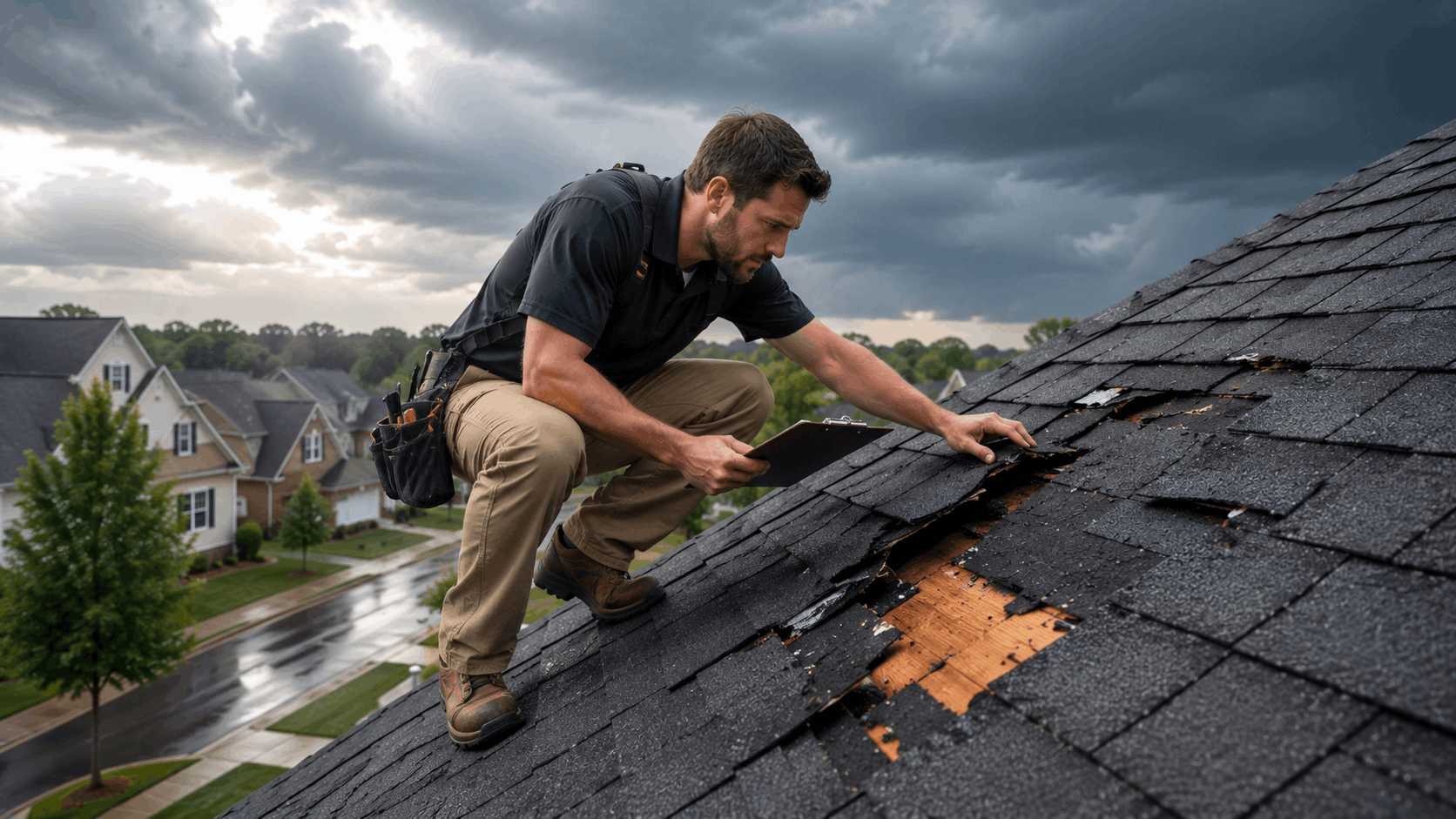
Roofing demand is uneven. A hailstorm or windstorm can create hundreds of damaged roofs in one area overnight. Triple-I's April 2026 release reported $51 billion in insured losses in 2025 from tornadoes, hail, straight-line winds and severe thunderstorms, and said hail accounts for "as much as 80% of severe convective storm claims in any given year." Triple-I's homeowners insurance data, from ISO, a Verisk business, shows wind and hail accounted for 42.5% of homeowners insurance losses in 2023. Much of that damage lands on roofs.
Homeowners search on their phones, often right away
BrightLocal's 2026 data found 73% of local searches start on a mobile device. After a storm, a homeowner standing in the yard looking at missing shingles searches "roof repair near me" or "hail damage roof inspection" and calls one of the first companies that looks trustworthy. If you are not visible in that moment, you do not get the call.
Replacement customers research longer
Not every roofing search is urgent. A full replacement is one of the largest purchases a homeowner makes, and many compare several companies, read reviews, look at photos of past work and check licenses and warranties before calling. Good roofing SEO serves both: fast, clear contact for urgent repairs and detailed, trustworthy pages for people planning a replacement.
Your website backs up your reviews
BrightLocal's 2026 consumer survey of 1,002 US adults found 54% of consumers visit a business's website after reading positive reviews, up from 32% in 2019. For a roofer, that means the homeowner who liked your star rating clicks through to check your work, your license and your service area. If the website is thin, outdated or missing the service they need, the good reviews may not be enough. In DreamHost's 2026 Local Business Trust Index, a vendor survey of 1,201 US adults, 60% said an outdated-looking website hurts their view of a business's quality or trustworthiness.
Storm chasers compete for the same searches
After big storms, out-of-area contractors often arrive looking for work. Homeowners have been warned about them. The FTC's advice after weather disasters tells people to "Hire only contractors who are licensed and insured," to check a contractor's license with their state or county, to ask for proof of insurance and a written contract, and to "only pay in full after the work is done." A local roofer whose website and profile clearly show a local address or service area, license, insurance, reviews and years of local work has a real advantage, as long as customers can find that information.
How Google Decides Which Roofers to Show
Relevance, distance and prominence
Google's help page on improving local ranking says local results are "mainly based on relevance, distance, and prominence." Relevance is how well your profile and website match what someone searched. Distance is how far you are from the searcher or the place they named. Prominence is how well known you are, which Google says includes information from across the web, such as links and directories, plus your review count and score.
No one can pay for a better local ranking
Google also says, "There's no way to request or pay for a better local ranking on Google." Ads are separate and labeled. Organic map and search placement comes from relevance, distance and prominence, which is why the steps in this guide are about information, pages and reviews, not tricks.
Two places to show up
Most local roofing searches show a map with a few Business Profiles near the top, followed by regular website results. Your Google Business Profile competes in the map results; your website competes in the regular results and supports your profile. You want both working together.
Google Business Profile for Roofers
For many roofing searches, your Business Profile is the first thing a homeowner sees. Google says businesses "with complete and accurate info are more likely to show up in local search results."
Get verified
Only verified businesses appear fully on Maps and Search. Google's verification help page lists methods that can include phone or text, email, a live video call, a video recording or a postcard, though not every method is offered to every business. Google says verification reviews take up to five business days and occasionally longer. Video verification usually means showing your location, your branded truck or tools and proof that you run the business.
Use your real business name
Google's guidelines for representing your business say your name should reflect your real-world business name, without added keywords like "Best Roof Repair Denver." Keyword-stuffed names can lead to suspension, which is the last thing you want in storm season.
Set your service area correctly
Most roofers work at customers' homes. If you do not serve customers at your address, Google's service area help page explains how to hide your address and list the areas you serve instead. List the towns you genuinely cover. Do not create extra profiles for towns where you have no real location.
Choose accurate categories and services
Pick the primary category that best describes your business, such as roofing contractor, and add services that match your website: roof repair, roof replacement, storm damage repair, roof inspection, gutter work and the materials you install. Keep descriptions honest and specific.
Add real photos regularly
Google lists photos and videos as a way to show customers what you offer. Add photos of your crews, trucks and finished roofs, especially before-and-after pairs. Real local work builds trust, particularly after storms when homeowners are wary of strangers.
Keep hours and availability accurate
If you take emergency calls after storms, say so honestly, with the hours you actually answer. If you do not, do not suggest it. During a surge, update your profile if your response times change.
Post updates
Business Profile posts let you share updates, offers and events. Before storm season, a short post about free inspections after storms, if you offer them, or what to do if a storm damages your roof, keeps your profile active. Google says posts older than six months are archived unless you set a date range.
Reviews: The Factor You Control Most
BrightLocal's 2026 survey found 47% of consumers won't use a business with fewer than 20 reviews and 74% want reviews from the past three months. For roofers, reviews do double duty: they support prominence in Google's eyes and they reassure homeowners who are worried about storm chasers.
- Ask after every job, with a direct review link by text or email, while the customer is happy with the new roof.
- Ask in slow months too, so your newest reviews are recent when storm season starts.
- Reply to every review, briefly and politely, including negative ones. Never share private details in a reply.
- Never offer incentives. Google's policy prohibits discounts or gifts for reviews, and the FTC's 2024 rule bans fake reviews.
Our guide to getting your first 25 Google reviews has simple scripts you can use.
The Pages a Roofing Website Needs
Your website is where homeowners go to confirm you do the work they need, in their area, and that you are legitimate. It also gives Google clear pages to match with specific searches. Google's SEO Starter Guide asks for content that is "helpful, reliable, and people-first" and titles that are "unique to the page."
A page for each main service
- Roof repair
- Roof replacement
- Storm damage repair
- Hail damage inspection and repair
- Wind damage and missing shingles
- Emergency tarping, if you offer it
- Roof inspections
- Leak repair
- Gutters, if you install or repair them
- Commercial or flat roofing, if you do it
A homeowner searching "hail damage roof inspection" wants a different answer from one searching "metal roof installation." One crowded services page cannot match both. A dedicated page for each service can.
Material pages
If you install several materials, such as asphalt shingles, metal, tile or flat roofing systems, a page for each helps homeowners comparing options and matches searches like "metal roof installers near me." Explain pros, cons, typical lifespan claims only as the manufacturer states them, and which homes each suits.
Town pages with real local detail
Create a page for each town you serve regularly. Fill it with genuine local detail: neighborhoods you work in, common roof types and ages in the area, local weather patterns such as hail season or high winds, permit notes if you know them and recent jobs nearby. Google's spam policies treat near-identical pages that only swap the town name as doorway pages, so each page needs real substance.
Trust pages
- About: who you are, how long you have worked locally and your team.
- License and insurance: your license number where your state expects it, and that you carry insurance. The FTC tells homeowners to check both.
- Warranties: your workmanship warranty and the manufacturer warranties you can offer, described accurately.
- Reviews and project gallery: real photos of local roofs.
What a Strong Roofing Service Page Includes
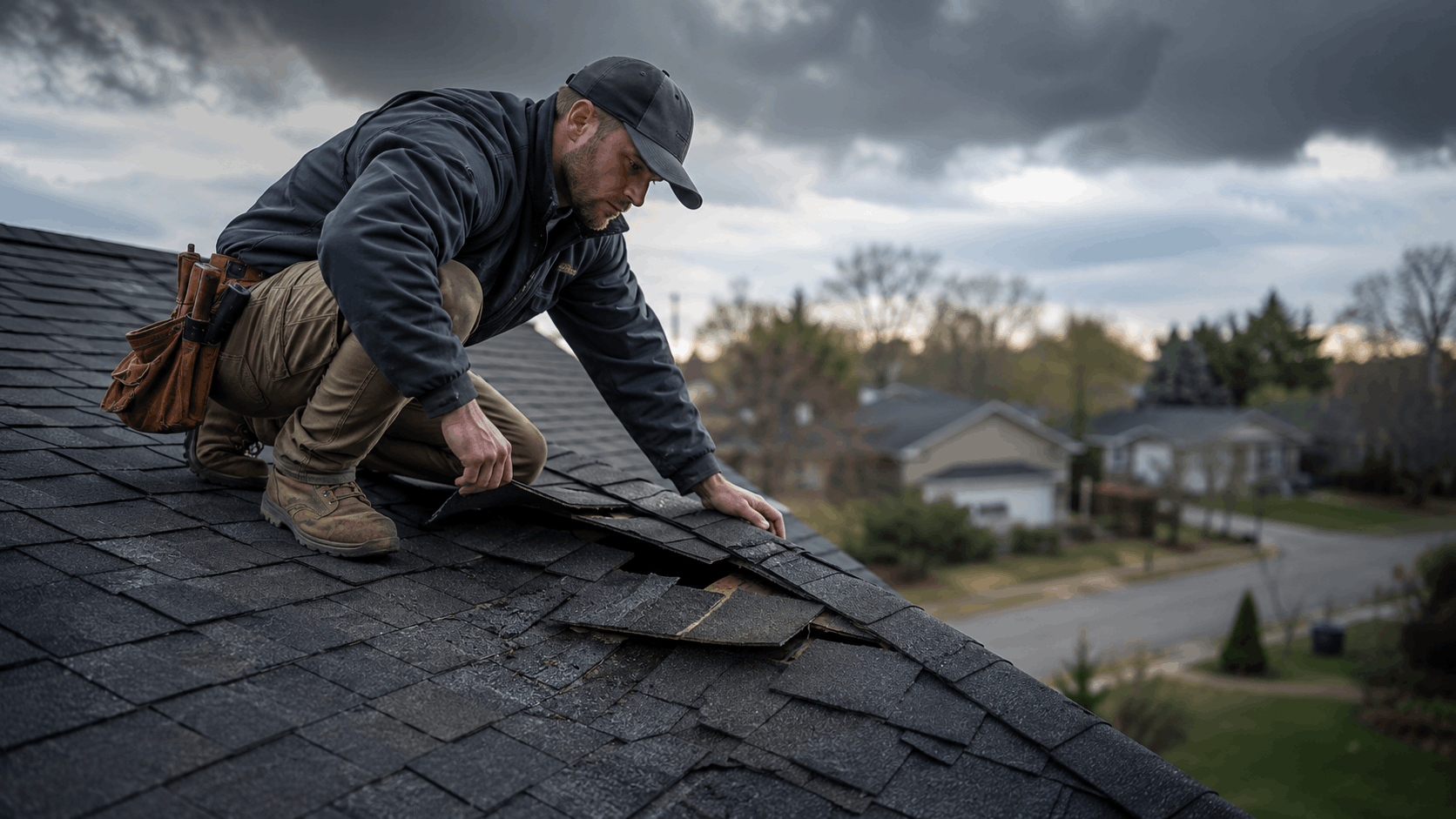
Take a "storm damage roof repair" page as an example. A strong one includes:
- A clear heading naming the service and area, such as "Storm Damage Roof Repair in Omaha and Nearby Towns."
- A direct opening that says what you do and how to reach you, with a tappable phone number.
- Signs of damage homeowners can look for safely from the ground: missing or lifted shingles, granules in gutters, dented vents or gutters, leaks or water stains inside.
- What happens when they call: inspection, documentation with photos, temporary protection if needed, a written estimate and the repair.
- Insurance information, stated carefully. Explain that you can document damage and provide estimates. Many states regulate who may negotiate an insurance claim on a homeowner's behalf, so check your state's rules before advertising any claim help.
- Safety advice: tell homeowners not to climb onto a damaged roof.
- Proof: photos of real storm repairs, a few reviews that mention storm work and your license and insurance details.
- FAQs customers ask on the phone, such as "How soon should I get my roof inspected after hail?" or "Will a few missing shingles cause leaks?"
- A clear call to action at the top and bottom.
The same structure works for every service: what it is, when you need it, how the job works, honest pricing information, proof and an easy way to call.
Explaining pricing honestly
Roofing prices depend on size, pitch, materials, layers to remove and damage, so most roofers cannot quote online. That is fine. Explain what affects cost, whether inspections and estimates are free, how you handle surprises like rotted decking and what payment options you offer. An older BrightLocal survey from 2016 found consumers of every age group named prices among the must-haves on a local business site. Honest pricing information filters out poor fits and builds trust with good ones.
Making Your Site Ready for the Call Surge
A tappable phone number everywhere
Put your phone number in the header of every page so it is always one tap away on a phone. After a storm, most homeowners want to call, not fill out a form.
A short contact form
Some homeowners prefer to send a request, especially after hours. A HubSpot analysis of more than 40,000 landing pages found conversion rates fall as form fields are added, so ask only for name, phone, address or town and a short description. Letting customers attach a photo of the damage can help you triage, if your form supports it.
Honest availability
When a storm hits, demand can outstrip your crews. Update your homepage and profile with realistic response times. Saying "We are scheduling inspections within a few days" is better than promising same-day service you cannot deliver.
Real photos, sized for phones
Use your own photos of crews and roofs. Nielsen Norman Group's eyetracking research found users ignore generic stock photos but look closely at real ones. Resize large photos before uploading so pages load comfortably on mobile data, and describe each image so Google's image guidelines can help it understand them.
Structured data, briefly
Structured data is code that describes your business to search engines. Google's LocalBusiness documentation requires only name and address and says details must match what is visible on the page. It can help Google understand your details, but it is not a ranking shortcut.
A Storm Season SEO Timeline for Roofers
Storm timing varies by region, so adjust these months to your local hail and wind season. The principle is the same everywhere: prepare before demand rises.
Two to three months before storm season
- Review your Business Profile: name, hours, service area, categories, services and photos.
- Create or refresh your storm damage, hail damage, wind damage and emergency tarping pages.
- Update town pages with recent jobs and local detail.
- Ask recent customers for reviews so your newest reviews are current.
- Test your contact form and call button on a phone.
- Check Google Search Console for errors and confirm new pages are indexed. Google says crawling "can take anywhere from a few days to a few weeks," according to its page on asking Google to recrawl, which is why this happens early.
Just before the season
- Post on your Business Profile about what homeowners should do after a storm and how to reach you.
- Make sure your phone and form messages reach someone who can respond quickly.
- Plan how you will handle a surge: who answers, how inspections are scheduled and what you tell people about timing.
Right after a storm
- Update your homepage and profile with honest availability.
- Answer calls and messages quickly, or call back fast.
- Document jobs with photos, with customers' permission, for your gallery and pages later.
After the rush
- Ask every storm customer for a review.
- Add the best before-and-after photos to your service and town pages.
- Write a short project story or two about real local jobs.
- Review which pages and searches brought calls in Search Console.
The Searches Roofers Should Plan For
Homeowners search for roofing help in a few distinct ways. Map each kind of search to the page that should answer it.
| Kind of search | Examples | Page that should answer it |
|---|---|---|
| Urgent | roof leak repair near me, emergency roof tarp | Leak repair and emergency tarping pages, with the phone number at the top |
| Storm-specific | hail damage roof inspection, wind damaged shingles | Storm, hail and wind damage pages |
| Planned replacement | roof replacement, new roof cost | Roof replacement page with honest pricing information |
| Material | metal roof installers, tile roof repair | Material pages |
| Place-based | roofer in [town], roofing company [town] | Town pages with real local detail |
| Trust | licensed roofer near me, best rated roofers | About, license and insurance, reviews and gallery pages, plus your Business Profile |
| Questions | do I need a new roof after hail, how long does a roof last | Helpful guides linked to service pages |
If a kind of search has no matching page on your site, that is a gap to fill before the next season.
Local Links and Mentions for Roofers
Google says prominence includes information from across the web, such as links and directory listings. For a roofer, the best links come from real local relationships, not purchased link packages.
- Suppliers and manufacturers: if you hold a manufacturer certification, its contractor directory may list you. Only claim certifications you actually hold.
- Local business groups: your chamber of commerce or a home builders association often lists members with a link.
- Community involvement: sponsoring a youth team, a charity event or a home show booth can earn a mention on the organizer's site.
- Partners: real estate agents, home inspectors, general contractors, gutter companies and insurance agents may link to trusted local roofers.
- Local news: after a major storm, local reporters sometimes look for roofers to explain damage or warn about scams. Being helpful and quotable can earn coverage.
Each of these also helps homeowners find and trust you, which is the real point.
Listings Beyond Google
Homeowners also find roofers through Apple Maps, Bing and Yelp. Claim and complete your listing on each with the same name, phone, address or service area and website as your Google profile. Apple Business, Bing Places and Yelp each have their own claim and verification steps. Keep a list of every listing and its login, so when your phone number or hours change, you can update them all the same day.
Handling the Surge: Phones and Follow-Up
SEO brings the calls. What you do with them decides whether they become jobs.
- Decide who answers during a surge, and what happens after hours.
- Record a clear voicemail that says you are scheduling storm inspections, how soon you call back and how to send photos or a request through your website.
- Call back fast. Homeowners often call several roofers after a storm. The first to respond professionally often wins the inspection.
- Confirm form messages arrive and that someone checks them several times a day during a surge.
- Keep a simple log of every request, its source and its status, so nobody falls through the cracks.
Commercial Roofing SEO
If you do commercial or flat roofing, treat it as its own audience. Property managers, facility managers and building owners search differently from homeowners. They look for terms like commercial roof repair, flat roof replacement, roof maintenance programs and specific systems you install. Give commercial work its own pages with project photos, the systems you install, maintenance plans you offer and how you work with property managers. Keep commercial and residential calls to action separate so each audience finds what it needs.
Content That Helps Homeowners and Builds Trust
Beyond service and town pages, a few helpful guides answer the questions homeowners ask before calling. Keep each one practical, accurate and safe, and link it to the matching service page.
- What to do after hail hits your roof, step by step, without climbing on it.
- How to spot storm damage from the ground.
- Repair or replace: how to decide.
- How to choose a roofer after a storm, including checking a license and insurance, as the FTC advises.
- Asphalt, metal or tile: which roof fits your home and climate.
- How long a roof replacement takes and what to expect on the day.
Guides like these help homeowners, show your expertise and give Google and AI tools specific, useful text to match with real questions. Write them during slow months, not after a storm, when you will have no time to spare.
Roofing SEO Between Storms
Storms are unpredictable, so a roofing company that only markets after storms has an unpredictable business. Use quieter months to build steady demand:
- Inspection and maintenance pages: a page explaining annual or post-season roof inspections, and any maintenance plan you offer, gives homeowners a reason to call before there is a problem.
- Seasonal problems: in colder regions, ice dams and winter leaks; in fall, clearing gutters and checking flashing before winter; in hot regions, heat and sun wear. Write about the problems your climate actually brings.
- Planned replacements: many homeowners plan replacements months ahead. Clear replacement and material pages, financing information if you offer it and a strong project gallery serve them.
- Reviews and photos: keep asking for reviews and adding project photos, so your profile looks active all year.
Photographing Roofing Jobs for Your Website
Real project photos are some of the most persuasive content a roofer can have, and they are easy to collect if you build the habit.
- Take before, during and after photos on every job, from the same angles, so the change is obvious.
- Stay safe. Photos are never worth a fall. Take ground-level shots where possible and only shoot on the roof when your normal safety practices are in place.
- Ask permission before publishing photos of a customer's home, and avoid showing house numbers, license plates or people without consent.
- Shoot in good light, keep the horizon level and include the whole roof plane where you can.
- Name and describe photos before uploading, such as "hail damaged shingles before repair" and "new architectural shingles after replacement," and place them on the matching service or town page.
Add-On Services Worth Their Own Pages
Many roofers also handle gutters, siding, skylights, attic ventilation or solar panel removal and reinstallation for roof work. If you do any of these regularly, give each a page. Homeowners search for them separately, and storm damage often affects gutters and siding along with the roof. Only list services you actually perform, and link each add-on page to the related roofing pages so homeowners see the full picture.

Roofing SEO and AI Search
More homeowners now ask AI tools questions such as "who repairs hail damage near me" or "do I need a new roof after hail." Google says its AI features draw on pages already in its index, with "no additional requirements," according to its guide to AI features, and it tells businesses to keep Business Profile information up to date. Yext's analysis of 6.8 million AI citations, vendor research from 2025, found first-party websites were the largest single source at 44%. Clear service pages, accurate profile details and genuine reviews help in both traditional and AI search. Our guide to how AI tools find local businesses goes deeper.
Tracking Whether Roofing SEO Is Working
- Google Search Console: shows which searches show your pages, how often people click and which pages are indexed. Our guide to reading Search Console explains the basics.
- Business Profile performance: shows calls, direction requests and website clicks from your profile.
- Your own lead log: for every call or request, note the source, service and town, and whether it became a job.
- Compare seasons with seasons: roofing is seasonal, so compare this storm season with the last one, not May with January.
Judge progress over months. Google's SEO Starter Guide says some changes "might take effect in a few hours, others could take several months," and that you "likely want to wait a few weeks" before judging results. No one can guarantee rankings.
Common Roofing SEO Mistakes
- Waiting until a storm hits to build storm pages or ask for reviews.
- One page for every service, instead of a page for each.
- Copy-paste town pages that only swap the town name.
- Keyword-stuffed Business Profile names, which risk suspension.
- Stock photos instead of real local roofs and crews.
- Hiding license and insurance details, which homeowners are told to check.
- Promising response times you cannot keep during a surge.
- Advertising insurance claim help without checking your state's rules.
- Letting reviews go quiet between seasons.
- A phone number that is hard to tap on mobile.
A Monthly Roofing SEO Routine
Thirty minutes a month keeps the basics in shape:
- Check that your hours, phone and service area match on your website and Business Profile.
- Submit your own contact form and tap the call button on your phone.
- Add a few new project photos to your profile and the matching website pages.
- Reply to new reviews, and send review requests to last month's customers who have not left one.
- Look at Search Console for new issues and for searches you appear for but rarely get clicks on.
- Note anything that changed in your business, such as a new service, material or town, and update the site.
Questions to Ask Before Hiring Help With Roofing SEO
Some roofers hire an agency or freelancer for SEO. Good help exists, but so do poor offers. Ask:
- What exactly will you do each month, and how will I see it?
- Will you guarantee rankings? If yes, be cautious: Google says no one can pay for a better local ranking, and no honest provider guarantees one.
- Who owns the website, content and accounts if we stop working together?
- Will you add keywords to my Business Profile name or create extra profiles? Both break Google's guidelines.
- Will you buy links? Purchased link schemes can violate Google's spam policies.
- How will you measure results: calls and jobs, or only rankings?
Choosing a Website for Your Roofing Company
You can build a roofing website several ways. General builders like Wix, from $17 to $159 a month billed annually according to Website Builder Expert, and Squarespace, with its Basic plan at $19 a month billed annually, look polished but leave every service and town page for you to plan and write. An agency can build a custom site; a GoodFirms survey of more than 200 agencies and freelancers put a basic-feature site at about $3,200 on average, plus ongoing costs.
Grow Local's website builder for roofers takes a different approach. You answer plain questions about your services and the towns you serve, and AI builds the site, including service pages of 800 or more words each and a location page for each city, with 50 or more pages per site. It costs $99 a month on one plan, with no contract and no setup fee, and includes hosting, SSL and Google Business Profile connection. You can review a free preview before paying, and you edit services, hours, phone and photos from the dashboard. Like any website, it cannot guarantee rankings; reviews, real photos and local reputation still depend on you. For a side-by-side look, see our roofer website builder comparison.
An Example: Preparing a Roofing Company for Hail Season
Here is how the timeline might look for an illustrative three-crew roofing company in Omaha, Nebraska. The details are an example, not a real business.
- Late winter: the owner reviews the Business Profile, removes a keyword someone had added to the name and hides the home address, listing the seven towns the company serves.
- Early spring: the office manager refreshes the storm damage, hail inspection and emergency tarping pages, adds before-and-after photos from last season and writes a guide on spotting hail damage from the ground.
- Before the first storms: they text past customers asking for reviews, test the form on a phone and post on the profile about what to do after hail.
- After a May hailstorm: calls spike. The homepage says inspections are being scheduled within a few days. Every inspection is documented with photos.
- Summer: each storm customer gets a review request. The best photos go on town pages. The owner compares calls with last year's storm season in the lead log.
By the end of the season the company has a dozen new reviews, a fuller gallery and a clear record of which pages brought calls. Nothing here is a trick. The company simply did the preparation before demand arrived, so it was visible and trustworthy when homeowners searched.
Myths About Roofing SEO
"SEO only matters after a storm"
Pages and reviews take time to be found and trusted. Preparation has to happen before the season.
"I need a page for every town in the state"
Create pages only for towns you genuinely serve, with real local detail. Dozens of thin copies risk being treated as doorway pages.
"Putting keywords in my Business Profile name helps"
Google's guidelines prohibit it, and it can get your profile suspended.
"I can pay Google for better map placement"
Google says there is no way to pay for a better local ranking. Ads are a separate, labeled product.
"A great-looking website is enough"
Design builds trust once people arrive. Service and town pages, an accurate profile and reviews are what get them there.
Frequently Asked Questions
What is roofing SEO?
It is the work of making your roofing company easy to find on Google for searches like roof repair, roof replacement and storm damage in the towns you serve, through your Business Profile, website pages and reviews.
How long does roofing SEO take to work?
There is no fixed timeline, and no one can guarantee rankings. Google says crawling new pages can take days to weeks and that some changes take several months to show. Start well before storm season.
Do I need a separate page for storm damage?
Yes, if you do storm work. A dedicated page matches storm-related searches and answers homeowners' specific questions better than a general services page.
Should I create a page for every town I serve?
For towns you serve regularly, yes, with genuine local detail. Skip towns you rarely work in, and never publish near-identical copies.
How many reviews does a roofer need?
There is no magic number, but BrightLocal's 2026 survey found 47% of consumers won't use a business with fewer than 20 reviews and 74% want reviews from the past three months. Aim for a steady flow after every job.
Can I mention insurance claims on my website?
You can explain that you document damage and provide estimates. Many states regulate who may negotiate claims on a homeowner's behalf, so check your state's rules before advertising claim help.
Should I show my license number on my website?
Where your state requires or expects it, yes. The FTC tells homeowners to confirm a contractor's license and insurance, so making them easy to find helps.
Do roofing websites need to work well on phones?
Yes. BrightLocal's 2026 data found 73% of local searches start on a mobile device, and storm searches often happen standing in the yard.
What is the most important roofing SEO task?
A complete, verified Google Business Profile with accurate details and steady reviews, supported by a website with a clear page for each service and town.
Can Grow Local build a roofing website?
Yes. It builds service and location pages from your answers for $99 a month, and you can see a free preview before paying.
Should I write blog posts about storms?
Yes, if they genuinely help homeowners, such as how to spot hail damage safely or how to choose a roofer after a storm. Publish them before the season and link them to your service pages.
Do I need different pages for residential and commercial roofing?
If you do both, yes. Property managers and homeowners search differently and want different information.
Should I hide my address on Google if I work from home?
If you do not serve customers at your address, Google's service area guidance explains how to hide it and list the areas you serve instead.
Is roofing SEO worth it if I already get referrals?
Referrals are valuable, but referred homeowners usually still look you up online before calling. A strong profile and website confirm the referral and catch storm demand from people who do not know anyone to ask.
Final Thoughts
Roofing SEO is preparation. Storms create sudden, local demand, and the roofers who get those calls are the ones who already have a verified, accurate Business Profile, a website with a clear page for each service and town, real photos, visible license and insurance details and a steady stream of recent reviews. Build your storm pages and ask for reviews months before the season, keep availability honest when the calls come and turn every storm job into photos, stories and reviews for next year. If you want the website part done for you, Grow Local's roofer website builder creates your service and town pages from your answers, and you can review a free preview before deciding.